TP53 (Tumour protein p53 (Li-Fraumeni syndrome))
2016-04-01 Thierry Soussi AffiliationMolecular Carcinogenesis, Biomarkers Group, International Agency for Research on Cancer (IARC\\\/CIRC), 150 Cours Albert Thomas, F-69372 Lyon CEDEX 08, France
Identity


Abstract
Review on TP53, with data on DNA, on the protein encoded, and where the gene is implicated.
DNA/RNA
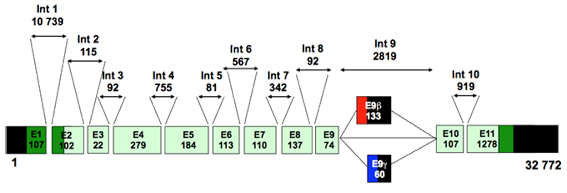
Description
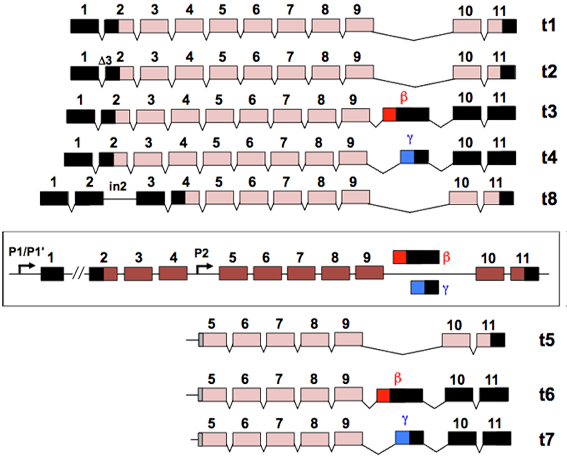
To solve some confusing situation on TP53 nomenclature, an international consortium has joined forces with the Locus Reference Genomic (LRG) consortium to provide a stable reference sequence and a coordinate system for permanent and unambiguous reporting of disease-causing variants in genes related to any pathology. The TP53 nomenclature can be reached at http://ftp.ebi.ac.uk/pub/databases/lrgex/LRG_321.xml.
Transcription
Proteins
Description
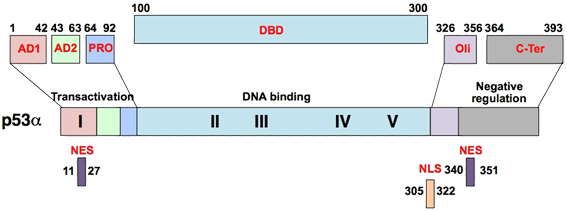
The p1 protein contains from N-term to C-term, two transactivationg domains (TAD1, 1-40 and TAD2, 41-61), a proline rich domain (63-97), a specific DNA binding domain (102-292), 3 nuclear localization signals (305-322), a tetramerization domain that includes a nuclear export signal (325-355) and a negative regulatory domain (360-393).
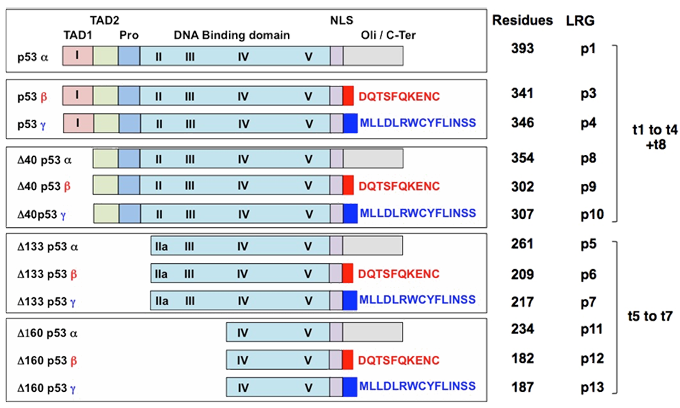
Shorter C-terminal TP53 isoforms do not contain either the tetramerization domain or the negative regulatory domain.
Shorter N-terminal TP53 isoforms do not contain TAD1 (Δ40 TP53 isoforms), TAD1, TAD2 and the proline rich domain (Δ133) or TAD1, TAD2, the proline rich domain and part of the DNA binding domain (Δ160)
TP53 is modified by numerous post-translational modifications phosphorylation, acetylation, ubiquitination, sumoylation, neddylation, methylation, ADP ribosylation, and glycosylation. Acetylation of multiple residues is essential for TP53 activation and DNA transcriptional activity.
Function
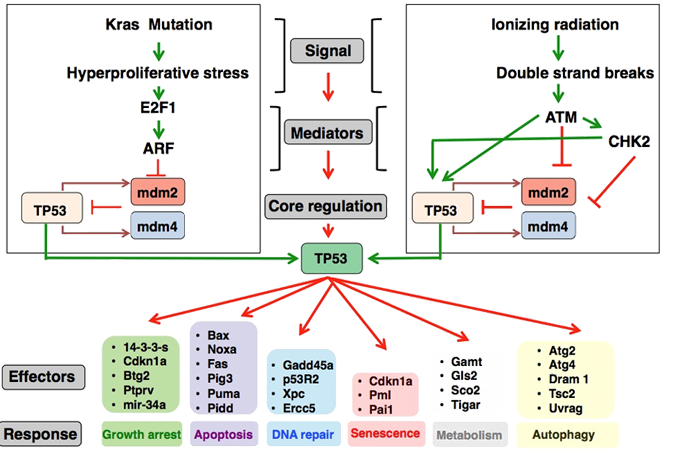
The p53 response can be conveniently divided into two sets of pathways acting upstream and downstream the core regulation of TP53.
The upstream pathways (stress signal detection and integration)
Multiple type of stress such as DNA damage, hypoxia, nucleotides pool depletion, viral infection, oncogene activation or oxidative stress can elicit a TP53 response. For each stress, a different panel of mediators is recruited.
In most cases, the goal of this step is the disruption of the TP53-MDM2 interaction leading to an accumulation and an activation of the TP53 protein. Subsequent post translational modifications (phosphorylation and acetylation principally) modulate TP53 activity depending of the type and the intensity of the damage and the cellular context.
For DNA damage, the ATM and CHEK2 kinase will phosphorylate TP53, MDM2 and MDM4 to release the negative regulation of the regulatory proteins.
For ribosomal stress, free ribosomal proteins will bind and sequester MDM2, relieving its inhibitory
For oncogene activation (hyperproliferative stress), the P16-ARF protein will sequester MDM2 in the nucleolus and relieve its inhibitory activity.
The core regulation of TP53
In normal tissues, TP53 protein levels are maintained at a very low level predominantly by the action of specific E3 ligases such as MDM2 and the ubiquitin proteosome pathway. Other E3 ligases such as Pirrh2, RFWD2 or TRIM24 target TP53 and able to regulate its stability.
TP53 translation is also highly regulated and enhanced after various types of stress. TP53 mRNA includes two Internal Ribosome Entry Sites (IRESs) elements. The first IRES is located in the 5UTR of the full-length isoform, the second is located into the protein-coding region and mediates the translation of a ΔN-p53 isoform.
The downstream pathways (effectors activation and TP53 response)
Several thousand genes have been shown to be activated by TP53 upon various types of stress. Different sets of genes are associated with a specific response. Initially, apoptosis, growth arrest and senescence have been considered to be the main response to TP53 activation. More recent studies have emphasized the importance of TP53 in other cellular responses such as DNA repair, metabolism and regulation of the Warburg effect, autophagy and regulation of stemm cell maintenance.
Although growth arrest, apoptosis and senescence were originally associated with the tumour suppressor activity of TP53, their importance has recently been challenged. Several mouse models defective for these three T53 activities lack any predisposition to develop neoplasia.
TP53 also has cytoplasmic transcription-independent functions (apoptosis and autophagy) via a direct interaction with pro- and anti-apoptotic factors in mitochondria.
| Response | Gene |
| Apoptosis | APAF1 ; BAX - FAS - - MIR34A - PMAIP1 ; TP53AIP1 - PERP -PIDD1 - TP53I3 - BBC3 - SIVA1 ; TNFS10 |
| Growth arrest | YWHAZ ; BTG2 ; CDKN1A - GADD45A ; MIR34A ; MIR34B / MIR34C ; Prl13; PTPRVP ; RPRM |
| Senescence | CDKN1A ; SERPINE1 ; PML l |
| DNA repair | Dbd2; ERCC5 ; FANCC ; GADD45A ; XRCC5 ; MGMT ; MLH1 ; MSH2 ; RRM2B ; PAPD7 ; XPC |
| Metabolism / Anti oxydant | ADORA2B ; ALDH4A1 ; PRKAB1 ; GAMT ; GLS2 ; SLC2A1 (-);SLC2A4 (-);GPX1 ; IGFBP3 ; LPIN1 ; PARK2 ; VCAN (-); PRKAB1 ; ten; SCO1 ; SESN1 ; SESN2 ; TIGAR ; TP53INP1 ; TSC2 |
| Autophagy | ATG10 ; ATG2B ; ATG4A ; ATG4C ; ATG7 ; CTSD ; DDIT4 ; DRAM1 ; RBFOX3 ; LAPTM4A ; STK11 ; PIK3R3 ; PRKAG2 ; BBC3 ; ACD ; TSC2 ; ULK1 ; ULK2 ; UVRAG ; VAMP4 ; VMP1 |
| Tumour micro environment | ADGRB1 ; CX3CL1 ; ICAM1 ; IRF9 ; ISG15 ; SERPINB5 ; CCL2 ; NCF2 ; SERPINE1 ; TLR1 - TLR10 ; PRSS55 ; ULBP1 ; ULBP2 |
| Invasion metastasis | CDKN1A ; MIR34A ; MIR200C |
| Stem cell biology | CDKN1A ; ; MIR34A ; MIR34B / ; NOTCH1 |
| TP53 regulation | CARD16 ; MDM2 , PIRH-2; TP63 , TP73 |
| Unknown* | APOBEC3H; HRAS ; TNFAIP8 ; ZMAT3 |
This list is not exhaustive. Several TP53 responses overlap and include identical genes. Adapted from Bieging et al. with modifications.
* Genes induced by TP53 without any clear relation to a specific pathway
Expression
Localisation
Mutations
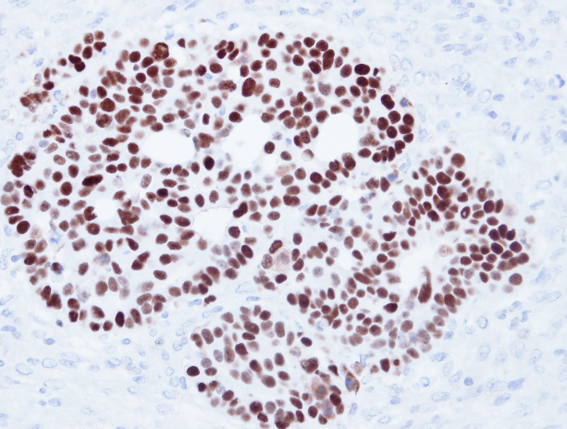
Germinal
A founder mutation TP53 (NG_017013.2:g.21852G>A, p.R337H) is detected in 0.3% of the general population in southern Brazil. This mutation is associated with an increased risk of childhood adrenal cortical carcinoma (ACC) but is also common in Brazilian LFS/LFL families.
The frequency of TP53 de novo germline mutation ranges between 7 and 20%.
Somatic
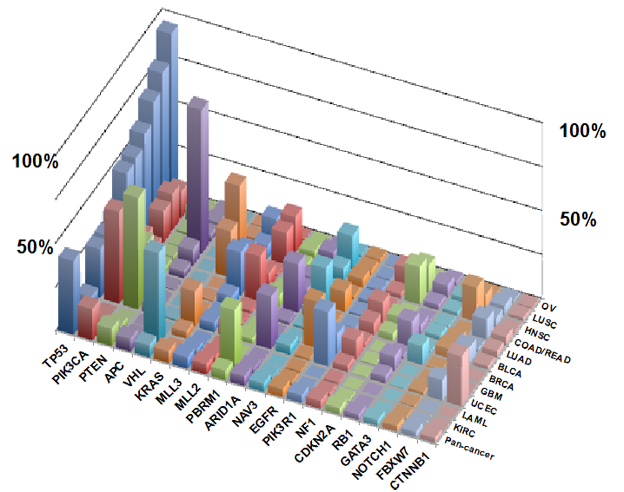
Two international consortiums have reported the sequencing of more than 10.000 tumour genomes and confirmed that the TP53 gene is the most frequently mutated gene in human cancer. TP53 mutations are strongly associated with tumours with high chromosomal instability.
Cancer specific driver genes can be noticed: APC in colorectal carcinoma (violet); VHL in kidney cancer (green) or PTEN and PIK3CA in endometrial carcinoma (green and red)
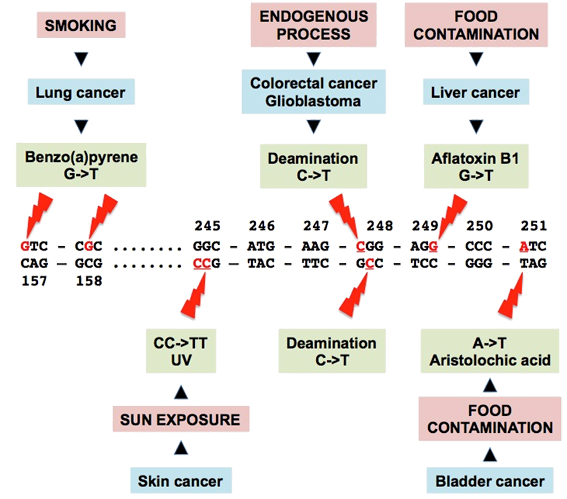
Molecular epidemiology studies demonstrate a link between exposure to various types of carcinogens, specific mutational events in the TP53 gene and the development of specific cancers.
Lung cancer
TP53 mutations in lung cancer are mostly GC to TA transversions, with a rate of transition mutations lower than in other cancers. There is a strong correlation between the frequency of these GC to TA transversions and lifetime cigarette smoking. This high frequency of GC to TA transversions has not been detected for other cancers such as colon, breast, ovary or brain cancer, which are not directly associated with smoking. This observation is compatible with the role of exogenous carcinogens such as benzo(a)pyrene in lung cancer. After metabolic activation, one of the derivative products of benzo(a)pyrene, the prime carcinogen in cigarette smoke, binds predominantly to guanine and gives rise to specific G-C to T-A transversions. Exposure of cells to benzo(a)pyrene lead to the formation of adducts at codon 157, 248 and 273 in the p53 gene. These positions are the major mutational hotspots in human lung cancer but not in other cancers. The p53 gene is one of the targets of carcinogens found in tobacco.
Liver cancer
There is a strong association between infection with hepatitis B virus and hepatocellular carcinoma. Aflatoxin B1 has been considered to be a significant etiological factor for liver cancer in Western Africa and Asia. Aflatoxins are compounds produced by fungal strains (such as Aspergillus flavus for aflatoxins B1) that are known food contaminants in these countries. Aflatoxins are highly carcinogenic in experimental animals, producing liver tumours in newborn mice, rats, fish, ducks and monkeys.
Worldwide epidemiological studies showed that a specific mutation at codon 249 (c.747G>T, p.R249S) is specifically found in liver cancer from countries in which food was contaminated by aflatoxin B1. In countries which do not consume contaminated food (including Europe and the USA), TP53 mutations are scattered along the central part of p53, as for the other types of cancer. In vitro and in vivo analysis showed a specific binding of aflatoxin B1 to codon 249 of the TP53 gene.
Bladder cancer
Aristolochic acid (AA), a common ingredient in many Chinese herbs, is a powerful nephrotoxin and human carcinogen associated with chronic kidney disease and upper urinary tract urothelial carcinomas including bladder cancer. AA exposure is also associated with Balkan endemic nephropathy (BEN) similarly characterized by kidney failure and a high frequency of transitional cancer of urothelial tracts including bladder, renal pelvis and ureters.
TP53 mutation from patients exposed to AA display a high frequency A:T-to-T:A transversions, a mutational signature associated with AA which forms a covalent adduct with adenine that leads to this transversion.
Skin cancer
Ultraviolet (UV) light induces specific DNA damage such as cyclobutane pyrimidine dimers (CPDs) and pyrimidine(6-4)pyrimidine photoproducts (64PPs) at dipyrimidine sites, where two pyrimidine (Py) bases are juxtaposed in tandem in the nucleotide sequence of DNA. If left unrepaired, this lesion leads to specific types of mutation: base substitutions of cytosine (C) → thymine (T) at dipyrimidine sites and CC → TT tandem base substitutions. These two types of mutation are called UV signature and their detection suggests past exposure to UV. In skin cancer such as squamous cell carcinoma (SCC) and basal cell carcinoma (BCC), the frequency of TP53 is high (70 to 80%) with more than 15% of tandem mutations (less than 1% for other cancer types).
Colorectal or brain cancer
The cytosine-guanine (CpG) dinucleotide is a hotspot for pathological mutations in the human genome. This hypermutability is due to its role as the major site of cytosine methylation with the attendant risk of spontaneous deamination of 5-methylcytosine (5mC) to yield C → T and G → A transitions. Most TP53 hotspots for mutations in colorectal or brain cancer are located at CpG sites with a mutation spectrum compatible with 5-methylcytosine deamination. These hotspot codons, CGN at positions 175, 248 or 273, encode arginine residues important for TP53 structure and/or activity. It is interesting to note that arginine can also be encoded by AGG and AGA that have the same frequency of usage in human but are not targeted by methylation. It has not yet been determined whether or not there is a specific selection to keep CGN in the TP53.
Implicated in
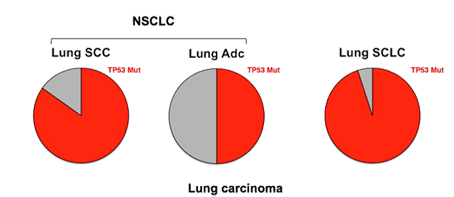
The pattern of TP53 mutations in skin cancer is highly related to UV exposure.
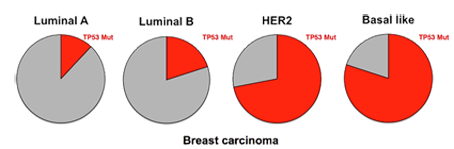
Molecular profiling studies have identified four major subtypes of breast cancer: luminal A, luminal B, basal like, and HER2. The frequency of TP53 alteration in these subtypes ranges from 12% in luminal A, 30% in luminal B, 70% in HER2 to more than 80% in basal like. There is a partial overlap between TNBC and Basal like.
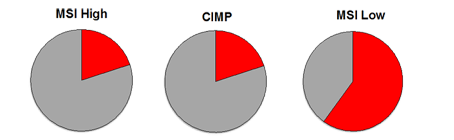
(i) Chromosomal instability (CIN) characterized by microsatellite stable tumours (MSS), loss of heterozygosity and major chromosomal changes in tumour-suppressor genes and oncogenes (60% of CRC)
(ii) The CpG island methylator phenotype (CIMP) which causes transcriptional silencing by methylation of CpG-rich regions in the promoter of tumour-suppressor genes (10 to 15% of CRC).
(iii) Microsatellite instability (MSI) is characterized by the accumulation of frame shift mutations in microsatellite sequences due to a deficiency in mismatch repair (MMR) genes (10 to 15% of CRC)
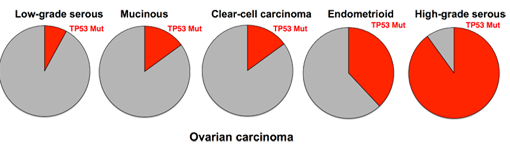

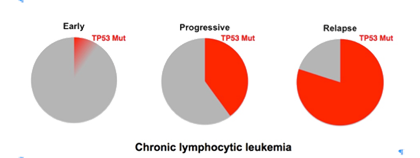
Other extended criteria have been proposed to provide better guidelines for TP53 genetic testing:
Birch definition : (1) a proband with any childhood cancer or sarcoma, brain tumour, or adrenocortical carcinoma diagnosed before age 45 years and (2) a first- or second-degree relative with a typical Li-Fraumeni cancer (sarcoma, breast cancer, brain tumour, adrenocortical carcinoma, or leukaemia) at any age and (3) a first- or second-degree relative with any cancer before age 60 years.
Eels definition: Two first- or second-degree relatives with Li-Fraumeni-related malignancies (sarcoma, breast cancer, brain tumour, leukaemia, adrenocortical tumour, melanoma, prostate cancer, pancreatic cancer) at any age.
Chompret definition: A proband who has (1) a tumour belonging to the Li-Fraumeni tumour spectrum (soft-tissue sarcoma, osteosarcoma, premenopausal breast cancer, brain tumour, adrenocortical carcinoma, leukemia, or bronchoalveolar lung cancer) before age 46 years and (2) at least one first- or second-degree relative with a Li-Fraumeni tumour (except breast cancer if the proband has breast cancer) before age 56 years or with multiple tumours or a proband with multiple tumours (except multiple breast tumours), 2 of which belong to the Li-Fraumeni tumour spectrum and the first of which occurred before age 46 years or A proband who is diagnosed with adrenocortical carcinoma or choroid plexus tumours, irrespective of family history.
Article Bibliography
| Pubmed ID | Last Year | Title | Authors |
|---|---|---|---|
| 23318258 | 2013 | Deciphering signatures of mutational processes operative in human cancer. | Alexandrov LB et al |
| 21852209 | 2011 | p53: guardian of ploidy. | Aylon Y et al |
| 26049273 | 2015 | Surveillance recommendations for patients with germline TP53 mutations. | Ballinger ML et al |
| 23954639 | 2013 | Metabolic regulation by p53 family members. | Berkers CR et al |
| 25799989 | 2015 | Cancer: A piece of the p53 puzzle. | Bieging KT et al |
| 16708075 | 2006 | p53: more research and more questions. | Braithwaite AW et al |
| 23733769 | 2013 | Impact of neonatal screening and surveillance for the TP53 R337H mutation on early detection of childhood adrenocortical tumors. | Custódio G et al |
| 15838523 | 2005 | The p53 pathway: positive and negative feedback loops. | Harris SL et al |
| 24132290 | 2013 | Mutational landscape and significance across 12 major cancer types. | Kandoth C et al |
| 26122615 | 2015 | p53 in survival, death and metabolic health: a lifeguard with a licence to kill. | Kruiswijk F et al |
| 16814724 | 2006 | p53 aerobics: the major tumor suppressor fuels your workout. | Kruse JP et al |
| 19776744 | 2009 | The first 30 years of p53: growing ever more complex. | Levine AJ et al |
| 10935507 | 2000 | Dial 9-1-1 for p53: mechanisms of p53 activation by cellular stress. | Ljungman M et al |
| 20044243 | 2010 | Autophagy regulation by p53. | Maiuri MC et al |
| 12154353 | 2002 | p73: Friend or foe in tumorigenesis. | Melino G et al |
| 16226451 | 2005 | Transcription-independent pro-apoptotic functions of p53. | Moll UM et al |
| 24651012 | 2014 | Mutant p53 in cancer: new functions and therapeutic opportunities. | Muller PA et al |
| 14583457 | 2003 | Li-Fraumeni and related syndromes: correlation between tumor type, family structure, and TP53 genotype. | Olivier M et al |
| 17311302 | 2007 | Impact of mutant p53 functional properties on TP53 mutation patterns and tumor phenotype: lessons from recent developments in the IARC TP53 database. | Petitjean A et al |
| 24406212 | 2015 | p53 orchestrates between normal differentiation and cancer. | Rivlin N et al |
| 24478183 | 2014 | Locus-specific databases in cancer: what future in a post-genomic era? The TP53 LSDB paradigm. | Soussi T et al |
| 11902578 | 2001 | Assessing TP53 status in human tumours to evaluate clinical outcome. | Soussi T et al |
| 26024390 | 2015 | TP53: an oncogene in disguise. | Soussi T et al |
| 9218725 | 1997 | Li-Fraumeni syndrome--a molecular and clinical review. | Varley JM et al |
| 11099028 | 2000 | Surfing the p53 network. | Vogelstein B et al |
| 11114324 | 2000 | p53: death star. | Vousden KH et al |
| 11781586 | 2001 | The evolution of diverse biological responses to DNA damage: insights from yeast and p53. | Wahl GM et al |
| 11252895 | 2000 | P63 and P73: P53 mimics, menaces and more. | Yang A et al |
Other Information
Locus ID:
NCBI: 7157
MIM: 191170
HGNC: 11998
Ensembl: ENSG00000141510
Variants:
dbSNP: 7157
ClinVar: 7157
TCGA: ENSG00000141510
COSMIC: TP53
RNA/Proteins
Expression (GTEx)
Pathways
Protein levels (Protein atlas)
PharmGKB
| Entity ID | Name | Type | Evidence | Association | PK | PD | PMIDs |
|---|---|---|---|---|---|---|---|
| PA128406956 | fluorouracil | Chemical | ClinicalAnnotation | associated | PD | ||
| PA165108952 | Li-Fraumeni syndrome | Disease | DataAnnotation, Literature, MultilinkAnnotation | associated | 23788249 | ||
| PA166153473 | venetoclax | Chemical | LabelAnnotation | associated | |||
| PA30718 | MDM2 | Gene | MultilinkAnnotation | associated | 14704432 | ||
| PA443560 | Breast Neoplasms | Disease | ClinicalAnnotation | associated | PD | ||
| PA445062 | Neoplasms | Disease | ClinicalAnnotation | associated | PD | 18357466, 19052714, 19786980, 20638924, 22188361, 26696550 | |
| PA445113 | Neutropenia | Disease | ClinicalAnnotation | associated | PD | ||
| PA449165 | cyclophosphamide | Chemical | ClinicalAnnotation | associated | PD | ||
| PA449476 | epirubicin | Chemical | ClinicalAnnotation | associated | PD | ||
| PA452621 | antineoplastic agents | Chemical | ClinicalAnnotation | associated | PD | 18357466, 19052714, 19786980, 20638924, 22188361, 26696550 |
References
| Pubmed ID | Year | Title | Citations |
|---|---|---|---|
| 37154864 | 2024 | P53: A Key Target in the Development of Osteoarthritis. | 2 |
| 37155089 | 2024 | PHLDA1 is a P53 target gene involved in P53-mediated cell apoptosis. | 1 |
| 37256347 | 2024 | Genetic heterogeneity in p53-null leukemia increases transiently with spindle assembly checkpoint inhibition and is not rescued by p53. | 1 |
| 37555614 | 2024 | Multi-endpoint analysis of cadmium chloride-induced genotoxicity shows role for reactive oxygen species and p53 activation in DNA damage induction, cell cycle irregularities, and cell size aberrations. | 1 |
| 37661069 | 2024 | Enhancing the invasive traits of breast cancers by CYP1B1 via regulation of p53 to promote uPAR expression. | 1 |
| 37794678 | 2024 | Multiple TP53 p.R337H haplotypes and implications for tumor susceptibility. | 0 |
| 37794795 | 2024 | Susceptibility of pediatric acute lymphoblastic leukemia to STAT3 inhibition depends on p53 induction. | 0 |
| 37806848 | 2024 | TuBG1 promotes hepatocellular carcinoma via ATR/P53-apoptosis and cycling pathways. | 2 |
| 37819701 | 2024 | p53 Activation Facilitates Transdifferentiation of Human Cardiac Fibroblasts into Endothelial Cells. | 0 |
| 37840151 | 2024 | TP53 mutation and human papilloma virus status as independent prognostic factors in a Norwegian cohort of vulva squamous cell carcinoma. | 1 |
| 37855385 | 2024 | Targeting UBR5 inhibits postsurgical breast cancer lung metastases by inducing CDC73 and p53 mediated apoptosis. | 2 |
| 37878531 | 2024 | Impact of TP53-induced glycolysis and apoptosis regulator on malignant activity and resistance to ferroptosis in intrahepatic cholangiocarcinoma. | 1 |
| 37898451 | 2024 | Association between expression levels of p53, miRNA-21, and lncRNA-TCL6 and the risk of preeclampsia in pregnant women. | 0 |
| 37938093 | 2024 | Prognostic impact of TP53 mutations in adult acute lymphoblastic leukemia treated with a pediatric-type regimen. | 0 |
| 37973687 | 2024 | Hepatitis C virus may accelerate breast cancer progression by increasing mutant p53 and c-Myc oncoproteins circulating levels. | 0 |
Citation
Thierry Soussi
TP53 (Tumour protein p53 (Li-Fraumeni syndrome))
Atlas Genet Cytogenet Oncol Haematol. 2016-04-01
Online version: http://atlasgeneticsoncology.org/gene/88/tp53
Historical Card
2007-04-01 TP53 (Tumour protein p53 (Li-Fraumeni syndrome)) by Magali Olivier Affiliation
2002-10-01 TP53 (Tumour protein p53 (Li-Fraumeni syndrome)) by Thierry Soussi Affiliation
2001-12-01 TP53 (Tumour protein p53 (Li-Fraumeni syndrome)) by Thierry Soussi Affiliation
1998-10-01 TP53 (Tumour protein p53 (Li-Fraumeni syndrome)) by Richard Hamelin,Jean-Loup Huret Affiliation
1998-07-01 TP53 (Tumour protein p53 (Li-Fraumeni syndrome)) by Richard Hamelin,Jean-Loup Huret Affiliation
