PTHLH (parathyroid hormone-like hormone)
2012-07-01 Sai-Ching Jim Yeung , Mouhammed Amir Habra AffiliationThe University of Texas M. D. Anderson Cancer Center, Department of General Internal Medicine, Ambulatory Treatment, Emergency Care, Department of Endocrine Neoplasia, Hormonal Disorders, 1515 Holcombe Boulevard, Unit 437, Houston, Texas 77030, USA
Identity
HGNC
LOCATION
12p11.22
LOCUSID
ALIAS
BDE2,HHM,PLP,PTHR,PTHRP
FUSION GENES
DNA/RNA
Description
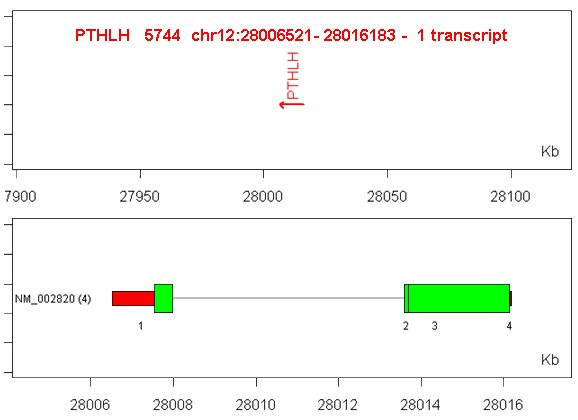
PTHLH is encoded by a single gene that is highly conserved among species. The gene is composed of 7 exons spanning a region of 13899 bases (start: 28002284 bp from pter; end: 28016183 bp from pter).
Orientation: minus strand.
The genomic DNA for the PTHLH gene was isolated from a human placental genomic library (Yasuda et al., 1989).
Orientation: minus strand.
The genomic DNA for the PTHLH gene was isolated from a human placental genomic library (Yasuda et al., 1989).
Transcription
The sequence is supported by 3 sequences from 3 cDNA clones.
Pseudogene
None.
Proteins
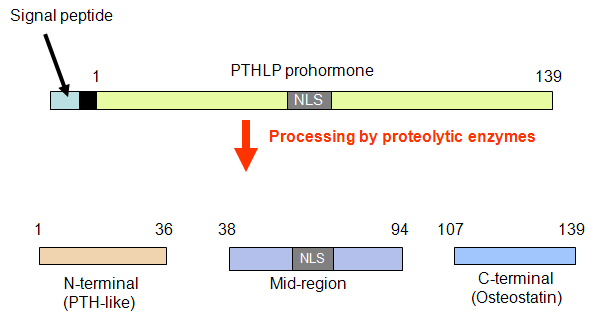
This diagram represents schematically one possible proteolytic processing pattern of PTHLH into 3 bioactive peptides. The mid-region of PTHLH contains the nuclear localization signal (NLS).
Description
Size: 177 amino acids, 20194 Da.
The PTHLH gene has seven exons, and its transcripts are processed by alternative splicing into three isoforms, encoding proteins with 139, 173 and 141 amino acid. The pattern of expression of PTHLH mRNA isoforms may be cell type-specific (Sellers et al., 2004). Although different tumors may have different PTHLH splicing patterns, there are no tumor-specific transcripts (Southby et al., 1995). PTHLH is processed into a set of distinct peptide hormones by endoproteolytic cleavage of the initial translation products: mature N-terminal, mid-region and C-terminal secretory peptides, each having its own distinct function. The distribution of the endopeptidase processing enzymes (PTP (prohormone thiol protease), prohormone convertases 1 and 2 (PC1 and PC2)) may vary in different tissues (Deftos et al., 2001). PTP cleaved the PTHLH precursor at the multibasic, dibasic, and monobasic residue cleavage sites to generate the NH2-terminal peptide (residues 1-37, having PTH-like and growth regulatory activities), the mid-region domain (residues 38-93, regulating calcium transport and cell proliferation), and the COOH-terminal domain (residues 102-141, modulating osteoclast activity) (Hook et al., 2001).
The PTHLH gene has seven exons, and its transcripts are processed by alternative splicing into three isoforms, encoding proteins with 139, 173 and 141 amino acid. The pattern of expression of PTHLH mRNA isoforms may be cell type-specific (Sellers et al., 2004). Although different tumors may have different PTHLH splicing patterns, there are no tumor-specific transcripts (Southby et al., 1995). PTHLH is processed into a set of distinct peptide hormones by endoproteolytic cleavage of the initial translation products: mature N-terminal, mid-region and C-terminal secretory peptides, each having its own distinct function. The distribution of the endopeptidase processing enzymes (PTP (prohormone thiol protease), prohormone convertases 1 and 2 (PC1 and PC2)) may vary in different tissues (Deftos et al., 2001). PTP cleaved the PTHLH precursor at the multibasic, dibasic, and monobasic residue cleavage sites to generate the NH2-terminal peptide (residues 1-37, having PTH-like and growth regulatory activities), the mid-region domain (residues 38-93, regulating calcium transport and cell proliferation), and the COOH-terminal domain (residues 102-141, modulating osteoclast activity) (Hook et al., 2001).
Expression
PTHLH is a protein polyhormone produced by most if not all tissues in the body. It is secreted during both fetal and postnatal life. Although PTHLH is found in the circulation, most of its activity appears to be paracrine.
A complex of transcription factors and coactivators (CREB, Ets1 and CBP) regulates PTHLH transcription and may contribute to the alterations associated with the promotion of carcinogenesis (Hamzaoui et al., 2007). Disruption of the normal regulation during cancer progression may in part be associated with TGF-beta1-induced changes in PTHLH mRNA isoform expression and stability (Sellers et al., 2004). TGF-β activates PTHLH expression increasing transcription from the P3 promoter through a synergistic interaction of Smad3 and Ets1 (Lindemann et al., 2001). ERK1/ERK2-dependent Ets2/PKCε synergism also appears to regulate PTHLH expression in breast cancer cells (Lindemann et al., 2003).
The PTHLH gene is also under the transcriptional control of glucocorticoids and vitamin D (Ikeda et al., 1989). 1,25-dihydroxy vitamin D3 treatment increases PTHLH mRNA expression and blocks the stimulatory effect of TGF-beta on PTHLH mRNA expression (Kunakornsawat et al., 2001). Glucocortical steroid hormone can suppress PTHLH mRNA expression and release of bioactive PTHLH in certain PTHLH-producing tumors (Kasono et al., 1991). The regulation of PTHLH expression by female sex steroid hormones is still unclear (Kurebayashi and Soono, 1997; Sugimoto et al., 1999; Rabbani et al., 2005).
Glucocorticoids reduced PTHLH and PTH1R expression in human mesenchymal stem cells which could be one of the mechanisms involved in steroids induced bone loss (Ahlström et al., 2009).
In cell lines, upregulation of hypoxia induced factor HIF-2α subunit is involved in PTHLH upregulation (Manisterski et al., 2010).
PTHLH is a downstream target for RAS and SRC (Li and Drucker, 1994), K-ras mutation increases PTHLH expression (Kamai et al., 2001) while a farnesyltransferase inhibitor known to inhibit RAS function can decrease PTHLH expression (Dackiw et al., 2005). The von Hippel-Lindau tumor suppressor protein also negatively regulates PTHLH expression at the post-transcriptional level (Massfelder et al., 2004).
A complex of transcription factors and coactivators (CREB, Ets1 and CBP) regulates PTHLH transcription and may contribute to the alterations associated with the promotion of carcinogenesis (Hamzaoui et al., 2007). Disruption of the normal regulation during cancer progression may in part be associated with TGF-beta1-induced changes in PTHLH mRNA isoform expression and stability (Sellers et al., 2004). TGF-β activates PTHLH expression increasing transcription from the P3 promoter through a synergistic interaction of Smad3 and Ets1 (Lindemann et al., 2001). ERK1/ERK2-dependent Ets2/PKCε synergism also appears to regulate PTHLH expression in breast cancer cells (Lindemann et al., 2003).
The PTHLH gene is also under the transcriptional control of glucocorticoids and vitamin D (Ikeda et al., 1989). 1,25-dihydroxy vitamin D3 treatment increases PTHLH mRNA expression and blocks the stimulatory effect of TGF-beta on PTHLH mRNA expression (Kunakornsawat et al., 2001). Glucocortical steroid hormone can suppress PTHLH mRNA expression and release of bioactive PTHLH in certain PTHLH-producing tumors (Kasono et al., 1991). The regulation of PTHLH expression by female sex steroid hormones is still unclear (Kurebayashi and Soono, 1997; Sugimoto et al., 1999; Rabbani et al., 2005).
Glucocorticoids reduced PTHLH and PTH1R expression in human mesenchymal stem cells which could be one of the mechanisms involved in steroids induced bone loss (Ahlström et al., 2009).
In cell lines, upregulation of hypoxia induced factor HIF-2α subunit is involved in PTHLH upregulation (Manisterski et al., 2010).
PTHLH is a downstream target for RAS and SRC (Li and Drucker, 1994), K-ras mutation increases PTHLH expression (Kamai et al., 2001) while a farnesyltransferase inhibitor known to inhibit RAS function can decrease PTHLH expression (Dackiw et al., 2005). The von Hippel-Lindau tumor suppressor protein also negatively regulates PTHLH expression at the post-transcriptional level (Massfelder et al., 2004).
Localisation
PTHLH is a secreted polyhormone and is localized in the Golgi apparatus in the cytoplasm. However, in some cells, PTHLH can be detected in the nucleus by immunochemistry. The growth-inducing effect of NLS-containing mid-region PTHLH peptide in breast cancer is dependent on both internalization into the cytoplasm and subsequent translocation to the nucleus (Kumari et al., 2006). PTHLH travels from the cytosol to the nucleus with the help of the nuclear transport factor importin beta1. Importin beta1 enhanced the association of PTHLH with microtubules, and the microtubule cytoskeleton plays an important role in protein transport to the nucleus (Lam et al., 2002).
The site of recognition of PTHLH is the N-terminal half of importin, which can also bind Ran and nucleoporin, and is sufficient for PTHLH nuclear import (Conti, 2003).
The site of recognition of PTHLH is the N-terminal half of importin, which can also bind Ran and nucleoporin, and is sufficient for PTHLH nuclear import (Conti, 2003).
Function
PTHLH is a growth factor, a PTH-like calciotropic hormone, a developmental regulatory molecule, and a muscle relaxant (Clemens et al., 2001). The diverse activities of PTHLH result not only from processing of the precursor into multiple hormones, but from use of multiple receptors.
It is clear that the Type 1 Parathyroid Hormone Receptor (PTH1R), binding both PTH (1-34) and PTHLH (1-36), is the receptor mediating the function of PTHLH (1-36), and it is the only cloned receptor for PTHLH so far (Clemens et al., 2001).
PTHLH also binds to a type of receptor in some tissues that does not bind PTH. PTHLH (67-86) activates phospholipase C signaling pathways through a receptor distinct from that activated by PTHLH (1-36) in the same cells (Orloff et al., 1996). Unlike PTH, picomolar concentrations of the PTHLH (107-111) fragment to can activate membrane-associated PKC in osteosarcoma cells (Gagnon et al., 1993). PTHLH (107-139) exerts effects through the PKC/ERK pathway (de Gortázar et al., 2006). Thus, it is highly likely that the mid-region and osteostatin peptides bind other, unique receptors, but those receptors have yet to be cloned and identified.
In contrast to the receptor-mediated endrocrine and paracrine action, the mid-region PTHLH peptide contains a classic bipartite nuclear localization signal (NLS) which upon entering the nuclear compartment confers "intracrine" actions. Details of the nuclear action of PTHLH are still lacking, but overall, nuclear PTHLH appears to be mitogenic (de Miguel et al., 2001). The translation of PTHLH initiates from both the methionine-coding AUG and a leucine-coding CUGs further downstream in its signal sequence. It appeared that when translation was initiated from CUGs, PTHLH accumulated in the nucleoli, and that when translation was initiated from AUG, PTHLH localized in both the Golgi apparatus and nucleoli. Thus, nucleolar PTHLH appears to be derived from translation initiating from both AUG and CUGs (Amizuka et al., 2002). Modulation of cell adhesion by PTHLH localized in the nucleus is a normal physiological action of PTHLH, mediated by increasing integrin gene transcription (Anderson et al., 2007). The promotion by PTHLH in cancer growth and metastasis may be mediated by upregulating integrin alpha6beta4 expression and activating Akt (Shen and Falzon, 2006).
PTHLH also interacts with beta-arrestin 1B, an important component of MAPK signaling and G-protein-coupled receptor desensitization, and this interaction requires residues 122-141 of PTHLH. Therefore, beta-arrestin 1 may mediate a novel regulatory function of PTHLH in intracellular signaling (Conlan et al., 2002).
PTHLH also play a major role in development of several tissues and organs. PTHLH stimulates the proliferation of chondrocytes and suppresses their terminal differentiation. PTHLH (107-139) is a substrate for secPHEX, and osteocalcin, pyrophosphate and phosphate are inhibitors of secPHEX activity; thus PHEX activity and PTHLH are part of a complex network regulating bone mineralization (Boileau et al., 2001). PTHLH plays a central role in the physiological regulation of bone formation, by promoting recruitment and survival of osteoblasts, and probably plays a role in the physiological regulation of bone resorption, by enhancing osteoclast formation. Signaling by fibroblast growth factor receptor 3 and PTHLH coordinate in cartilage and bone development (Amizuka et al., 2004). PTHLH is also an essential physiological regulator of adult bone mass (Bisello et al., 2004).
In oophorectomized mice, injecting PTHLH fragments increased bone formation and reduced bone resorption (de Castro et al., 2012).
Subcutaneous PTHLH injections in healthy postmenopausal women resulted in a pure anabolic effect on bone and increase intestinal calcium absorption when given in high doses (Horwitz et al., 2010).
PTHLH maintains chondrocytes and growth plates as the inhibition of PTHLH signaling via PTH/PTHLH receptor in chondrocytes resulted in an accelerated differentiation of chondrocytes and premature disappearance of the growth plates (Hirai et al., 2011). PTHLH signaling stimulates chrondrocytes proliferation. This process is inhibited via WNT/beta catenin signaling that in turn stimulates chondrocytes hypertrophy (Guo et al., 2009).
In giant cell tumors, stromal cell production of PTHLH increased RANK ligand expression and led to giant cell formation (Cowan et al., 2012).
PTHLH increased the survival of giant cell tumor stromal cells in vitro while the neutralization of PTHLH signaling induced cell death through the activation of different pathways (caspase, TRAIL, JAK-STAT, and cyclin E/CDK2) (Mak et al., 2012).
PTHLH aids in normal mammary gland development and lactation as well as placental transfer of calcium. Mammary gland development depends upon a complex interaction between epithelial and mesenchymal cells that requires PTHLH. The calcium sensor (CaR) regulates PTHLH production as well as transport of calcium in the lactating mammary gland (Ardeshirpour et al., 2006). In normal animals, mammary epithelial cells secrete a lot of PTHLH, which helps to adjust maternal metabolism to meet the calcium demands of lactation. The mid-region PTHLH peptide has also been shown to control the normal maternal-to-fetal pumping of calcium across the placenta.
Rarely, placental PTHLH production can lead to pregnancy associated hypercalcemia. Hypercalcemia in pregnancy could have significant morbidity but tend to resolve post-delivery (Eller-Vainicher et al., 2012).
PTHLH is secreted from smooth muscle in many organs, usually in response to stretching. PTHLH relaxes smooth muscle. Transgenic mice that express PTHLH in vascular smooth muscle have hypotension, being consistent with a vasodilating effect of PTHLH.
PTHLH is highly expressed in the skin. EGF and other similar ligands can potentially activate PTHLH gene expression in the epidermis (Cho et al., 2004). PTHLH can inhibit hair growth and is required for tooth eruption as shown by mouse models that manipulated the PTHLH gene.
In rodent and human pancreatic beta cell cultures, PTHLH (1-36) enhanced the proliferation and function of beta cells. Injecting male mice with PTHLH (1-36) increased beta cell proliferation via increased levels of cyclin D2 and decreased levels of Ink4a (Williams et al., 2011).
PTHLH activates BMP-2/ Cbfa1 signaling pathway which could lead to vascular calcifications in hemodialysis patients (Liu et al., 2012).
In addition, PTHLH overexpression increased arterial vascular smooth muscle cells proliferation resulting in arterial stenosis (Sicari et al., 2012).
It is clear that the Type 1 Parathyroid Hormone Receptor (PTH1R), binding both PTH (1-34) and PTHLH (1-36), is the receptor mediating the function of PTHLH (1-36), and it is the only cloned receptor for PTHLH so far (Clemens et al., 2001).
PTHLH also binds to a type of receptor in some tissues that does not bind PTH. PTHLH (67-86) activates phospholipase C signaling pathways through a receptor distinct from that activated by PTHLH (1-36) in the same cells (Orloff et al., 1996). Unlike PTH, picomolar concentrations of the PTHLH (107-111) fragment to can activate membrane-associated PKC in osteosarcoma cells (Gagnon et al., 1993). PTHLH (107-139) exerts effects through the PKC/ERK pathway (de Gortázar et al., 2006). Thus, it is highly likely that the mid-region and osteostatin peptides bind other, unique receptors, but those receptors have yet to be cloned and identified.
In contrast to the receptor-mediated endrocrine and paracrine action, the mid-region PTHLH peptide contains a classic bipartite nuclear localization signal (NLS) which upon entering the nuclear compartment confers "intracrine" actions. Details of the nuclear action of PTHLH are still lacking, but overall, nuclear PTHLH appears to be mitogenic (de Miguel et al., 2001). The translation of PTHLH initiates from both the methionine-coding AUG and a leucine-coding CUGs further downstream in its signal sequence. It appeared that when translation was initiated from CUGs, PTHLH accumulated in the nucleoli, and that when translation was initiated from AUG, PTHLH localized in both the Golgi apparatus and nucleoli. Thus, nucleolar PTHLH appears to be derived from translation initiating from both AUG and CUGs (Amizuka et al., 2002). Modulation of cell adhesion by PTHLH localized in the nucleus is a normal physiological action of PTHLH, mediated by increasing integrin gene transcription (Anderson et al., 2007). The promotion by PTHLH in cancer growth and metastasis may be mediated by upregulating integrin alpha6beta4 expression and activating Akt (Shen and Falzon, 2006).
PTHLH also interacts with beta-arrestin 1B, an important component of MAPK signaling and G-protein-coupled receptor desensitization, and this interaction requires residues 122-141 of PTHLH. Therefore, beta-arrestin 1 may mediate a novel regulatory function of PTHLH in intracellular signaling (Conlan et al., 2002).
PTHLH also play a major role in development of several tissues and organs. PTHLH stimulates the proliferation of chondrocytes and suppresses their terminal differentiation. PTHLH (107-139) is a substrate for secPHEX, and osteocalcin, pyrophosphate and phosphate are inhibitors of secPHEX activity; thus PHEX activity and PTHLH are part of a complex network regulating bone mineralization (Boileau et al., 2001). PTHLH plays a central role in the physiological regulation of bone formation, by promoting recruitment and survival of osteoblasts, and probably plays a role in the physiological regulation of bone resorption, by enhancing osteoclast formation. Signaling by fibroblast growth factor receptor 3 and PTHLH coordinate in cartilage and bone development (Amizuka et al., 2004). PTHLH is also an essential physiological regulator of adult bone mass (Bisello et al., 2004).
In oophorectomized mice, injecting PTHLH fragments increased bone formation and reduced bone resorption (de Castro et al., 2012).
Subcutaneous PTHLH injections in healthy postmenopausal women resulted in a pure anabolic effect on bone and increase intestinal calcium absorption when given in high doses (Horwitz et al., 2010).
PTHLH maintains chondrocytes and growth plates as the inhibition of PTHLH signaling via PTH/PTHLH receptor in chondrocytes resulted in an accelerated differentiation of chondrocytes and premature disappearance of the growth plates (Hirai et al., 2011). PTHLH signaling stimulates chrondrocytes proliferation. This process is inhibited via WNT/beta catenin signaling that in turn stimulates chondrocytes hypertrophy (Guo et al., 2009).
In giant cell tumors, stromal cell production of PTHLH increased RANK ligand expression and led to giant cell formation (Cowan et al., 2012).
PTHLH increased the survival of giant cell tumor stromal cells in vitro while the neutralization of PTHLH signaling induced cell death through the activation of different pathways (caspase, TRAIL, JAK-STAT, and cyclin E/CDK2) (Mak et al., 2012).
PTHLH aids in normal mammary gland development and lactation as well as placental transfer of calcium. Mammary gland development depends upon a complex interaction between epithelial and mesenchymal cells that requires PTHLH. The calcium sensor (CaR) regulates PTHLH production as well as transport of calcium in the lactating mammary gland (Ardeshirpour et al., 2006). In normal animals, mammary epithelial cells secrete a lot of PTHLH, which helps to adjust maternal metabolism to meet the calcium demands of lactation. The mid-region PTHLH peptide has also been shown to control the normal maternal-to-fetal pumping of calcium across the placenta.
Rarely, placental PTHLH production can lead to pregnancy associated hypercalcemia. Hypercalcemia in pregnancy could have significant morbidity but tend to resolve post-delivery (Eller-Vainicher et al., 2012).
PTHLH is secreted from smooth muscle in many organs, usually in response to stretching. PTHLH relaxes smooth muscle. Transgenic mice that express PTHLH in vascular smooth muscle have hypotension, being consistent with a vasodilating effect of PTHLH.
PTHLH is highly expressed in the skin. EGF and other similar ligands can potentially activate PTHLH gene expression in the epidermis (Cho et al., 2004). PTHLH can inhibit hair growth and is required for tooth eruption as shown by mouse models that manipulated the PTHLH gene.
In rodent and human pancreatic beta cell cultures, PTHLH (1-36) enhanced the proliferation and function of beta cells. Injecting male mice with PTHLH (1-36) increased beta cell proliferation via increased levels of cyclin D2 and decreased levels of Ink4a (Williams et al., 2011).
PTHLH activates BMP-2/ Cbfa1 signaling pathway which could lead to vascular calcifications in hemodialysis patients (Liu et al., 2012).
In addition, PTHLH overexpression increased arterial vascular smooth muscle cells proliferation resulting in arterial stenosis (Sicari et al., 2012).
Implicated in
Entity name
Humoral hypercalcemia of malignancy
Prognosis
The median survival after the first occurrence of hypercalcemia is 66 days in patients with serum PTHLH ≤ 21 pmol/L and 33 days in patients with PTHLH > 21 pmol/L. In hypercalcemia of malignancy, raised serum levels of PTHLH indicate a more advanced tumor state and an extremely poor prognosis (Pecherstorfer et al., 1994).
Oncogenesis
Humoral hypercalcemia of malignancy (HHM) was first described by Albright in 1941 (Albright, 1941), and is a well-known complication among cancer patients. This syndrome is commonly encountered in advanced cancer of epithelial origin, especially squamous cell carcinoma of the lung. Studies of the "humors" secreted by cancer that causes hypercalcemia led to the discovery of 3 classes of peptides: parathyroid-like peptides, growth factor-like peptides, and bone-resorbing factors. Then protein purification led to molecular studies that cloned cDNAs for PTHLH (Suva et al., 1987; Broadus et al., 1988; Mangin et al., 1988). Suva et al. (Suva et al., 1987) suggested that the PTHLH may be responsible for the abnormal calcium metabolism in HHM.
In the mammary epithelium of breast cancer mouse model, PTHLH inhibition delayed tumor formation and spread with reduction of markers of angiogenesis and cell proliferation (Li et al., 2011).
PTHLH can be expressed in many tumors and leads to chemotherapy resistance as it inhibits apoptosis via downregulation of proapoptotic factors including Bax, and PUMA while upregulating antiapoptotic factors (Bcl-2, and Bcl-xl) (Gagiannis et al., 2009).
In the mammary epithelium of breast cancer mouse model, PTHLH inhibition delayed tumor formation and spread with reduction of markers of angiogenesis and cell proliferation (Li et al., 2011).
PTHLH can be expressed in many tumors and leads to chemotherapy resistance as it inhibits apoptosis via downregulation of proapoptotic factors including Bax, and PUMA while upregulating antiapoptotic factors (Bcl-2, and Bcl-xl) (Gagiannis et al., 2009).
Entity name
Autocrine promotion of tumor progression
Prognosis
In the absence of hypercalcemia, approximately 17% of patients with gastroesophageal carcinoma have elevated levels of PTHLH, and the increase in PTHLH was associated with a poor prognosis (Deans et al., 2005).
Oncogenesis
mRNA for the PTH1R was detected many tumors expressing PTHLH; thus the PTHLH produced by these tumors may act in an autocrine or paracrine fashion (Southby et al., 1995; Alokail and Peddie, 2007; Gessi et al., 2007). PTHLH (1-34) treatment resulted in an increase in proliferation in prostate cancer cells which may require androgen in some cell lines (Asadi et al., 2001). In breast cancer cells, PTHLH regulates CDC2 and CDC25B via PTH1R in a cAMP-independent manner, and PTHLH promotes cell migration through induction of ITGA6, PAI-1, and KISS-1, and promotes proliferation through induction of KISS-1 (Dittmer et al., 2006). These pieces of evidence together suggest that PTHLH and PTH1R together play an important role in the autocrine/paracrine promotion of tumor proliferation in some cancers.
Entity name
Bone metastasis
Disease
Breast cancer
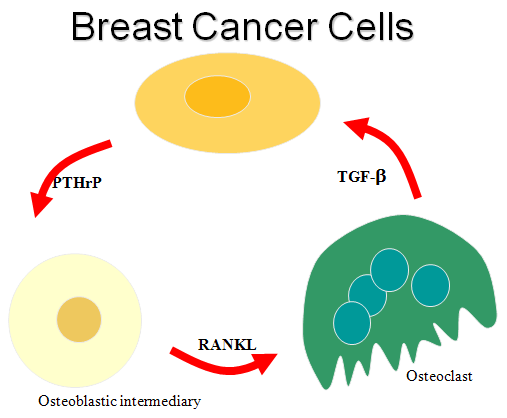
The interactions among breast cancer cells, osteoblasts and osteoclasts define a feedback loop that promote breast cancer growth in the bone microenvironment.
Oncogenesis
PTHLH is a mediator of the bone destruction associated with osteolytic metastasis. Patients with PTHLH-expressing breast carcinoma are more likely to develop bone metastasis, and bone metastasis expresses PTHLH in >90% of cases as compared with
Entity name
Cachexia in hypercalcemia of malignancy
Oncogenesis
PTHLH induces a wasting/cachectic syndrome (Iguchi et al., 2001). PTHLH leads to decreased physical activity and lowered energy metabolism independently of the effects of hypercalcemia and proinflammatory cytokines (Onuma et al., 2005). In a rodent model, PTHLH induces a cachectic syndrome (in addition to inducing hypercalcemia of malignancy) by changing the mRNA levels of orexigenic and anorexigenic peptides, except leptin and orexin (Hashimoto et al., 2007). Expression of cachexia-inducing cytokines such as interleukin-6 and leukemia inhibitory factor is increased by PTHLH (Iguchi et al., 2006). Animal data suggest that humanized antibody against PTHLH may be effective for patients with hypercalcemia and cachexia in patients with humoral hypercalcemia of malignancy (Sato et al., 2003).
Article Bibliography
| Pubmed ID | Last Year | Title | Authors |
|---|---|---|---|
| 19121329 | 2009 | Dexamethasone downregulates the expression of parathyroid hormone-related protein (PTHrP) in mesenchymal stem cells. | Ahlström M et al |
| 16170852 | 2007 | Characterisation of ligand binding to the parathyroid hormone/parathyroid hormone-related peptide receptor in MCF7 breast cancer cells and SaOS-2 osteosarcoma cells. | Alokail MS et al |
| 14751559 | 2004 | Signalling by fibroblast growth factor receptor 3 and parathyroid hormone-related peptide coordinate cartilage and bone development. | Amizuka N et al |
| 12557418 | 2002 | Biological action of parathyroid hormone (PTH)-related peptide (PTHrP) mediated either by the PTH/PTHrP receptor or the nucleolar translocation in chondrocytes. | Amizuka N et al |
| 17406357 | 2007 | PTHrP increases transcriptional activity of the integrin subunit alpha5. | Anderson JA et al |
| 16377269 | 2006 | The calcium-sensing receptor regulates PTHrP production and calcium transport in the lactating mammary gland. | Ardeshirpour L et al |
| 12230264 | 2001 | Effect of parathyroid hormone related protein, and dihydrotestosterone on proliferation and ornithine decarboxylase mRNA in human prostate cancer cell lines. | Asadi F et al |
| 14600591 | 2003 | Breast cancer metastasis to bone: it is not all about PTHrP. | Bendre M et al |
| 15265822 | 2004 | Parathyroid hormone-related protein: an essential physiological regulator of adult bone mass. | Bisello A et al |
| 11311133 | 2001 | Characterization of PHEX endopeptidase catalytic activity: identification of parathyroid-hormone-related peptide107-139 as a substrate and osteocalcin, PPi and phosphate as inhibitors. | Boileau G et al |
| 3043221 | 1988 | Humoral hypercalcemia of cancer. Identification of a novel parathyroid hormone-like peptide. | Broadus AE et al |
| 15072578 | 2004 | Regulation of parathyroid hormone-related protein gene expression by epidermal growth factor-family ligands in primary human keratinocytes. | Cho YM et al |
| 11704631 | 2001 | Parathyroid hormone-related protein and its receptors: nuclear functions and roles in the renal and cardiovascular systems, the placental trophoblasts and the pancreatic islets. | Clemens TL et al |
| 12220636 | 2002 | The COOH-terminus of parathyroid hormone-related protein (PTHrP) interacts with beta-arrestin 1B. | Conlan LA et al |
| 12490886 | 2003 | The hitchhiker's guide to the nucleus. | Conti E et al |
| 22102368 | 2012 | PTHrP increases RANKL expression by stromal cells from giant cell tumor of bone. | Cowan RW et al |
| 16213899 | 2005 | Modulation of parathyroid hormone-related protein levels (PTHrP) in anaplastic thyroid cancer. | Dackiw A et al |
| 15800880 | 2005 | Serum parathyroid hormone-related peptide is associated with systemic inflammation and adverse prognosis in gastroesophageal carcinoma. | Deans C et al |
| 11720250 | 2001 | Comparative tissue distribution of the processing enzymes "prohormone thiol protease," and prohormone convertases 1 and 2, in human PTHrP-producing cell lines and mammalian neuroendocrine tissues. | Deftos LJ et al |
| 16551631 | 2006 | Parathyroid hormone-related protein regulates tumor-relevant genes in breast cancer cells. | Dittmer A et al |
| 22247017 | 2012 | PTHrP-associated hypercalcemia of pregnancy resolved after delivery: a case report. | Eller-Vainicher C et al |
| 19507249 | 2009 | Parathyroid hormone-related protein confers chemoresistance by blocking apoptosis signaling via death receptors and mitochondria. | Gagiannis S et al |
| 8475799 | 1993 | Protein kinase C-activating domains of parathyroid hormone-related protein. | Gagnon L et al |
| 17372745 | 2007 | Human parathyroid hormone-related protein and human parathyroid hormone receptor type 1 are expressed in human medulloblastomas and regulate cell proliferation and apoptosis in medulloblastoma-derived cell lines. | Gessi M et al |
| 15807924 | 2005 | Molecular mechanisms of breast cancer metastases to bone. | Guise TA et al |
| 8833902 | 1996 | Evidence for a causal role of parathyroid hormone-related protein in the pathogenesis of human breast cancer-mediated osteolysis. | Guise TA et al |
| 10898330 | 2000 | Molecular mechanisms of osteolytic bone metastases. | Guise TA et al |
| 19557172 | 2009 | The Wnt/beta-catenin pathway interacts differentially with PTHrP signaling to control chondrocyte hypertrophy and final maturation. | Guo X et al |
| 17321669 | 2007 | PTHrP P3 promoter activity in breast cancer cell lines: role of Ets1 and CBP (CREB binding protein). | Hamzaoui H et al |
| 17200368 | 2007 | Parathyroid hormone-related protein induces cachectic syndromes without directly modulating the expression of hypothalamic feeding-regulating peptides. | Hashimoto H et al |
| 21173257 | 2011 | Parathyroid hormone/parathyroid hormone-related protein receptor signaling is required for maintenance of the growth plate in postnatal life. | Hirai T et al |
| 11467841 | 2001 | Proteolysis of ProPTHrP(1-141) by "prohormone thiol protease" at multibasic residues generates PTHrP-related peptides: implications for PTHrP peptide production in lung cancer cells. | Hook VY et al |
| 20061412 | 2010 | Parathyroid hormone-related protein for the treatment of postmenopausal osteoporosis: defining the maximal tolerable dose. | Horwitz MJ et al |
| 16369893 | 2006 | Effects of anti-parathyroid hormone-related protein monoclonal antibody and osteoprotegerin on PTHrP-producing tumor-induced cachexia in nude mice. | Iguchi H et al |
| 11668474 | 2001 | Involvement of parathyroid hormone-related protein in experimental cachexia induced by a human lung cancer-derived cell line established from a bone metastasis specimen. | Iguchi H et al |
| 2777759 | 1989 | Transcriptional regulation of the parathyroid hormone-related peptide gene by glucocorticoids and vitamin D in a human C-cell line. | Ikeda K et al |
| 11851621 | 2001 | Higher expression of K-ras is associated with parathyroid hormone-related protein-induced hypercalcaemia in renal cell carcinoma. | Kamai T et al |
| 1938595 | 1991 | Effects of glucocorticoids and calcitonin on parathyroid hormone-related protein (PTHrP) gene expression and PTHrP release in human cancer cells causing humoral hypercalcemia. | Kasono K et al |
| 16450371 | 2006 | Nuclear targeting of a midregion PTHrP fragment is necessary for stimulating growth in breast cancer cells. | Kumari R et al |
| 11848494 | 2001 | Effects of 1,25(OH)2D3, EB1089, and analog V on PTHrP production, PTHrP mRNA expression and cell growth in SCC 2/88. | Kunakornsawat S et al |
| 9192988 | 1997 | Parathyroid hormone-related protein secretion is inhibited by oestradiol and stimulated by antioestrogens in KPL-3C human breast cancer cells. | Kurebayashi J et al |
| 11818509 | 2002 | Nuclear transport of parathyroid hormone (PTH)-related protein is dependent on microtubules. | Lam MH et al |
| 22056386 | 2011 | PTHrP drives breast tumor initiation, progression, and metastasis in mice and is a potential therapy target. | Li J et al |
| 8119972 | 1994 | Parathyroid hormone-related peptide is a downstream target for ras and src activation. | Li X et al |
| 12628005 | 2003 | Ets2 and protein kinase C epsilon are important regulators of parathyroid hormone-related protein expression in MCF-7 breast cancer cells. | Lindemann RK et al |
| 22448974 | 2012 | Involvement of parathyroid hormone-related protein in vascular calcification of chronic haemodialysis patients. | Liu F et al |
| 22508574 | 2012 | Transcriptomic and proteomic analyses in bone tumor cells: Deciphering parathyroid hormone-related protein regulation of the cell cycle and apoptosis. | Mak IW et al |
| 2829195 | 1988 | Identification of a cDNA encoding a parathyroid hormone-like peptide from a human tumor associated with humoral hypercalcemia of malignancy. | Mangin M et al |
| 20890122 | 2010 | Hypoxia induces PTHrP gene transcription in human cancer cells through the HIF-2α. | Manisterski M et al |
| 14729622 | 2004 | Parathyroid hormone-related protein is an essential growth factor for human clear cell renal carcinoma and a target for the von Hippel-Lindau tumor suppressor gene. | Massfelder T et al |
| 15800941 | 2005 | Parathyroid hormone-related protein (PTHrP) as a causative factor of cancer-associated wasting: possible involvement of PTHrP in the repression of locomotor activity in rats bearing human tumor xenografts. | Onuma E et al |
| 8940360 | 1996 | A midregion parathyroid hormone-related peptide mobilizes cytosolic calcium and stimulates formation of inositol trisphosphate in a squamous carcinoma cell line. | Orloff JJ et al |
| 8175989 | 1994 | Parathyroid hormone-related protein and life expectancy in hypercalcemic cancer patients. | Pecherstorfer M et al |
| 2032246 | 1991 | Localization of parathyroid hormone-related protein in breast cancer metastases: increased incidence in bone compared with other sites. | Powell GJ et al |
| 15831570 | 2005 | Regulation of parathyroid hormone-related peptide by estradiol: effect on tumor growth and metastasis in vitro and in vivo. | Rabbani SA et al |
| 14613038 | 2003 | Treatment of malignancy-associated hypercalcemia and cachexia with humanized anti-parathyroid hormone-related protein antibody. | Sato K et al |
| 15291755 | 2004 | Alternative splicing of parathyroid hormone-related protein mRNA: expression and stability. | Sellers RS et al |
| 16965770 | 2006 | PTH-related protein upregulates integrin alpha6beta4 expression and activates Akt in breast cancer cells. | Shen X et al |
| 22210745 | 2012 | c-myc and skp2 coordinate p27 degradation, vascular smooth muscle proliferation, and neointima formation induced by the parathyroid hormone-related protein. | Sicari BM et al |
| 7669584 | 1995 | Alternative promoter usage and mRNA splicing pathways for parathyroid hormone-related protein in normal tissues and tumours. | Southby J et al |
| 10517339 | 1999 | Suppression of parathyroid hormone-related protein messenger RNA expression by medroxyprogesterone acetate in breast cancer tissues. | Sugimoto T et al |
| 3616618 | 1987 | A parathyroid hormone-related protein implicated in malignant hypercalcemia: cloning and expression. | Suva LJ et al |
| 21800111 | 2011 | Systemic and acute administration of parathyroid hormone-related peptide(1-36) stimulates endogenous beta cell proliferation while preserving function in adult mice. | Williams K et al |
| 2708388 | 1989 | Characterization of the human parathyroid hormone-like peptide gene. Functional and evolutionary aspects. | Yasuda T et al |
| 9916131 | 1999 | TGF-beta signaling blockade inhibits PTHrP secretion by breast cancer cells and bone metastases development. | Yin JJ et al |
| 21702049 | 2012 | Comparison of the skeletal effects induced by daily administration of PTHrP (1-36) and PTHrP (107-139) to ovariectomized mice. | de Castro LF et al |
| 17120184 | 2006 | Transient exposure to PTHrP (107-139) exerts anabolic effects through vascular endothelial growth factor receptor 2 in human osteoblastic cells in vitro. | de Gortázar AR et al |
| 11517189 | 2001 | The C-terminal region of PTHrP, in addition to the nuclear localization signal, is essential for the intracrine stimulation of proliferation in vascular smooth muscle cells. | de Miguel F et al |
Other Information
Locus ID:
NCBI: 5744
MIM: 168470
HGNC: 9607
Ensembl: ENSG00000087494
Variants:
dbSNP: 5744
ClinVar: 5744
TCGA: ENSG00000087494
COSMIC: PTHLH
RNA/Proteins
Expression (GTEx)
Pathways
Protein levels (Protein atlas)
References
| Pubmed ID | Year | Title | Citations |
|---|---|---|---|
| 38407575 | 2024 | A novel heterozygous mutation in PTHLH causing autosomal dominant brachydactyly type E complicated with short stature. | 0 |
| 38552853 | 2024 | Osteostatin, a peptide for the future treatment of musculoskeletal diseases. | 0 |
| 38407575 | 2024 | A novel heterozygous mutation in PTHLH causing autosomal dominant brachydactyly type E complicated with short stature. | 0 |
| 38552853 | 2024 | Osteostatin, a peptide for the future treatment of musculoskeletal diseases. | 0 |
| 36482064 | 2023 | Exosomal lncRNA HOTAIR promotes osteoclast differentiation by targeting TGF-β/PTHrP/RANKL pathway. | 6 |
| 36858515 | 2023 | Malignancy-related Hypercalcemia Caused by Metameric Cutaneous Metastasis of Parathyroid Hormone-related Protein-producing Bladder Carcinoma with Squamous Cell Differentiation: An Autopsy Case of Cobb Syndrome. | 0 |
| 37664938 | 2023 | Role of Parathyroid Hormone and Parathyroid Hormone-Related Protein in Protein-Energy Malnutrition. | 0 |
| 36482064 | 2023 | Exosomal lncRNA HOTAIR promotes osteoclast differentiation by targeting TGF-β/PTHrP/RANKL pathway. | 6 |
| 36858515 | 2023 | Malignancy-related Hypercalcemia Caused by Metameric Cutaneous Metastasis of Parathyroid Hormone-related Protein-producing Bladder Carcinoma with Squamous Cell Differentiation: An Autopsy Case of Cobb Syndrome. | 0 |
| 37664938 | 2023 | Role of Parathyroid Hormone and Parathyroid Hormone-Related Protein in Protein-Energy Malnutrition. | 0 |
| 34897794 | 2022 | Novel Pathogenetic Variants in PTHLH and TRPS1 Genes Causing Syndromic Brachydactyly. | 3 |
| 34897794 | 2022 | Novel Pathogenetic Variants in PTHLH and TRPS1 Genes Causing Syndromic Brachydactyly. | 3 |
| 33640382 | 2021 | Role of the calcium-sensing receptor (CaSR) in cancer metastasis to bone: Identifying a potential therapeutic target. | 11 |
| 33781836 | 2021 | Role of SPARC in the epithelial-mesenchymal transition induced by PTHrP in human colon cancer cells. | 8 |
| 34024253 | 2021 | Parathyroid hormone-related protein inhibits nitrogen-containing bisphosphonate-induced apoptosis of human periodontal ligament fibroblasts by activating MKP1 phosphatase. | 6 |
Citation
Sai-Ching Jim Yeung ; Mouhammed Amir Habra
PTHLH (parathyroid hormone-like hormone)
Atlas Genet Cytogenet Oncol Haematol. 2012-07-01
Online version: http://atlasgeneticsoncology.org/gene/41897/pthlh
Historical Card
2007-10-01 PTHLH (parathyroid hormone-like hormone) by Sai-Ching Jim Yeung Affiliation
The University of Texas M. D. Anderson Cancer Center, Department of General Internal Medicine, Ambulatory Treatment, Emergency Care, Department of Endocrine Neoplasia, Hormonal Disorders, 1515 Holcombe Boulevard, Unit 437, Houston, Texas 77030, USA
