PTN (pleiotrophin)
2012-05-01 Evangelia Pantazaka , Evangelia Papadimitriou AffiliationLaboratory of Molecular Pharmacology, Department of Pharmacy, University of Patras, Patras, Greece
Identity
DNA/RNA
Description
Transcription
Pseudogene
Proteins
Note
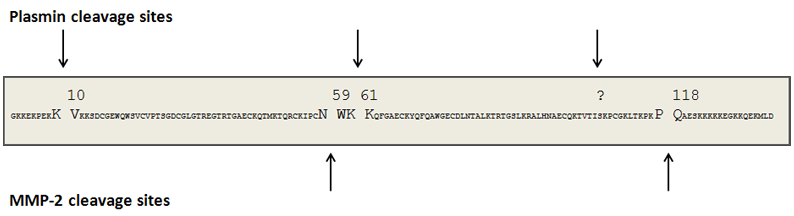
Description
Heteronuclear NMR has revealed the structure of PTN (Kilpelainen et al., 2000); two β-sheet domains (N- and C-terminals) maintained through five disulfide bonds and connected by a flexible linker, and two lysine-rich clusters at the N- and C-terminal domains that appear as random flexible coils. Each β-sheet domain consists of three antiparallel β-strands and contains a thrombospondin repeat I (TSR-I) motif. TSR-I has been suggested to be responsible for PTN binding to heparin/heparan sulfate (Raulo et al., 2005) and N-syndecan (Raulo et al., 2006), to regulate PTN neurite outgrowth activity and synaptic plasticity (Raulo et al., 2006), mitogenic and angiogenic activity (in particular the C-terminal TSR-I) (Hamma-Kourbali et al., 2008). Computational analysis has identified the three-dimensional structure and electrostatic potential distribution of PTN, and homology modelling using midkine as a template has predicted the binding pocket of PTN for oligosaccharides (Li et al., 2010a). The structure of PTN peptide P112-136 has also been studied by NMR suggesting that the peptide adopts a specific folded conformation (Mikelis et al., 2011).
Cloning of different PTN constructs has led to the identification that residues 41-64 (with the cooperation of either of the lysine-rich terminal clusters) are important for the transformation of NIH 3T3 cells and were designated as the "transforming domain" (Zhang et al., 1999b), while residues 69-136 have been designated as the "angiogenesis domain" (Zhang et al., 2006) (also see "Peptides/chimaeras and structure-function relationship").
PTN has been reported to form non-covalent dimers in a process dependent on the presence of heparin or other glycosaminoglycans (Bernard-Pierrot et al., 1999). PTN was secreted as a dimer in conditioned medium of NIH 3T3 cells (Bernard-Pierrot et al., 1999). Furthermore, truncated PTN mutants (P1-40 and P1-110) have been suggested to heterodimerize with endogenous PTN (Zhang et al., 1997; Bernard-Pierrot et al., 2002), an action that explains their dominant negative effects.
Regulation. PTN expression is regulated in a temporal and cell type-dependent manner (also see "Expression"). PTN expression has been reported to be regulated by: cytokines and growth factors, such as midkine in a compensatory manner (Herradon et al., 2005), platelet-derived growth factor (PDGF) (Li et al., 1992a; Antoine et al., 2005), epidermal growth factor (Pufe et al., 2003), fibroblast growth factor (FGF) 2 (Hatziapostolou et al., 2006), and tumour necrosis factor α (Pufe et al., 2003); signalling molecules, such as cAMP (Mourlevat et al., 2005), hydrogen peroxide (Polytarchou et al., 2005) and nitric oxide (Polytarchou et al., 2009); hormones (Tamura et al., 1995; Vacherot et al., 1995; Roger et al., 2006); transcription factors, such as AP-1 (Florin et al., 2005; Polytarchou et al., 2005; Poimenidi et al., 2009) and HOXA5 (Chen et al., 2005); tumour suppressors, such as menin (Gao et al., 2009; Feng et al., 2010) and PTEN (Li et al., 2006); miscellaneous conditions, such as hypoxia (Antoine et al., 2005), mechanical loading (Liedert et al., 2004), serum (Poimenidi et al., 2009) and X-rays (Polytarchou et al., 2004). Contradictory observations regarding retinoic acid suggest either induction of expression by retinoic acid (Kretschmer et al., 1991; Bloch et al., 1992; Azizan et al., 2000; Brunet-de Carvalho et al., 2003; Mitsiadis et al., 2008) and regulation by the retinoic acid receptors (Marzan et al., 2011), or lack of effect (Li et al., 1992a). PTN expression is also altered during disease (see "Implicated in").
PTN has been suggested to mediate FGF2 stimulatory effect on human prostate cancer cell proliferation and migration (Hatziapostolou et al., 2006), as well as hydrogen peroxide and nitric oxide stimulatory effects on human prostate cancer and endothelial cell migration (Polytarchou et al., 2005; Polytarchou et al., 2009). It is also suggested to regulate vascular endothelial growth factor (VEGF) receptor expression (Kokolakis et al., 2006) and VEGF-mediated proliferation and angiogenesis of endothelial cells (Héroult et al., 2004).
Signalling. PTN acts via various receptors (reviewed in Papadimitriou et al., 2009), like the receptor protein tyrosine phosphatase beta/zeta (RPTPβ/ζ) (Maeda et al., 1996; Meng et al., 2000; Ulbricht et al., 2003; Lu et al., 2005; Perez-Pinera et al., 2007b; Herradón and Ezquerra, 2009; Koutsioumpa et al., 2009; Mikelis et al., 2009; Polytarchou et al., 2009), ανβ3 integrin (Mikelis et al., 2009; Feng et al., 2010; Mikelis et al., 2011), nucleolin (Take et al., 1994; Said et al., 2005; Koutsioumpa et al., 2012), N-syndecan (Raulo et al., 1994; Nolo et al., 1995; Kinnunen et al., 1998a; Raulo et al., 2006; Landgraf et al., 2008) and anaplastic lymphoma kinase (ALK) (Stoica et al., 2001; Bowden et al., 2002; Powers et al., 2002; Lu et al., 2005; Perez-Pinera et al., 2007c; Yanagisawa et al., 2010).
PTN has been the first natural ligand identified for RPTPβ/ζ with high affinity (Maeda et al., 1996). It has been proposed that PTN binding to RPTPβ/ζ leads to dimerization of the receptor and loss of its tyrosine phosphatase activity. This subsequently increases the tyrosine phosphorylation of β-catenin, its dissociation from E-cadherin and its accumulation in the cytoplasm (Meng et al., 2000). Other downstream targets of the PTN/RPTPβ/ζ signalling are β-adducin (Pariser et al., 2005b) and a member of the Src family, Fyn (Pariser et al., 2005a), all affecting cytoskeletal integrity, adhesion and cell migration. On the other hand, it has been reported that PTN binding to RPTPβ/ζ leads to dephosphorylation and activation of c-Src kinase, focal adhesion kinase, phosphatidylinositol 3-kinase (PI3K), and Erk1/Erk2 (Souttou et al., 2001b; Polykratis et al., 2005; Hienola et al., 2006; Diamantopoulou et al., 2010; Himburg et al., 2010; Gao et al., 2011; Mikelis et al., 2011).
PTN has been also shown to directly bind ανβ3 integrin, which forms a functional complex with RPTPβ/ζ on the cell surface. In cell lines that express RPTPβ/ζ, the presence or absence of the ανβ3 integrin, determines whether PTN stimulates or inhibits cell migration (Mikelis et al., 2009). Through the RPTPβ/ζ/c-Src axis, PTN leads to β3 integrin Tyr773 phosphorylation, which is also required for PTN-induced cell migration (Mikelis et al., 2009).
PTN also binds nucleolin (Take et al., 1994; Said et al., 2005; Koutsioumpa et al., 2012). Through this binding it may inhibit human immunodeficiency virus type 1 (HIV-1) infection (Said et al., 2005). Moreover, cell surface nucleolin mediates PTN-induced endothelial cell migration (Koutsioumpa et al., 2012).
N-syndecan was the first PTN receptor identified (Raulo et al., 1994). PTN binds N-syndecan (Raulo et al., 1994; Kinnunen et al., 1998a; Raulo et al., 2005; Raulo et al., 2006) and induces neurite outgrowth (Raulo et al., 1994; Kinnunen et al., 1998b), other actions related to the nervous system (Nolo et al., 1995; Iseki et al., 2002; Landgraf et al., 2008) and development (Imai et al., 1998; Asahina et al., 2002; Tare et al., 2002). The PTN/N-syndecan pathway has been suggested to involve c-Src activation (Kinnunen et al., 1998b).
ALK is a transmembrane tyrosine kinase (Stoica et al., 2001) suggested to promote PTN-induced cell proliferation (Souttou et al., 2001a; Powers et al., 2002), survival (Bowden et al., 2002) and neuronal differentiation (Souttou et al., 2001a). The PTN/ALK pathway is supposed to activate the Ras-MAPK (Souttou et al., 2001a) or the PI3K-Akt (Bai et al., 2000; Slupianek et al., 2001) signalling pathways. However, there are also studies showing that PTN is not a ligand for ALK (Moog-Lutz et al., 2005; Mathivet et al., 2007). In line with this notion, it has been suggested that instead of PTN directly binding ALK, the latter is indirectly activated by PTN binding to RPTPβ/ζ (Perez-Pinera et al., 2007a).
Two forms of PTN have been suggested to differentially bind PTN receptors; PTN15 has been shown to bind ALK and promote proliferation of glioblastoma cells, whereas PTN18 has been shown to bind RPTPβ/ζ and promote haptotactic migration (Lu et al., 2005). In a later study, neither of the two PTN forms where able to activate ALK in neuroblastoma and glioblastoma cells (Mathivet et al., 2007). Moreover, based on the fact that PTN binding to ανβ integrin occurs through its C-terminal domain (Mikelis et al., 2011), PTN15 that lacks the C-terminal domain of the full length molecule (Lu et al., 2005) is not expected to bind ανβ3.
In fetal alveolar epithelial type II cells, PTN exerts its effects via cross-talk with Wnt/β-catenin signalling (Weng et al., 2009), although this has not been linked to any of the PTN receptors up to date.
Expression
High levels of PTN have been detected in several cancers and cell lines derived from these tumours. Examples of such malignancies include breast (Wellstein et al., 1992; Riegel and Wellstein, 1994; Choudhuri et al., 1997; Chang et al., 2007), prostate (Vacherot et al., 1999; Hatziapostolou et al., 2005), cervical (Moon et al., 2003), colon (Souttou et al., 1998; Kong et al., 2012), pancreatic (Weber et al., 2000; Yao et al., 2009), lung (Garver et al., 1993; Jäger et al., 1997; Feng et al., 2010), and ovarian (Nakanishi et al., 1997; Collino et al., 2009; Lee et al., 2012) carcinomas, gliomas (Powers et al., 2002; Ulbricht et al., 2003; Zhang et al., 2004; Grzelinski et al., 2005; Lu et al., 2005; Grzelinski et al., 2006; Ulbricht et al., 2006; Peria et al., 2007; Mikelis et al., 2009), meningiomas (Mailleux et al., 1992), melanomas (Czubayko et al., 1996; Satyamoorthy et al., 2000; Seykora et al., 2003; Wu et al., 2005; Gao et al., 2011), multiple myeloma (Chen et al., 2007; Chen et al., 2009), choriocarcinoma (Schulte et al., 1996), and most cell lines of malignant pediatric tumours (Barthlen et al., 2003).
Localisation
Function
Growth and maturation of brain
Neurite outgrowth promoting activity was the first to be acknowledged when PTN was first identified and is considered one of the characteristic PTN functions (Kovesdi et al., 1990; Kretschmer et al., 1991; Rauvala et al., 1994; Amet et al., 2001; Chang et al., 2004; Yanagisawa et al., 2010; Yao et al., 2011). Moreover, PTN is involved in the neurite outgrowth promoting actions of the Y-P30 polypeptide, produced by peripheral blood mononuclear cells of the maternal immune system in pregnancy, during brain development of the embryo (Landgraf et al., 2008), and mediates the neuritogenic activity of embryonic brain-derived chondroitin sulphate/dermatan sulphate hybrid chains (Bao et al., 2005). Levels of PTN expression are significantly regulated by amphetamine administration and PTN seems to have important roles in the modulation of synaptic plasticity (Le Grevès, 2005), the protection of nigrostriatal pathways against amphetamine insult (Gramage et al., 2010b), and limitation of amphetamine-induced neurotoxic and rewarding effects (Gramage et al., 2010a). In the same line, levels of the endogenous expression of PTN affect cognitive deficits and long-term alterations of hippocampal long-term potentiation after adolescent amphetamine treatment (Gramage et al., 2011).
Proliferation-mitogenesis
PTN has been suggested to promote proliferation of endothelial cells (Courty et al., 1991; Fang et al., 1992; Laaroubi et al., 1994), epithelial cells (Fang et al., 1992; Delbé et al., 1995; Souttou et al., 1997; Bernard-Pierrot et al., 2004), prostate cancer LNCaP cells (Hatziapostolou et al., 2005; Hatziapostolou et al., 2006), fibroblasts (Fang et al., 1992; Souttou et al., 1997), osteoblasts (Zhou et al., 1992; Yang et al., 2003), human peripheral blood mononuclear cells (Achour et al., 2001), fetal alveolar epithelial type II cells (Weng et al., 2009) and adult rat hepatocytes (Asahina et al., 2002). Moreover, it mediates the stimulatory effect of hydrogen peroxide (Polytarchou et al., 2005) and FGF2 (Hatziapostolou et al., 2006) on LNCaP cell proliferation. Immobilised PTN has been shown to stimulate proliferation of oligodendrocyte CG-4 and primary progenitor glial 0-2A cells (Rumsby et al., 1999), as well as human umbilical vein and bovine brain capillaries endothelial cells (Papadimitriou et al., 2000). Conversely, it has been proposed to inhibit the proliferation of C6 glioma cells (Parthymou et al., 2008) and the VEGF-induced proliferation of human umbilical vein endothelial cells (Heroult et al., 2004).
Cell migration
PTN has been shown to promote migration of endothelial (Papadimitriou et al., 2001; Souttou et al., 2001b; Ulbricht et al., 2003; Li et al., 2005b; Polykratis et al., 2005; Mikelis et al., 2009), glioblastoma (Ulbricht et al., 2003; Lu et al., 2005; Mikelis et al., 2009), human osteoprogenitor (Yang et al., 2003), human osteoblasts (Li et al., 2005b) and human prostate cancer LNCaP (Hatziapostolou et al., 2005) cells. PTN has been reported to mediate the stimulatory effect of hydrogen peroxide on human endothelial and prostate cancer LNCaP cell migration (Polytarchou et al., 2005; Polytarchou et al., 2009), of eNOS/NO on human endothelial and prostate cancer cell migration (Polytarchou et al., 2009), of aprotinin on human endothelial cell migration (Koutsioumpa et al., 2009) and of FGF2 on LNCaP cell migration (Hatziapostolou et al., 2006). Conversely, it has been suggested to inhibit C6 glioma cell migration (Parthymou et al., 2008) and the VEGF-induced migration of human umbilical vein endothelial cells (Heroult et al., 2004; Polykratis et al., 2004).
Differentiation
PTN has been reported to play a negative role during adipogenesis (Gu et al., 2007; Yi et al., 2011) and to inhibit fetal alveolar epithelial type II cell differentiation into type I cells (Weng et al., 2009).
Skeletal system
Initially, PTN mRNA was found during development in bone and cartilage progenitors and in dental pulp (Tezuka et al., 1990; Vanderwinden et al., 1992). One biological function that was early attributed to PTN is the promotion of osteoblast attachment to the extracellular bone matrix through its C-terminal domain (Gieffers et al., 1993). It was later shown that bone mass loss observed due to oestrogen deficiency is compensated in transgenic mice over-expressing PTN (Masuda et al., 1997). PTN is prominently expressed in the cell matrices that act as target substrates for bone formation and may play an important role in bone formation, probably by mediating recruitment and attachment of osteoblasts/osteoblast precursors to the appropriate substrates for deposition of new bone (Imai et al., 1998). PTN has the ability to promote adhesion, migration, expansion, and differentiation of human osteoprogenitor cells (Yang et al., 2003) and to regulate periosteal bone formation and resorption in response to four-point bending of right tibias in C57BL/6J mice (Xing et al., 2005), although it was more recently suggested by using PTN knockout mice that it is not a key upstream mediator of the anabolic effects of mechanical loading on the skeleton (Kesavan and Mohan, 2008). Interestingly, the PTN transgenic mice develop a phenotype characterized by higher bone mineral content and density (Imai et al., 1998) and increased bone growth (Tare et al., 2002); however, a more recent study with targeted PTN over-expression in mouse bone suggests that although PTN mice have advanced bone growth in length and maturation during early stages of bone development, the difference is diminished in later life and the bones become brittle (Li et al., 2005a). On the other hand, although PTN-deficient mice seem to have normal bone formation (Lehmann et al., 2004), they show growth retardation in the weight-bearing bones by two months of age and low bone formation and osteopenia, as well as resistance to immobilization-dependent bone remodelling, during adulthood (Imai et al., 2009).
Injury repair, survival and regeneration in several systems
PTN levels in human serum (Weiss et al., 2009) and rat bone (Petersen et al., 2004) are increased during fracture healing (Petersen et al., 2004; Li et al., 2005a; Weiss et al., 2009).
Treatment with PTN chimaeras after canine carotid artery balloon angioplasty injury resulted in endothelial healing (Brewster et al., 2006). Up-regulation of PTN in heart failure and cardiac ischemia may contribute to the revascularization of the injured heart (Christman et al., 2005; Li et al., 2007). PTN has been reported to facilitate wound healing of injured fetal alveolar epithelial type II cells (Weng et al., 2009).
PTN has been suggested to play a role in the survival of hematopoietic stem cells (Himburg et al., 2010), and the survival and regeneration of dopaminergic neurons (Hida et al., 2003; Jung et al., 2004; Hida et al., 2007). PTN is highly expressed within the injured nerve suggesting a role in peripheral nerve regeneration (Blondet et al., 2005; Jin et al., 2009), in macrophages, astrocytes and endothelial cells after neuronal injury (Takeda et al., 1995; Yeh et al., 1998), in neurons and glial cells after spinal cord injury in rats (Wang et al., 2004), and in denervated nerve and muscle suggestive of a role in axonal regeneration (Mi et al., 2007).
Bacterial growth
PTN has been shown to have bactericidal properties through an unknown, up to date, mechanism (Svensson et al., 2010).
Apoptosis
PTN prevents apoptosis of SW-13 epithelial cells (Bowden et al., 2002) and spermatocytes (Zhang et al., 1999a), and inhibits transforming growth factor β1-induced apoptosis in hepatoma cell lines (Park et al., 2008). Similarly, the functions of PTN/RPTPβ/ζ on human embryonic stem cells seem to depend mainly on its anti-apoptotic effect (Soh et al., 2007). Conversely, PTN potentiates cardiomyocyte apoptosis (Li et al., 2007).
Homology
- approximately 50% amino acid residue identity,
- basic amino acid rich proteins,
- 10 conserved cysteine residues,
- consist of N- and C-terminal domains,
- C-terminal domain is evolutionary conserved,
- N-terminal domain of the zebrafish midkine and of the human PTN has dominant negative effects.
Orthologs. PTN is a basic amino acid (24%) and cysteine rich protein. Its 10 cysteine residues are conserved in vertebrates and all form disulfide bonds (Hulmes et al., 1993). PTN exhibits high sequence conservation among species (reviewed in Rauvala et al., 2000 and references therein). The PTN C-terminal domain is the most conserved domain evolutionarily (Svensson et al., 2010) (dbSNP, HomoloGene).
Mutations
Note
Two SNPs (rs322236 and rs3959914) within the first intron of the gene encoding PTN have been associated with volumetric bone mass density (Zmuda et al., 2011). Polymorphisms in the PTN gene promoter have been also mentioned to affect bone density and might be implicated in osteoporosis (Mencej-Bedrac et al., 2011). Four SNPs and five mutations (COSMIC) have been mentioned, but they have not been linked to expression or function.
Peptides/chimaeras and structure-function relationship
Several PTN peptides and truncated PTN constructs have been studied in an attempt to elucidate the structure/function relationship of PTN:
- The truncated construct P1-40 (dominant negative effector through its ability to form dimers with PTN) has been shown to prevent PTN-induced transformation of the mouse embryonic fibroblast NIH 3T3 cell line and the formation of tumours in the human breast cancer MDA-MB-231 cell line (Zhang et al., 1997).
- Peptides P1-21 and P121-139 have been demonstrated to stimulate endothelial tube formation, proliferation and in vivo angiogenesis (Papadimitriou et al., 2000; Papadimitriou et al., 2001).
- Peptides P9-59 and P60-110 have been reported to induce endothelial cell migration and tube formation, while P9-110 to inhibit migration. All three peptides caused an increase of endothelial adhesion (Polykratis et al., 2004). In a different study, the truncated constructs P9-59 and P60-110 (equivalents of the two out of the three fragments that are produced after MMP-2 cleavage) have been shown to promote or inhibit NIH 3T3 cell proliferation, respectively (Dean et al., 2007).
- The peptide P65-97 has been demonstrated to inhibit the mitogenic, tumourigenic and angiogenic activities of PTN (Hamma-Kourbali et al., 2008).
- The truncated construct P1-110 has been extensively studied. It has been reported to prevent proliferation and tumour formation in NIH 3T3 cells (Bernard-Pierrot et al., 2001), bind ALK, inhibit in vitro and in vivo PTN-induced angiogenesis of endothelial cells, in vitro and in vivo PTN-induced transforming activity of MDA-MB 231 cells (Bernard-Pierrot et al., 2002), to inhibit in vitro and in vivo proliferation of U87 MG glioblastoma cell line, in vivo angiogenesis, and growth and angiogenesis of U87 MG xenografts in nude mice (Dos Santos et al., 2010), and inhibit PTN-induced MDA-MB-231 breast tumour and endothelial cell proliferation and growth (Ducès et al., 2008).
- The peptide P111-136 has been shown to inhibit PTN-mediated PC-3 cell growth and angiogenesis (Hamma-Kourbali et al., 2011).
- The peptide P112-136 has been demonstrated to inhibit PTN binding to ανβ3, but not RPTPβ/ζ, inhibit in vivo angiogenesis and the PTN-induced migration and tube formation of human endothelial cells (Mikelis et al., 2011).
- The peptide P122-131 has been reported to inhibit adhesion, proliferation and migration of DU145 and LNCaP cells and in vivo angiogenesis (Diamantopoulou et al., 2010).
- Peptides generated after proteolysis with plasmin were shown to have stimulatory or inhibitory effects on endothelial migration and tube formation, and only stimulatory on cell adhesion (Polykratis et al., 2004).
- Chimaeras of PTN and FGF have been demonstrated to induce re-endothelialization after angioplasty injury (Brewster et al., 2006).
PTN knock-out and PTN-over-expressing mice
PTN-deficient mice are born without major anatomical defects and exhibit enhanced hippocampal long-term potentiation (Amet et al., 2001). However, mice deficient in both PTN and midkine have been shown to exhibit severe auditory deficit (Zou et al., 2006), have high mortality rates within a month of their birth (Muramatsu, 2010) and exhibit female infertility (Muramatsu et al., 2006).
PTN-over-expressing mice exhibit abnormalities in bone formation (Masuda et al., 1997; Hashimoto-Gotoh et al., 2004; Li et al., 2005a) and show decreased hippocampal long-term potentiation (Pavlov et al., 2002).
Implicated in
PTN can be potentially used as a marker of the presence of malignancies. It has been shown that patients with pancreatic or colon cancer have elevated serum PTN levels (Souttou et al., 1998; Kong et al., 2012), which drop after successful tumour removal (Souttou et al., 1998). PTN expression is increased in pancreatic cancer tissues compared to inflammatory or normal tissues (Klomp et al., 2002) and may be also linked to the increased perineural invasion and poor prognosis of pancreatic cancer (Yao et al., 2009). PTN has been also mentioned as a new diagnostic marker for testicular cancer with high sensitivity even in early-stage testicular cancer (Aigner et al., 2003).
The role of PTN in cancer is considered to be both direct by being an autocrine stimulator of tumour cells, and indirect by affecting tumour angiogenesis.
Over-expression of PTN in NIH 3T3 cells leads to anchorage-independent growth in vitro and tumour formation in nude mice in vivo (Chauhan et al., 1993). Human adrenal carcinoma cells expressing PTN acquire autonomous growth in vitro and in vivo (Fang et al., 1992). On the other hand, over-expression of a dominant-negative PTN form in human breast cancer MDA-MB-231 cells decreases their ability to form colonies in soft agar and tumours in nude mice (Zhang et al., 1997). PTN-targeting ribozymes in human melanoma WM852 (Czubayko et al., 1994) or 1205Lu cells (Czubayko et al., 1996; Malerczyk et al., 2005), as well as Colo357 pancreatic cancer (Weber et al., 2000), choriocarcinoma (Schulte et al., 1996) and glioblastoma (Grzelinski et al., 2005) cells suppress tumour growth in vivo and in vitro. Similarly, a replication-deficient recombinant adenovirus expressing antisense PTN at high efficiency decreases melanoma cell growth in vitro and in vivo (Satyamoorthy et al., 2000), and an RNA-interference PTN gene silencing approach decreases glioblastoma xenografts growth (Grzelinski et al., 2006). Antisense PTN expression in human prostate LNCaP cells decreases cell migration, as well as anchorage-dependent and independent growth in vitro (Hatziapostolou et al., 2005) and abolishes the stimulatory effect of FGF2 (Hatziapostolou et al., 2006) or signalling concentrations of hydrogen peroxide (Polytarchou et al., 2005) in the same cells.
Conversely, antisense PTN expression in rat glioma C6 cells increases cell migration, as well as anchorage-dependent and independent growth in vitro (Parthymou et al., 2008) and increased PTN expression is associated with poor vasculature and better prognosis in neuroblastomas (Calvet et al., 2006). PTN has been also shown to inhibit migration of several glioma cell lines in vitro (Lu et al., 2005; Mikelis et al., 2009).
The role of PTN in tumour angiogenesis has been initially suggested by the observation that culture supernatants derived from PTN transfected human adrenal carcinoma cells (Fang et al., 1992), lung cancer cells (Jäger et al., 1997) or PTN transfected MCF-7 human breast cancer cells (Choudhuri et al., 1997) possess mitogenic activities for endothelial cells. It also increases the angiogenic potential of multiple myeloma (Chen et al., 2009).
Ribozyme targeting of PTN in a human melanoma cell line decreases vessel formation in the primary tumour, as well as metastases (Czubayko et al., 1996), and antisense PTN expression in human prostate LNCaP cells decreases prostate cancer cell-induced angiogenesis in vitro and in vivo (Hatziapostolou et al., 2005).
Conversely, antisense PTN expression in rat glioma C6 cells decreases prostate cancer cell-induced angiogenesis in vitro and in vivo (Parthymou et al., 2008), and PTN seems to act as an angiostatic factor in an in vivo neuroblastoma model that is resistant to irinotecan (Calvet et al., 2006).
PTN has been shown to be deposited in senile plaques in both Alzheimers disease and Downs syndrome (Wisniewski et al., 1996).
During fracture healing, PTN is immunolocalised on both osteoblasts and endothelial cells in the well vascularized, newly formed woven bone (Petersen et al., 2004) and recombinant human PTN has chemotactic effects on both human osteoblastic and endothelial cells (Li et al., 2005b). Moreover, fracture healing was impaired in the adult PTN mice and this may be due to inhibitory effects of PTN over-expression on bone morphogenetic protein-2 mediated bone induction (Li et al., 2005b).
PTN is slightly up-regulated in patients with osteoarthritis (Pufe et al., 2003; Pufe et al., 2007; Kaspiris et al., 2010) and has been suggested as a potential therapeutic factor (reviewed in Mentlein, 2007), although evidence is still limited.
Article Bibliography
| Pubmed ID | Last Year | Title | Authors |
|---|---|---|---|
| 11936877 | 2001 | The angiogenic factor heparin affin regulatory peptide (HARP) induces proliferation of human peripheral blood mononuclear cells. | Achour A et al |
| 18486628 | 2008 | Pleiotrophin induces expression of inflammatory cytokines in peripheral blood mononuclear cells. | Achour A et al |
| 14504053 | 2003 | Marked increase of the growth factors pleiotrophin and fibroblast growth factor-2 in serum of testicular cancer patients. | Aigner A et al |
| 11414790 | 2001 | Enhanced hippocampal long-term potentiation in mice lacking heparin-binding growth-associated molecule. | Amet LE et al |
| 12204248 | 2002 | SAGE identification of differentiation responsive genes in P19 embryonic cells induced to form cardiomyocytes in vitro. | Anisimov SV et al |
| 16226713 | 2005 | Upregulation of pleiotrophin expression in rat hepatic stellate cells by PDGF and hypoxia: implications for its role in experimental biliary liver fibrogenesis. | Antoine M et al |
| 12057922 | 2002 | Pleiotrophin/heparin-binding growth-associated molecule as a mitogen of rat hepatocytes and its role in regeneration and development of liver. | Asahina K et al |
| 19638707 | 2009 | Global gene expression profiling in the failing myocardium. | Asakura M et al |
| 11068206 | 2000 | Chondromodulin I and pleiotrophin gene expression in bovine cartilage and epiphysis. | Azizan A et al |
| 11110708 | 2000 | Nucleophosmin-anaplastic lymphoma kinase associated with anaplastic large-cell lymphoma activates the phosphatidylinositol 3-kinase/Akt antiapoptotic signaling pathway. | Bai RY et al |
| 15632143 | 2005 | Heparin-binding growth factor, pleiotrophin, mediates neuritogenic activity of embryonic pig brain-derived chondroitin sulfate/dermatan sulfate hybrid chains. | Bao X et al |
| 14523809 | 2003 | Significance of heparin-binding growth factor expression on cells of solid pediatric tumors. | Barthlen W et al |
| 14715276 | 2004 | Heparin affin regulatory peptide in milk: its involvement in mammary gland homeostasis. | Bernard-Pierrot I et al |
| 1477961 | 1992 | Expression of the HBNF (heparin-binding neurite-promoting factor) gene in the brain of fetal, neonatal and adult rat: an in situ hybridization study. | Bloch B et al |
| 16055750 | 2005 | Pleiotrophin cellular localization in nerve regeneration after peripheral nerve injury. | Blondet B et al |
| 1773041 | 1991 | HBNF and MK, members of a novel gene family of heparin-binding proteins with potential roles in embryogenesis and brain function. | Böhlen P et al |
| 2049182 | 1991 | Isolation from bovine brain and structural characterization of HBNF, a heparin-binding neurotrophic factor. | Böhlen P et al |
| 12107166 | 2002 | Anti-apoptotic signaling of pleiotrophin through its receptor, anaplastic lymphoma kinase. | Bowden ET et al |
| 17071189 | 2006 | Improving endothelial healing with novel chimeric mitogens. | Brewster L et al |
| 14708942 | 2003 | HB-GAM/Pleiotrophin and Midkine are differently expressed and distributed during retinoic acid-induced neural differentiation of P19 cells. | Brunet-de Carvalho N et al |
| 16501609 | 2006 | Pleiotrophin, a candidate gene for poor tumor vasculature and in vivo neuroblastoma sensitivity to irinotecan. | Calvet L et al |
| 15358204 | 2004 | Zebrafish heparin-binding neurotrophic factor enhances neurite outgrowth during its development. | Chang MH et al |
| 17578909 | 2007 | Secretion of pleiotrophin stimulates breast cancer progression through remodeling of the tumor microenvironment. | Chang Y et al |
| 8421705 | 1993 | Pleiotrophin transforms NIH 3T3 cells and induces tumors in nude mice. | Chauhan AK et al |
| 19060246 | 2009 | Pleiotrophin produced by multiple myeloma induces transdifferentiation of monocytes into vascular endothelial cells: a novel mechanism of tumor-induced vasculogenesis. | Chen H et al |
| 17369488 | 2007 | Pleiotrophin is highly expressed by myeloma cells and promotes myeloma tumor growth. | Chen H et al |
| 15757903 | 2005 | Identification of transcriptional targets of HOXA5. | Chen H et al |
| 9135027 | 1997 | An angiogenic role for the neurokines midkine and pleiotrophin in tumorigenesis. | Choudhuri R et al |
| 15451633 | 2005 | Enhanced neovasculature formation in ischemic myocardium following delivery of pleiotrophin plasmid in a biopolymer. | Christman KL et al |
| 19538958 | 2009 | Epithelial-mesenchymal transition of ovarian tumor cells induces an angiogenic monocyte cell population. | Collino F et al |
| 1819274 | 1991 | Mitogenic properties of a new endothelial cell growth factor related to pleiotrophin. | Courty J et al |
| 8962127 | 1996 | Melanoma angiogenesis and metastasis modulated by ribozyme targeting of the secreted growth factor pleiotrophin. | Czubayko F et al |
| 17908800 | 2007 | Identification of candidate angiogenic inhibitors processed by matrix metalloproteinase 2 (MMP-2) in cell-based proteomic screens: disruption of vascular endothelial growth factor (VEGF)/heparin affin regulatory peptide (pleiotrophin) and VEGF/Connective tissue growth factor angiogenic inhibitory complexes by MMP-2 proteolysis. | Dean RA et al |
| 7790396 | 1995 | Effect of heparin on bovine epithelial lens cell proliferation induced by heparin affin regulatory peptide. | Delbé J et al |
| 11795867 | 2002 | Pleiotrophin: a cytokine with diverse functions and a novel signaling pathway. | Deuel TF et al |
| 20738847 | 2010 | A Pleiotrophin C-terminus peptide induces anti-cancer effects through RPTPβ/ζ. | Diamantopoulou Z et al |
| 20013808 | 2010 | Antitumorigenic effects of a mutant of the heparin affin regulatory peptide on the U87 MG glioblastoma cell line. | Dos Santos C et al |
| 18790762 | 2008 | 16-kDa fragment of pleiotrophin acts on endothelial and breast tumor cells and inhibits tumor development. | Ducès A et al |
| 16220264 | 2006 | Miple1 and miple2 encode a family of MK/PTN homologues in Drosophila melanogaster. | Englund C et al |
| 22382872 | 2012 | Pleiotrophin expression during odontogenesis. | Erlandsen H et al |
| 1464602 | 1992 | Pleiotrophin stimulates fibroblasts and endothelial and epithelial cells and is expressed in human cancer. | Fang W et al |
| 20639902 | 2010 | Lung cancer cell migration is regulated via repressing growth factor PTN/RPTP β/ζ signaling by menin. | Feng ZJ et al |
| 18752647 | 2008 | Pleiotrophin receptor RPTP-zeta/beta expression is up-regulated by L-DOPA in striatal medium spiny neurons of parkinsonian rats. | Ferrario JE et al |
| 15840658 | 2005 | Increased keratinocyte proliferation by JUN-dependent expression of PTN and SDF-1 in fibroblasts. | Florin L et al |
| 15351507 | 2004 | Identification of pleiotrophin in conditioned medium secreted from neural stem cells by SELDI-TOF and SELDI-tandem mass spectrometry. | Furuta M et al |
| 21129151 | 2011 | Menin represses malignant phenotypes of melanoma through regulating multiple pathways. | Gao SB et al |
| 8217186 | 1993 | Reciprocal expression of pleiotrophin and midkine in normal versus malignant lung tissues. | Garver RI Jr et al |
| 7925491 | 1993 | Receptor binding of osteoblast-specific factor 1 (OSF-1/HB-GAM) to human osteosarcoma cells promotes cell attachment. | Gieffers C et al |
| 22008908 | 2012 | Striatal pleiotrophin overexpression provides functional and morphological neuroprotection in the 6-hydroxydopamine model. | Gombash SE et al |
| 21812875 | 2013 | Periadolescent amphetamine treatment causes transient cognitive disruptions and long-term changes in hippocampal LTP depending on the endogenous expression of pleiotrophin. | Gramage E et al |
| 21375485 | 2011 | Connecting Parkinson's disease and drug addiction: common players reveal unexpected disease connections and novel therapeutic approaches. | Gramage E et al |
| 20192945 | 2010 | The neurotrophic factor pleiotrophin modulates amphetamine-seeking behaviour and amphetamine-induced neurotoxic effects: evidence from pleiotrophin knockout mice. | Gramage E et al |
| 20620199 | 2010 | Genetic inactivation of pleiotrophin triggers amphetamine-induced cell loss in the substantia nigra and enhances amphetamine neurotoxicity in the striatum. | Gramage E et al |
| 16839274 | 2006 | RNA interference-mediated gene silencing of pleiotrophin through polyethylenimine-complexed small interfering RNAs in vivo exerts antitumoral effects in glioblastoma xenografts. | Grzelinski M et al |
| 17239862 | 2007 | The effect of pleiotrophin signaling on adipogenesis. | Gu D et al |
| 21624116 | 2011 | The synthetic peptide P111-136 derived from the C-terminal domain of heparin affin regulatory peptide inhibits tumour growth of prostate cancer PC-3 cells. | Hamma-Kourbali Y et al |
| 1550956 | 1992 | Structural and functional characterization of full-length heparin-binding growth associated molecule. | Hampton BS et al |
| 15108072 | 2004 | Bone mass increase specific to the female in a line of transgenic mice overexpressing human osteoblast stimulating factor-1. | Hashimoto-Gotoh T et al |
| 16940294 | 2006 | Heparin affin regulatory peptide/pleiotrophin mediates fibroblast growth factor 2 stimulatory effects on human prostate cancer cells. | Hatziapostolou M et al |
| 15001987 | 2004 | Heparin affin regulatory peptide binds to vascular endothelial growth factor (VEGF) and inhibits VEGF-induced angiogenesis. | Héroult M et al |
| 19548869 | 2009 | Blocking receptor protein tyrosine phosphatase beta/zeta: a potential therapeutic strategy for Parkinson's disease. | Herradón G et al |
| 12786979 | 2003 | Pleiotrophin exhibits a trophic effect on survival of dopaminergic neurons in vitro. | Hida H et al |
| 17301686 | 2007 | Pleiotrophin promotes functional recovery after neural transplantation in rats. | Hida H et al |
| 15121180 | 2004 | HB-GAM inhibits proliferation and enhances differentiation of neural stem cells. | Hienola A et al |
| 16908672 | 2006 | N-syndecan deficiency impairs neural migration in brain. | Hienola A et al |
| 20305662 | 2010 | Pleiotrophin regulates the expansion and regeneration of hematopoietic stem cells. | Himburg HA et al |
| 2388713 | 1990 | Amino-terminal sequences of a novel heparin-binding protein from human, bovine, rat, and chick brain: high interspecies homology. | Huber D et al |
| 8484780 | 1993 | Comparison of the disulfide bond arrangements of human recombinant and bovine brain heparin binding neurite-promoting factors. | Hulmes JD et al |
| 19442624 | 2009 | Osteocyte-derived HB-GAM (pleiotrophin) is associated with bone formation and mechanical loading. | Imai S et al |
| 9817766 | 1998 | Osteoblast recruitment and bone formation enhanced by cell matrix-associated heparin-binding growth-associated molecule (HB-GAM). | Imai S et al |
| 12112370 | 2002 | Increased syndecan expression by pleiotrophin and FGF receptor-expressing astrocytes in injured brain tissue. | Iseki K et al |
| 21791434 | 2011 | Stromal pleiotrophin regulates repopulation behavior of hematopoietic stem cells. | Istvanffy R et al |
| 11953815 | 2002 | Serum levels of the angiogenic factor pleiotrophin in relation to disease stage in lung cancer patients. | Jäger R et al |
| 9389569 | 1997 | Differential expression and biological activity of the heparin-binding growth-associated molecule (HB-GAM) in lung cancer cell lines. | Jäger R et al |
| 19424734 | 2009 | Pleiotrophin and peripheral nerve injury. | Jin L et al |
| 15180956 | 2004 | Pleiotrophin mRNA is highly expressed in neural stem (progenitor) cells of mouse ventral mesencephalon and the product promotes production of dopaminergic neurons from embryonic stem cell-derived nestin-positive cells. | Jung CG et al |
| 15013213 | 2004 | Midkine and pleiotrophin in neural development and cancer. | Kadomatsu K et al |
| 19046452 | 2008 | Lack of anabolic response to skeletal loading in mice with targeted disruption of the pleiotrophin gene. | Kesavan C et al |
| 10788472 | 2000 | Heparin-binding growth-associated molecule contains two heparin-binding beta -sheet domains that are homologous to the thrombospondin type I repeat. | Kilpelainen I et al |
| 9749725 | 1998 | N-syndecan and HB-GAM (heparin-binding growth-associated molecule) associate with early axonal tracts in the rat brain. | Kinnunen A et al |
| 9553134 | 1998 | Cortactin-Src kinase signaling pathway is involved in N-syndecan-dependent neurite outgrowth. | Kinnunen T et al |
| 11895915 | 2002 | Significance of the expression of the growth factor pleiotrophin in pancreatic cancer patients. | Klomp HJ et al |
| 17091770 | 2006 | Effect of heparin affin regulatory peptide on the expression of vascular endothelial growth factor receptors in endothelial cells. | Kokolakis G et al |
| 22065111 | 2012 | Pleiotrophin is a potential colorectal cancer prognostic factor that promotes VEGF expression and induces angiogenesis in colorectal cancer. | Kong Y et al |
| 22423616 | 2012 | Pleiotrophin expression and role in physiological angiogenesis in vivo: potential involvement of nucleolin. | Koutsioumpa M et al |
| 1700712 | 1990 | Heparin-binding neurotrophic factor (HBNF) and MK, members of a new family of homologous, developmentally regulated proteins. | Kovesdi I et al |
| 8484754 | 1993 | Genomic organization of the human HBNF gene and characterization of an HBNF variant protein as a splice mutant. | Kretschmer PJ et al |
| 2229039 | 1990 | Amino acid sequence and characterization of a heparin-binding neurite-promoting factor (p18) from bovine brain. | Kuo MD et al |
| 8714367 | 1995 | Biochemical and mitogenic properties of the heparin-binding growth factor HARP. | Laaroubi K et al |
| 1530608 | 1992 | Structure of the human heparin-binding growth factor gene pleiotrophin. | Lai S et al |
| 18599487 | 2008 | The survival-promoting peptide Y-P30 enhances binding of pleiotrophin to syndecan-2 and -3 and supports its neuritogenic activity. | Landgraf P et al |
| 9753126 | 1998 | Effect of heparin-binding growth-associated molecule (HB-GAM) on synaptic transmission and early LTP in rat hippocampal slices. | Lauri SE et al |
| 15862925 | 2005 | Pleiotrophin gene transcription in the rat nucleus accumbens is stimulated by an acute dose of amphetamine. | Le Grevès P et al |
| 9283611 | 1997 | Cellular distribution of the angiogenic factor heparin affin regulatory peptide (HARP) mRNA and protein in the human mammary gland. | Ledoux D et al |
| 22496782 | 2012 | Chicken pleiotrophin: regulation of tissue specific expression by estrogen in the oviduct and distinct expression pattern in the ovarian carcinomas. | Lee JY et al |
| 15589206 | 2004 | Absence of mouse pleiotrophin does not affect bone formation in vivo. | Lehmann W et al |
| 20584902 | 2010 | Structure of pleiotrophin- and hepatocyte growth factor-binding sulfated hexasaccharide determined by biochemical and computational approaches. | Li F et al |
| 19917672 | 2010 | Pleiotrophin (PTN) is expressed in vascularized human atherosclerotic plaques: IFN-{gamma}/JAK/STAT1 signaling is critical for the expression of PTN in macrophages. | Li F et al |
| 15812580 | 2005 | Effects of pleiotrophin (PTN) over-expression on mouse long bone development, fracture healing and bone repair. | Li G et al |
| 15885491 | 2005 | rhBMP-2, rhVEGF(165), rhPTN and thrombin-related peptide, TP508 induce chemotaxis of human osteoblasts and microvascular endothelial cells. | Li G et al |
| 16507572 | 2006 | PTEN deletion leads to up-regulation of a secreted growth factor pleiotrophin. | Li G et al |
| 17925408 | 2007 | The pro-angiogenic cytokine pleiotrophin potentiates cardiomyocyte apoptosis through inhibition of endogenous AKT/PKB activity. | Li J et al |
| 1373617 | 1992 | Pleiotrophin gene expression is highly restricted and is regulated by platelet-derived growth factor. | Li YS et al |
| 1464612 | 1992 | Characterization of the human pleiotrophin gene. Promoter region and chromosomal localization. | Li YS et al |
| 2270483 | 1990 | Cloning and expression of a developmentally regulated protein that induces mitogenic and neurite outgrowth activity. | Li YS et al |
| 15184074 | 2004 | Mechanical regulation of HB-GAM expression in bone cells. | Liedert A et al |
| 9814819 | 1998 | Basic FGF and FGF receptor 1 are expressed in microglia during experimental autoimmune encephalomyelitis: temporally distinct expression of midkine and pleiotrophin. | Liu X et al |
| 15908427 | 2005 | Differential induction of glioblastoma migration and growth by two forms of pleiotrophin. | Lu KV et al |
| 20032204 | 2010 | Host factor pleiotrophin induces human immunodeficiency virus type 1 replication associated with inflammatory cytokine expression. | M'Bika JP et al |
| 16336835 | 2005 | Human umbilical cord Wharton's Jelly-derived mesenchymal stem cells differentiation into nerve-like cells. | Ma L et al |
| 8702927 | 1996 | 6B4 proteoglycan/phosphacan, an extracellular variant of receptor-like protein-tyrosine phosphatase zeta/RPTPbeta, binds pleiotrophin/heparin-binding growth-associated molecule (HB-GAM). | Maeda N et al |
| 11880101 | 2002 | Gene expression profiles in the Peyronie's disease plaque. | Magee TR et al |
| 1407714 | 1992 | The new growth factor pleiotrophin (HB-GAM) mRNA is selectively present in the meningothelial cells of human meningiomas. | Mailleux P et al |
| 15496960 | 2005 | Ribozyme targeting of the growth factor pleiotrophin in established tumors: a gene therapy approach. | Malerczyk C et al |
| 17368428 | 2007 | Role of heparin binding growth factors in nigrostriatal dopamine system development and Parkinson's disease. | Marchionini DM et al |
| 16985521 | 2006 | The pluripotent cytokine pleiotrophin is induced by wounding in human mesangial cells. | Martin J et al |
| 21375486 | 2011 | Uncovering new pharmacological targets to treat neuropathic pain by understanding how the organism reacts to nerve injury. | Martin YB et al |
| 20974122 | 2011 | Adipocyte derived paracrine mediators of mammary ductal morphogenesis controlled by retinoic acid receptors. | Marzan CV et al |
| 9299545 | 1997 | Bone mass loss due to estrogen deficiency is compensated in transgenic mice overexpressing human osteoblast stimulating factor-1. | Masuda H et al |
| 17904822 | 2007 | In contrast to agonist monoclonal antibodies, both C-terminal truncated form and full length form of Pleiotrophin failed to activate vertebrate ALK (anaplastic lymphoma kinase)? | Mathivet T et al |
| 21353611 | 2011 | -1227C>T polymorphism in the pleiotrophin gene promoter influences bone mineral density in postmenopausal women. | Mencej-Bedrač S et al |
| 10706604 | 2000 | Pleiotrophin signals increased tyrosine phosphorylation of beta beta-catenin through inactivation of the intrinsic catalytic activity of the receptor-type protein tyrosine phosphatase beta/zeta. | Meng K et al |
| 17614755 | 2007 | Targeting pleiotropin to treat osteoarthritis. | Mentlein R et al |
| 2170351 | 1990 | Molecular cloning of the 18-kDa growth-associated protein of developing brain. | Merenmies J et al |
| 17360581 | 2007 | Pleiotrophin is a neurotrophic factor for spinal motor neurons. | Mi R et al |
| 21344482 | 2011 | A peptide corresponding to the C-terminal region of pleiotrophin inhibits angiogenesis in vivo and in vitro. | Mikelis C et al |
| 19141530 | 2009 | Integrin alpha(v)beta(3) is a pleiotrophin receptor required for pleiotrophin-induced endothelial cell migration through receptor protein tyrosine phosphatase beta/zeta. | Mikelis C et al |
| 9846168 | 1998 | Upregulation of the angiogenic factor heparin affin regulatory peptide by progesterone in rat uterus. | Milhiet PE et al |
| 2610682 | 1989 | A novel 17 kD heparin-binding growth factor (HBGF-8) in bovine uterus: purification and N-terminal amino acid sequence. | Milner PG et al |
| 1457401 | 1992 | Cloning, nucleotide sequence, and chromosome localization of the human pleiotrophin gene. | Milner PG et al |
| 18582856 | 2008 | The large functional spectrum of the heparin-binding cytokines MK and HB-GAM in continuously growing organs: the rodent incisor as a model. | Mitsiadis TA et al |
| 15886198 | 2005 | Activation and inhibition of anaplastic lymphoma kinase receptor tyrosine kinase by monoclonal antibodies and absence of agonist activity of pleiotrophin. | Moog-Lutz C et al |
| 12648577 | 2003 | Immunohistochemical and quantitative competitive PCR analyses of midkine and pleiotrophin expression in cervical cancer. | Moon HS et al |
| 18472226 | 2008 | Fetal striatum- and ventral mesencephalon-derived expanded neurospheres rescue dopaminergic neurons in vitro and the nigro-striatal system in vivo. | Moses D et al |
| 15899261 | 2005 | Pleiotrophin mediates the neurotrophic effect of cyclic AMP on dopaminergic neurons: analysis of suppression-subtracted cDNA libraries and confirmation in vitro. | Mourlevat S et al |
| 17121547 | 2006 | Female infertility in mice deficient in midkine and pleiotrophin, which form a distinct family of growth factors. | Muramatsu H et al |
| 20431264 | 2010 | Midkine, a heparin-binding cytokine with multiple roles in development, repair and diseases. | Muramatsu T et al |
| 9241309 | 1997 | Expression of midkine and pleiotropin in ovarian tumors. | Nakanishi T et al |
| 8340821 | 1993 | Pleiotrophin is an abundant protein in dissociative extracts of bovine fetal epiphyseal cartilage and nasal cartilage from newborns. | Neame PJ et al |
| 7659286 | 1995 | Co-expression of heparin-binding growth-associated molecule (HB-GAM) and N-syndecan (syndecan-3) in developing rat brain. | Nolo R et al |
| 21170350 | 2010 | Unlocking biomarker discovery: large scale application of aptamer proteomic technology for early detection of lung cancer. | Ostroff RM et al |
| 20167557 | 2009 | Roles of pleiotrophin in tumor growth and angiogenesis. | Papadimitriou E et al |
| 15925565 | 2005 | Fyn is a downstream target of the pleiotrophin/receptor protein tyrosine phosphatase beta/zeta-signaling pathway: regulation of tyrosine phosphorylation of Fyn by pleiotrophin. | Pariser H et al |
| 16105548 | 2005 | Pleiotrophin stimulates tyrosine phosphorylation of beta-adducin through inactivation of the transmembrane receptor protein tyrosine phosphatase beta/zeta. | Pariser H et al |
| 18381592 | 2008 | Pleiotrophin inhibits transforming growth factor beta1-induced apoptosis in hepatoma cell lines. | Park TJ et al |
| 17881084 | 2008 | Heparin affin regulatory peptide/pleiotrophin negatively affects diverse biological activities in C6 glioma cells. | Parthymou A et al |
| 16473473 | 2006 | Enhanced hippocampal GABAergic inhibition in mice overexpressing heparin-binding growth-associated molecule. | Pavlov I et al |
| 12093164 | 2002 | Role of heparin-binding growth-associated molecule (HB-GAM) in hippocampal LTP and spatial learning revealed by studies on overexpressing and knockout mice. | Pavlov I et al |
| 17681947 | 2007 | Anaplastic lymphoma kinase is activated through the pleiotrophin/receptor protein-tyrosine phosphatase beta/zeta signaling pathway: an alternative mechanism of receptor tyrosine kinase activation. | Perez-Pinera P et al |
| 17443289 | 2007 | Pleiotrophin expression in astrocytic and oligodendroglial tumors and it's correlation with histological diagnosis, microvascular density, cellular proliferation and overall survival. | Peria FM et al |
| 14586627 | 2004 | The angiogenic peptide pleiotrophin (PTN/HB-GAM) is expressed in fracture healing: an immunohistochemical study in rats. | Petersen W et al |
| 19331172 | 2009 | Serum stimulates Pleiotrophin gene expression in an AP-1-dependent manner in human endothelial and glioblastoma cells. | Poimenidi E et al |
| 15797857 | 2005 | Characterization of heparin affin regulatory peptide signaling in human endothelial cells. | Polykratis A et al |
| 19058221 | 2009 | Nitric oxide stimulates migration of human endothelial and prostate cancer cells through up-regulation of pleiotrophin expression and its receptor protein tyrosine phosphatase beta/zeta. | Polytarchou C et al |
| 11809760 | 2002 | Pleiotrophin signaling through anaplastic lymphoma kinase is rate-limiting for glioblastoma growth. | Powers C et al |
| 12632418 | 2003 | Expression of pleiotrophin, an embryonic growth and differentiation factor, in rheumatoid arthritis. | Pufe T et al |
| 16949312 | 2007 | Effects of pleiotrophin, a heparin-binding growth factor, on human primary and immortalized chondrocytes. | Pufe T et al |
| 21437871 | 2011 | Genetic analyses of interferon pathway-related genes reveal multiple new loci associated with systemic lupus erythematosus. | Ramos PS et al |
| 1993066 | 1991 | A new heparin binding protein regulated by retinoic acid from chick embryo. | Raulais D et al |
| 8175719 | 1994 | Isolation of a neuronal cell surface receptor of heparin binding growth-associated molecule (HB-GAM). Identification as N-syndecan (syndecan-3). | Raulo E et al |
| 16583116 | 2006 | The two thrombospondin type I repeat domains of HB-GAM display a cooperative function in N-syndecan binding and regulation of synaptic plasticity. | Raulo E et al |
| 10980414 | 2000 | Heparin-binding proteins HB-GAM (pleiotrophin) and amphoterin in the regulation of cell motility. | Rauvala H et al |
| 7955315 | 1994 | Expression of HB-GAM (heparin-binding growth-associated molecules) in the pathways of developing axonal processes in vivo and neurite outgrowth in vitro induced by HB-GAM. | Rauvala H et al |
| 2583087 | 1989 | An 18-kd heparin-binding protein of developing brain that is distinct from fibroblast growth factors. | Rauvala H et al |
| 7533562 | 1994 | The potential role of the heparin-binding growth factor pleiotrophin in breast cancer. | Riegel AT et al |
| 16914133 | 2006 | Involvement of Pleiotrophin in CNTF-mediated differentiation of the late retinal progenitor cells. | Roger J et al |
| 10383055 | 1999 | Substratum of pleiotrophin (HB-GAM) stimulates rat CG-4 line oligodendrocytes to adopt a bipolar morphology and disperse: primary O-2A progenitor glial cells disperse similarly on pleiotrophin. | Rumsby M et al |
| 16156786 | 2005 | Pleiotrophin inhibits HIV infection by binding the cell surface-expressed nucleolin. | Said EA et al |
| 11041363 | 2000 | An antisense strategy for inhibition of human melanoma growth targets the growth factor pleiotrophin. | Satyamoorthy K et al |
| 8962128 | 1996 | Human trophoblast and choriocarcinoma expression of the growth factor pleiotrophin attributable to germ-line insertion of an endogenous retrovirus. | Schulte AM et al |
| 12544092 | 2003 | Gene expression profiling of melanocytic lesions. | Seykora JT et al |
| 16614316 | 2006 | Pleiotrophin induces transdifferentiation of monocytes into functional endothelial cells. | Sharifi BG et al |
| 8910787 | 1996 | Localization of pleiotrophin and its mRNA in subpopulations of neurons and their corresponding axonal tracts suggests important roles in neural-glial interactions during development and in maturity. | Silos-Santiago I et al |
| 11280786 | 2001 | Role of phosphatidylinositol 3-kinase-Akt pathway in nucleophosmin/anaplastic lymphoma kinase-mediated lymphomagenesis. | Slupianek A et al |
| 17823238 | 2007 | Pleiotrophin enhances clonal growth and long-term expansion of human embryonic stem cells. | Soh BS et al |
| 17680989 | 2007 | Activation of phospholipase C pathways by a synthetic chondroitin sulfate-E tetrasaccharide promotes neurite outgrowth of dopaminergic neurons. | Sotogaku N et al |
| 15542254 | 2004 | Correlation of elevated plasma levels of two structurally related growth factors, heparin affin regulatory peptide and midkine, in advanced solid tumor patients. | Soulié P et al |
| 9235965 | 1997 | Signal transduction pathways involved in the mitogenic activity of pleiotrophin. Implication of mitogen-activated protein kinase and phosphoinositide 3-kinase pathways. | Souttou B et al |
| 11121404 | 2001 | Activation of anaplastic lymphoma kinase receptor tyrosine kinase induces neuronal differentiation through the mitogen-activated protein kinase pathway. | Souttou B et al |
| 9776412 | 1998 | Relationship between serum concentrations of the growth factor pleiotrophin and pleiotrophin-positive tumors. | Souttou B et al |
| 11241349 | 2001 | Pleiotrophin induces angiogenesis: involvement of the phosphoinositide-3 kinase but not the nitric oxide synthase pathways. | Souttou B et al |
| 11278720 | 2001 | Identification of anaplastic lymphoma kinase as a receptor for the growth factor pleiotrophin. | Stoica GE et al |
| 20308059 | 2010 | Midkine and pleiotrophin have bactericidal properties: preserved antibacterial activity in a family of heparin-binding growth factors during evolution. | Svensson SL et al |
| 7896734 | 1994 | Identification of nucleolin as a binding protein for midkine (MK) and heparin-binding growth associated molecule (HB-GAM). | Take M et al |
| 7477935 | 1995 | Induction of heparin-binding growth-associated molecule expression in reactive astrocytes following hippocampal neuronal injury. | Takeda A et al |
| 21153232 | 1995 | 1α,25-Dihydroxyvitamin D(3) down-regulates pleiotrophin messenger RNA expression in osteoblast-like cells. | Tamura M et al |
| 12413943 | 2002 | Effects of targeted overexpression of pleiotrophin on postnatal bone development. | Tare RS et al |
| 1701634 | 1990 | Isolation of mouse and human cDNA clones encoding a protein expressed specifically in osteoblasts and brain tissues. | Tezuka K et al |
| 19781675 | 2010 | A microarray based identification of osteoporosis-related genes in primary culture of human osteoblasts. | Trost Z et al |
| 16923162 | 2006 | RNA interference targeting protein tyrosine phosphatase zeta/receptor-type protein tyrosine phosphatase beta suppresses glioblastoma growth in vitro and in vivo. | Ulbricht U et al |
| 9973098 | 1999 | Involvement of heparin affin regulatory peptide in human prostate cancer. | Vacherot F et al |
| 1416088 | 1992 | Cellular distribution of the new growth factor pleiotrophin (HB-GAM) mRNA in developing and adult rat tissues. | Vanderwinden JM et al |
| 15132827 | 2004 | Upregulation of heparin-binding growth-associated molecule after spinal cord injury in adult rats. | Wang YT et al |
| 11016659 | 2000 | Pleiotrophin can be rate-limiting for pancreatic cancer cell growth. | Weber D et al |
| 19037648 | 2009 | The systemic angiogenic response during bone healing. | Weiss S et al |
| 1733956 | 1992 | A heparin-binding growth factor secreted from breast cancer cells homologous to a developmentally regulated cytokine. | Wellstein A et al |
| 16798779 | 2006 | Gene expression profiling identifies regulatory pathways involved in the late stage of rat fetal lung development. | Weng T et al |
| 19661059 | 2009 | Pleiotrophin regulates lung epithelial cell proliferation and differentiation during fetal lung development via beta-catenin and Dlk1. | Weng T et al |
| 8730853 | 1996 | HB-GAM is a cytokine present in Alzheimer's and Down's syndrome lesions. | Wisniewski T et al |
| 15606670 | 2005 | Pleiotrophin expression correlates with melanocytic tumor progression and metastatic potential. | Wu H et al |
| 16149068 | 2005 | Global gene expression analysis in the bones reveals involvement of several novel genes and pathways in mediating an anabolic response of mechanical loading in mice. | Xing W et al |
| 19833155 | 2010 | Pleiotrophin induces neurite outgrowth and up-regulates growth-associated protein (GAP)-43 mRNA through the ALK/GSK3beta/beta-catenin signaling in developing mouse neurons. | Yanagisawa H et al |
| 12510805 | 2003 | Induction of human osteoprogenitor chemotaxis, proliferation, differentiation, and bone formation by osteoblast stimulating factor-1/pleiotrophin: osteoconductive biomimetic scaffolds for tissue engineering. | Yang X et al |
| 18716876 | 2009 | Pleiotrophin expression in human pancreatic cancer and its correlation with clinicopathological features, perineural invasion, and prognosis. | Yao J et al |
| 21677838 | 2011 | PAd-shRNA-PTN reduces pleiotrophin of pancreatic cancer cells and inhibits neurite outgrowth of DRG. | Yao J et al |
| 9570800 | 1998 | Upregulation of pleiotrophin gene expression in developing microvasculature, macrophages, and astrocytes after acute ischemic brain injury. | Yeh HJ et al |
| 16681640 | 2006 | Serum pleiotrophin levels are elevated in multiple myeloma patients and correlate with disease status. | Yeh HS et al |
| 21945314 | 2011 | MiR-143 enhances adipogenic differentiation of 3T3-L1 cells through targeting the coding region of mouse pleiotrophin. | Yi C et al |
| 21881556 | 2012 | Pleiotrophin triggers inflammation and increased peritoneal permeability leading to peritoneal fibrosis. | Yokoi H et al |
| 15684595 | 2004 | Overexpression of heparin-binding growth-associated molecule in malignant glioma cells. | Zhang L et al |
| 10359781 | 1999 | A dominant-negative pleiotrophin mutant introduced by homologous recombination leads to germ-cell apoptosis in male mice. | Zhang N et al |
| 16554021 | 2006 | Identification of the angiogenesis signaling domain in pleiotrophin defines a mechanism of the angiogenic switch. | Zhang N et al |
| 1510662 | 1992 | Effects of a bone lysine-rich 18 kDa protein on osteoblast-like MC3T3-E1 cells. | Zhou HY et al |
| 21153022 | 2011 | Genetic analysis of vertebral trabecular bone density and cross-sectional area in older men. | Zmuda JM et al |
| 16619002 | 2006 | Mice doubly deficient in the midkine and pleiotrophin genes exhibit deficits in the expression of beta-tectorin gene and in auditory response. | Zou P et al |
| 19384682 | 2009 | Pleiotrophin inhibits hippocampal long-term potentiation: a role of pleiotrophin in learning and memory. | del Olmo N et al |
Other Information
Locus ID:
NCBI: 5764
MIM: 162095
HGNC: 9630
Ensembl: ENSG00000105894
Variants:
dbSNP: 5764
ClinVar: 5764
TCGA: ENSG00000105894
COSMIC: PTN
RNA/Proteins
| Gene ID | Transcript ID | Uniprot |
|---|---|---|
| ENSG00000105894 | ENST00000348225 | P21246 |
| ENSG00000105894 | ENST00000348225 | A0A024R778 |
| ENSG00000105894 | ENST00000393083 | C9JR52 |
Expression (GTEx)
Protein levels (Protein atlas)
References
| Pubmed ID | Year | Title | Citations |
|---|---|---|---|
| 34110666 | 2023 | Pleiotrophin attenuates the senescence of dental pulp stem cells. | 2 |
| 36828390 | 2023 | Pleiotrophin drives a prometastatic immune niche in breast cancer. | 4 |
| 37269057 | 2023 | Single-cell RNA-sequencing analysis reveals enhanced non-canonical neurotrophic factor signaling in the subacute phase of traumatic brain injury. | 3 |
| 37850119 | 2023 | Differential Production of Midkine and Pleiotrophin by Innate APCs upon Stimulation through Nucleic Acid-Sensing TLRs. | 0 |
| 37960806 | 2023 | Prognostic evaluation of oral squamous cell carcinoma based on pleiotrophin, urokinase plasminogen activator, and glycoprotein nonmetastatic melanoma protein B expression. | 0 |
| 34110666 | 2023 | Pleiotrophin attenuates the senescence of dental pulp stem cells. | 2 |
| 36828390 | 2023 | Pleiotrophin drives a prometastatic immune niche in breast cancer. | 4 |
| 37269057 | 2023 | Single-cell RNA-sequencing analysis reveals enhanced non-canonical neurotrophic factor signaling in the subacute phase of traumatic brain injury. | 3 |
| 37850119 | 2023 | Differential Production of Midkine and Pleiotrophin by Innate APCs upon Stimulation through Nucleic Acid-Sensing TLRs. | 0 |
| 37960806 | 2023 | Prognostic evaluation of oral squamous cell carcinoma based on pleiotrophin, urokinase plasminogen activator, and glycoprotein nonmetastatic melanoma protein B expression. | 0 |
| 34247888 | 2022 | Pleiotrophin Serum Level is Increased in Relapsing-Remitting Multiple Sclerosis and Correlates With Sex, BMI and Treatment. | 1 |
| 35588441 | 2022 | LncRNA PITPNA-AS1/miR-223-3p/PTN axis regulates malignant progression and stemness in lung squamous cell carcinoma. | 4 |
| 34247888 | 2022 | Pleiotrophin Serum Level is Increased in Relapsing-Remitting Multiple Sclerosis and Correlates With Sex, BMI and Treatment. | 1 |
| 35588441 | 2022 | LncRNA PITPNA-AS1/miR-223-3p/PTN axis regulates malignant progression and stemness in lung squamous cell carcinoma. | 4 |
| 33288843 | 2021 | Discovery of PTN as a serum-based biomarker of pro-metastatic prostate cancer. | 19 |
Citation
Evangelia Pantazaka ; Evangelia Papadimitriou
PTN (pleiotrophin)
Atlas Genet Cytogenet Oncol Haematol. 2012-05-01
Online version: http://atlasgeneticsoncology.org/gene/41904/ptn
