S100A4 (S100 Calcium Binding Protein A4)
2013-11-01 Gajanan V Sherbet AffiliationSchool of Electrical, Electronic, Computer Engineering, University of Newcastle upon Tyne, UK, Institute for Molecular Medicine, Huntington Beach, CA, USA
Identity

DNA/RNA
Note
Homo sapiens chromosome 1, GRCh37 primary reference assembly.
NCBI reference sequence: NC_000001.10, NT_004487.19.
Description
Transcription
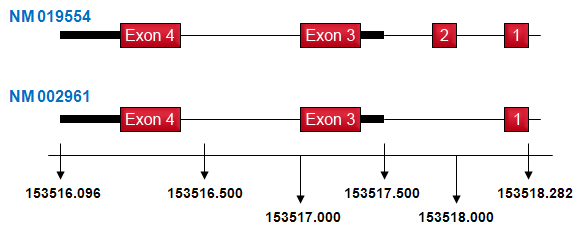
NCBI reference sequence NM_019554 ver 01954.2 564 bp mRNA; NM 002961 ver 002961.2; 512 bp mRNA.
Splice variants have been reported of S100A4. In human osteosarcoma, alternative splicing within the 5-untranslated region (UTR) generates the two variants. Both variants, hu-mts1 and hu-mts1 (var), contain one open reading frame, differ slightly in translational capacity; possess similar stability. The hu-mts1 and hu-mts1 (var) splice variants with exons 1, 2, 3, and 4 and another with exons 1, 3 and 4, may be differentially expressed. The hu-mts1 (var) is expressed in the colon but not in the liver; it was not found in leukocytes, neutrophils, macrophages and lymphocytes. The hu-mts1 variant predominated in human breast carcinoma (SK-BR-3) and lung carcinoma (A549) is predominant (Ambartsumian et al., 1995). The differential association of the variants has been described in gastric cancers, which seems to relate to disease state possibly relates to progression; however the expression status of the variants in the lymph node metastases is not known. A splice transcript with loss of non-coding exon 1a/1b, but exons 2 and 3 present has been described in infiltrating carcinoma of the breast by Albertazzi et al. One would note nonetheless that Alternative Splicing and Transcript Diversity (ASTD) have listed 12 variant transcripts.
Regulation of transcription
Binding sites for several transcription factors have been identified in the promoter of S100A4. SABiosciences ChIP-qPCR Assay database lists 19 p53 binding sites.
Multiple NFAT (nuclear factor of activated T cells) transcription factor consensus binding sites; NF-kappaB related binding site (Tulchinsky et al., 1997). Much evidence is also available regarding activation of NF-kappaB by S100A4. S100A4 can activate NF-kappaB via the classical pathway mediated by MEKK/IKKβ; S100A6 and S100P also are capable of exerting pro-metastatic effects again by activating the NF-kappaB pathway. Experimentally induced expression of S100A4 is inhibited by NF-kappaB inhibitors. Aside from these, several other regulatory pathways may be identified, e.g. the Wnt/β-catenin/TCF, HIF/HER among others, as evidenced by the established phenotypic expression induced by the gene.
S100A4 has been postulated to signal via RAGE (receptor for advanced glycation end products) which is known to activate NF-kappaB.
A composite enhancer consisting of 6 cis-elements has been identified in the first intron of murine S100A4. This interacts with Sp1 and AP-1 family members and CBF (core binding factor alpha) and KRC (zinc finger transcription factor kappa recognition component) transcription factors.
Pseudogene
Proteins

Description
NCBI sequence: NM_002961; NP_002952; NM_019554; NP_062427; UniProtKB/Swiss-Prot: P26447.
Features
EF-hand domains:
EF hand 1: length 36; position 12-47,
EF hand 2: length 36; position 50-84.
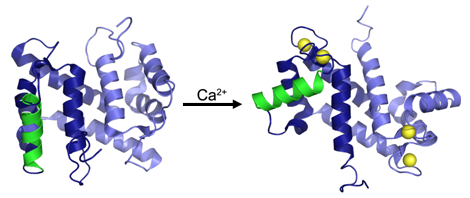
Target protein interaction domains: in the active state S100A4 interacts with many target proteins e.g. p53 family proteins, HDM2, Annexin II, F-actin, tropomyosin, and heavy chain of non-muscle myosin IIA, among others. In a closed conformational state S100A4 is inactive, but the protein assumes an open conformation upon calcium binding. In the altered configuration S100A4 can interact with target proteins. These target proteins interact with specific binding domains of S100A4, which are accessible upon conformational change of the apoprotein upon Ca2+ binding. The Rudland/Barraclough group has shown that specific mutations that inhibit self-association of S100A4 markedly reduce its metastasis promoting effects. The mutations reduce self-association and reduce the affinity of S100A4 to two target proteins viz. p53 and non-muscle myosin heavy chain isoform A. The interaction between S100A4 and target proteins can possibly also be disrupted by the packaging of S100A4 in such a way as to sequester S100A4 dimers.
Inhibition of S100A4 polymerisation by suppressing TG2 (tissue transglutaminase 2) function has resulted in the inhibition of cell migration in vitro. This is inspired by the fact that TG2 is a cross-linking protein. Treatment of cells in vitro with EGF seems to up regulate the expression of EGFR and TG2 accompanied by enhanced cell migration. S100A4 over expressing tumours not infrequently tend to be EGFR postive; so tissue transglutaminase could be promoting EGFR dimerisation and facilitate EGF/EGFR signalling.
Expression
For expression profile: Human Protein Atlas (HPA): CAB002618 and Human Protein Reference Database HPRD.
S100A4 occurs in many forms of human cancer, e.g. breast, colorectal, liver, lung, head and neck, ovarian, endometrial, pancreatic, renal, testicular, and prostate cancers, and melanoma; also in many cell lines of myeloid, lymphoid, lung and brain origin and cell lines derived from many forms of leukaemias. The expression of the gene is regulated by methylation. Over expression correlates with hypomethylation and the frequency of hypomethylation relates to tumour progression, e.g. in ovarian cancers. There is no implication at present that the degree of methylation is related to expression. S100A4 has been implicated in other human diseases, e.g. Crohns disease and rheumatoid arthritis.
Localisation
Intracellular distribution is an important factor in determining genetic activity.
It may be noted here that S100A4 is often expressed in component inflammatory cells of tumour stroma. It has been postulated that interactions between the stroma and tumour cells lead to the expression of the protein and modulate its function in either or both. However, both the postulate and its potential influence in tumour progression are yet to be established.
The pattern of intracellular distribution of many genetic determinants has been found to be highly relevant to invasion and metastasis. Nuclear location of S100A4 was shown some while ago to relate to aggressive tumour behaviour and poor prognosis. Translocation to the nucleus has been associated with EMT induced by TGF-β/Smad signalling. IL-induced translocation seems to require sumoylation of specific lysine residues and in this way conceivably regulating target gene expression. Expression patterns need to be explored in more than one tumour system. This might be crucial in the development of strategies of treatment targeting S100A4, especially with the postulated link of S100A4 expression with chemoresistance.
Function
S100A4 promotes metastatic spread of cancer as demonstrated by gene transfer studies. Its expression has shown clear correlation with tumour spread to lymph nodes and with prognosis.
Cell cycle, cell proliferation, tumour growth and apoptosis.
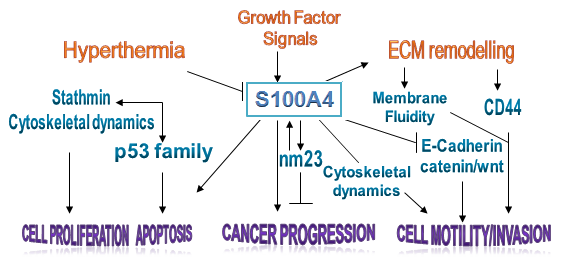
S100A4 binds to and forms complexes with p53 to regulate cell cycle progression. P53 has been confirmed as a target of S100A4, which stabilises p53. There is conclusive evidence that S100A4 binds to C-terminal regulatory region of p53. S100A4 and certain other members of the S100 family bind to TAD transactivation domain (residues 1-57) of p53. They may also affect p53 function by binding to the tetramerization domain of p53 (residues 325-355) and interfering with intracellular translocation and subcellular localisation. This interaction is suggested to be linked with p53 function. Nineteen p53 binding sites have been identified in the promoter of S100A4 (SABiosciences ChIP-qPCR Assay). S100A4 also influences p21waf1 and mdm2, a regulator of p53 function and the apoptosis family bax gene. It binds to N-terminal domain of mdm2. Signalling pathways include P53-Rb/stathmin/p53 down stream effectors, e.g. p21waf, p16 etc. P53/stathmin signalling modulates microtubule dynamics and cell division. Furthermore, p53 and down stream target apoptosis family genes such as BNIP3, caspases; calpain/Fas (?) are postulated as important pathways in S100A4 signalling. Knockdown of S100A4 has been reported to lead to apoptosis. The transcription factor NF-kappaB which involved in anti-apoptosis has been implicated in S100A4 signalling.
S100A4 proliferative signalling seems to involve epidermal growth factor receptors (EGFR). EGFR expression correlates with S100A4 expression. Interactive signalling with HER2 might be postulated with the finding that S100A4 stimulates EGFR/HER2 receptor signalling and on the identification in human S100A4 promoter of an HER2 response element 1099-1487 bp up stream of the transcription start site. The interaction of S100A4 with the TGF-beta system via Smad has also been reported. S100A4 seems able to bind to the N-ter region of Smad3. TGF-beta is an important activator of epithelial mesenchymal transition leading to acquisition of invasive ability. The interaction between S100A4 and Smad thus falls in place with the metastasis-promoting function of the former. Some of these pathways are pictorially represented above (figure 5). S100A4 activates EMT via up regulation of Snail, a negative regulator of E-cadherin. The TGF-β family receptor Activin involvement has been implicated.
Invasion, motility, and intercellular adhesion.
One of the targets of S100A4 involved in cell motility is myosin filaments. Myosin II consists of two heavy chains (MHC) with globular domains which interact with F-actin. The tail domains of heavy chains form a coiled-coil tail that participates in the assembly of myosin filaments. Wrapped round the neck region of each heavy chain are the essential and the regulatory light chains. Phosphorylation of the regulatory light chain and also of MHC plays an important part in the assesmbly of myosin II monomers into filaments. S100A4 inhibits CK2-mediated phosphorylation of MHC, inhibits the assembly of myosin monomers into filaments. The affinity of S100A4 for the myosin-IIA can be reduced by CK2-mediated phosphorylation. S100A4 destabilises MHCIIA filaments phosphorylated by PKC and inhibits the assembly of monomers. PKC and CK2 can phosphorylate distinct serine residues but yet be additive in their effect. The outcome is that S100A4 promotes dissociation of the filaments and prevents self assembly of monomers resulting in enhanced migration. Thus S100A4 seems to provide a mechanistic link between the actomyosin cytoskeletal and migration.
Signalling systems include modulation of cytoskeletal dynamics; cadherin/catenin complex cytoskeletal linkage and significantly a TCF, a component of the canonical Wnt signalling system, binding site has been identified in the S100A4 promoter and S100A4 directly binds heterodimeric beta-catenin/TCF complexes; CD44/cytoskeletal linkage; ECM associated proteolytic enzyme system/ECM remodelling, affects tubulin polymerisation. S100A4 and tumour suppressor nm23 exert opposite effects on tubulin dynamics. Two C-terminal lysine residues are required for enhanced motility and invasion and interaction with target proteins. The connective tissue growth factor (CTGF) has been reported to up regulate S100A4 expression and inhibition of S100A4 blocks CTGF-induced cell motility.
S100A4 seems to function via the MMP/TIMP system in promoting invasion as well as induction of angiogenesis. S100A4 is over expressed in invasive glioma cell lines together with down regulation of TIMP-2, indicating a close linkup of S100A4 with the MMP system in the promotion of invasion.
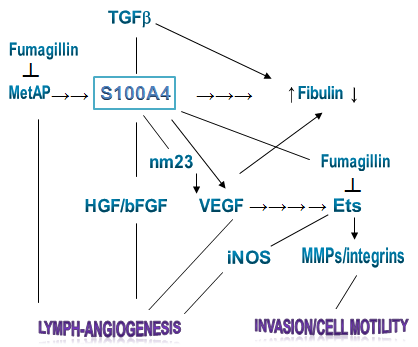
Angiogenesis signalling occurs via activation of MMP/TIMP; activation of angiogenic factors VEGF/endothelial cell proliferation; MetAP2/p53-mediated inhibition of endothelial cell proliferation. S100A4 stimulates angiogenic signalling in breast cancer. An indirect link is suggested by the inhibition of S100A4 by Interferon-gamma which might inhibit angiogenesis by down regulating VEGF expression. Hypoxia is a major regulator of angiogenesis. HIF-1α (hypoxia-inducible factor-1α) is a transcription regulator in hypoxia. It can activate VEGF to induce angiogenesis and TGF-α and promotes cell survival. Exposure to hypoxia has been correlated with reduced methylation of the hypoxia response element in S100A4s promoter region and enhanced HIF binding to the promoter and increased transcription of the gene together with increased cell proliferation and invasion. Given that HIF also promotes VEGF expression one can see a potential two pronged approach to control tumour growth with HIF inhibition. Some clinical studies are underway to study the effects of Sorafenib-mediated inhibition of HIF-1α and VEGF. In laboratory studies Sorafenib has been found to reduce tumour growth and tumour associated microvessel density.
Osteopontin was identified as a metastasis-associated protein some time ago. Many strands of evidence suggest that osteopontin is an intermediary in S100A4 signalling pathway. In breast cancer expression of osteopontin in the background of S100A4 has generally correlated with poor patient survival.
Osteopontin is associated with several activated NF-kappaB pathways. S100A4 induces the expression and secretion of osteopontin in some osteosarcoma cell lines in an NF-kappaB-dependent fashion. Inhibition of osteopontin inhibits tumour development and angiogenesis; inhibition of both might result in synergistic suppression of tumour progression.
Shown below are the potential pathways of S100A4 signalling in cell motility/invasion and angiogenesis, emphasising the possibility that S100A4 seems able to influence many significant systems leading to angiogenesis.
Homology
Bos taurus (Bovine) (Gene ID: 282343).
Canis lupus familiaris (Gene ID: 403787; NCBI reference sequence: NP_001003161.1; protein: NP_777020.1).
Sequence homology 93% to murine S100A4 (Entrez Gene ID 20198; NP_035441).
Sequence homology 91% to rat protein (Entrez Gene ID 24615; NP_036750).
Mutations
Note
Chromosomal rearrangements
The locus 1q21 is a hotspot for chromosomal rearrangements, microdeletions and duplications; significance uncertain and there are no clear implications for metastasis. No translocations leading to hybrid S100A4 have been recorded.
There are 11 common and 1 rare fragile sites on chromosome 1. The common FRA1F occurs in 1q21. Chromosome 1 is prone to sister chromatid recombination (SCR) and >70% SCRs occur at the fragile sites or in the same band as the fragile sites, but no link with S100A4 established.
Germinal
Somatic
No mutations have been found coding regions in human, canine and feline S100A4. Mutating phenylalanine 72 to alanine reduces functional effectiveness. Toombak (tobacco rich in tobacco-specific nitrosamine) dipping (placing between the lower lip and gums) has been indirectly linked with S100A4 mutations in oral squamous cell carcinoma, but mutations have been described also in non-dippers. The carcinoma from dippers had 4 mutations (one transition, 3 transversions) and non-snuff-dippers showed 3 mutations each (one transition, 2 transversions). The suggestion is that S100A4 mutations could be complementing the effects of more frequent mutations of p53 and p21waf1.
Implicated in
Also indicative of poor prognosis is high S100A4 expression coupled with reduced E-cadherin expression in pancreatic, oral squamous cell carcinoma and in melanoma. S100A4 expression is inversely related with expression of metastasis suppressor nm23 and with prognosis of breast cancer.
Efforts are being made to inhibit Wnt/β-catenin mediated targeting of S100A4 using sulindac.
Perineural invasion has been associated with enhanced S100A4 expression. Worthy of note is that perineural invasion is a feature linked with tumour spread and poor prognosis and its correlation with S100A4 might have implications for disease management.
S100A4 may be involved in disorders of these systems, but data currently available are somewhat fragmentary. Both S100A4 mRNA and protein are said to be up regulated in the hypertrophic hearts. Up regulation is associated with hypertrophy induced by aortic stenosis or myocardial infarction. In vitro, recombinant S100A4 protein increases the number of viable cardiac myocytes. The ERK1/ERK2 signalling system has been found to be activated in these processes.
Two putative neurotropic motifs have been identified in S100A4 and neuroprotective function has been attributed to the protein.
S100A4 might be associated with PAH (pulmonary arterial hypertension) and putatively linked with 17β-oestradiol modulated S100A4/RAGE signalling. A clinical trial is underway at present to study S100A4 as a marker in PAH treatment (NCT01305252).
Breakpoints
Note
Article Bibliography
| Pubmed ID | Last Year | Title | Authors |
|---|---|---|---|
| 9570150 | 1998 | Expression of metastasis-associated genes h-mts1 (S100A4) and nm23 in carcinoma of breast is related to disease progression. | Albertazzi E et al |
| 11498791 | 2001 | The metastasis-associated Mts1(S100A4) protein could act as an angiogenic factor. | Ambartsumian N et al |
| 15133476 | 2004 | Expression of S100A4 combined with reduced E-cadherin expression predicts patient outcome in malignant melanoma. | Andersen K et al |
| 19403524 | 2009 | Tissue transglutaminase is an essential participant in the epidermal growth factor-stimulated signaling pathway leading to cancer cell migration and invasion. | Antonyak MA et al |
| 20957651 | 2011 | Osteopontin--an important downstream effector of S100A4-mediated invasion and metastasis. | Berge G et al |
| 17143014 | 2007 | Interferon-gamma-induced suppression of S100A4 transcription is mediated by the class II transactivator. | Boye K et al |
| 18548584 | 2008 | Activation of NF-kappaB by extracellular S100A4: analysis of signal transduction mechanisms and identification of target genes. | Boye K et al |
| 22782346 | 2012 | EMMPRIN is associated with S100A4 and predicts patient outcome in colorectal cancer. | Boye K et al |
| 21889495 | 2011 | The MUC4 membrane-bound mucin regulates esophageal cancer cell proliferation and migration properties: Implication for S100A4 protein. | Bruyère E et al |
| 7919958 | 1994 | Metastasis-associated mts1 gene expression is down-regulated by heat shock in variant cell lines of the B16 murine melanoma. | Cajone F et al |
| 11089885 | 1999 | Stathmin is involved in S100A4-mediated regulation of cell cycle progression. | Cajone F et al |
| 3755724 | 1986 | Molecular cloning of the cDNA for a growth factor-inducible gene with strong homology to S-100, a calcium-binding protein. | Calabretta B et al |
| 21712367 | 2011 | The metastasis promoting protein S100A4 is increased in idiopathic inflammatory myopathies. | Cerezo LA et al |
| 22408350 | 2012 | S100A4 silencing blocks invasive ability of esophageal squamous cell carcinoma cells. | Chen D et al |
| 11527429 | 2001 | Binding to intracellular targets of the metastasis-inducing protein, S100A4 (p9Ka). | Chen H et al |
| 22964635 | 2013 | Coupling S100A4 to Rhotekin alters Rho signaling output in breast cancer cells. | Chen M et al |
| 19011242 | 2009 | Integrin alpha6beta4 controls the expression of genes associated with cell motility, invasion, and metastasis, including S100A4/metastasin. | Chen M et al |
| 17550972 | 2007 | CTGF enhances the motility of breast cancer cells via an integrin-alphavbeta3-ERK1/2-dependent S100A4-upregulated pathway. | Chen PS et al |
| 16097057 | 2005 | Overexpression of S100A4 is closely associated with progression of colorectal cancer. | Cho YG et al |
| 11504871 | 2001 | Characterization of Sp1, AP-1, CBF and KRC binding sites and minisatellite DNA as functional elements of the metastasis-associated mts1/S100A4 gene intronic enhancer. | Cohn MA et al |
| 20489045 | 2010 | S100A4 expression is increased in stricture fibroblasts from patients with fibrostenosing Crohn's disease and promotes intestinal fibroblast migration. | Cunningham MF et al |
| 8455951 | 1993 | Induction of the metastatic phenotype by transfection of a benign rat mammary epithelial cell line with the gene for p9Ka, a rat calcium-binding protein, but not with the oncogene EJ-ras-1. | Davies BR et al |
| 7546288 | 1995 | Expression of the rat, S-100-related, calcium-binding protein gene, p9Ka, in transgenic mice demonstrates different patterns of expression between these two species. | Davies M et al |
| 17567780 | 2007 | Fragile sites and human disease. | Debacker K et al |
| 22185646 | 2011 | Development of pulmonary arterial hypertension in mice over-expressing S100A4/Mts1 is specific to females. | Dempsie Y et al |
| 23149742 | 2012 | The metastasis-promoting S100A4 protein confers neuroprotection in brain injury. | Dmytriyeva O et al |
| 11390274 | 2001 | S100: a multigenic family of calcium-modulated proteins of the EF-hand type with intracellular and extracellular functional roles. | Donato R et al |
| 22399300 | 2012 | S100P dissociates myosin IIA filaments and focal adhesion sites to reduce cell adhesion and enhance cell migration. | Du M et al |
| 15865432 | 2005 | Regulation of myosin-IIA assembly and Mts1 binding by heavy chain phosphorylation. | Dulyaninova NG et al |
| 19055112 | 2008 | Serum metastasin mRNA is an important survival predictor in breast cancer. | El-Abd E et al |
| 15781852 | 2005 | Proteins of the S100 family regulate the oligomerization of p53 tumor suppressor. | Fernandez-Fernandez MR et al |
| 16243835 | 2006 | S100A4, a mediator of metastasis. | Garrett SC et al |
| 18781956 | 2008 | Metastasis-inducing S100A4 protein: implication in non-malignant human pathologies. | Grigorian M et al |
| 20507646 | 2010 | Signal transduction mechanisms involved in S100A4-induced activation of the transcription factor NF-kappaB. | Grotterød I et al |
| 18554396 | 2008 | The metastasis-associated protein S100A4 exists in several charged variants suggesting the presence of posttranslational modifications. | Haugen MH et al |
| 16615153 | 2006 | Metastasis-associated protein S100A4--a potential prognostic marker for colorectal cancer. | Hemandas AK et al |
| 12517790 | 2003 | ERBB2 up-regulates S100A4 and several other prometastatic genes in medulloblastoma. | Hernan R et al |
| 23135911 | 2013 | S100A9 is a novel ligand of EMMPRIN that promotes melanoma metastasis. | Hibino T et al |
| 22287060 | 2012 | Hypoxia upregulates ovarian cancer invasiveness via the binding of HIF-1α to a hypoxia-induced, methylation-free hypoxia response element of S100A4 gene. | Horiuchi A et al |
| 19945782 | 2010 | Short hairpin RNA-mediated inhibition of S100A4 promotes apoptosis and suppresses proliferation of BGC823 gastric cancer cells in vitro and in vivo. | Hua J et al |
| 12168821 | 2002 | Mutations of the cell cycle arrest gene p21WAF1, but not the metastasis-inducing gene S100A4, are frequent in oral squamous cell carcinomas from Sudanese toombak dippers and non-snuff-dippers from the Sudan, Scandinavia, USA and UK. | Ibrahim SO et al |
| 19653048 | 2009 | S100A4 mRNA is a diagnostic and prognostic marker in pancreatic carcinoma. | Ikenaga N et al |
| 16077966 | 2005 | S100A4 expression with reduced E-cadherin expression predicts distant metastasis of human malignant melanoma cell lines in the NOD/SCID/gammaCnull (NOG) mouse model. | Ikoma N et al |
| 18784356 | 2008 | The basic C-terminal amino acids of calcium-binding protein S100A4 promote metastasis. | Ismail TM et al |
| 19917604 | 2010 | Self-association of calcium-binding protein S100A4 and metastasis. | Ismail TM et al |
| 3628004 | 1987 | A growth-related mRNA in cultured mouse cells encodes a placental calcium binding protein. | Jackson-Grusby LL et al |
| 22674610 | 2013 | Activation of Smad-mediated TGF-β signaling triggers epithelial-mesenchymal transitions in murine cloned corneal progenitor cells. | Kawakita T et al |
| 16984379 | 2006 | Nuclear expression of S100A4 is associated with aggressive behavior of epithelial ovarian carcinoma: an important autocrine/paracrine factor in tumor progression. | Kikuchi N et al |
| 19513503 | 2009 | Enhanced S100A4 protein expression is clinicopathologically significant to metastatic potential and p53 dysfunction in colorectal cancer. | Kim JH et al |
| 19740107 | 2009 | Epidermal growth factor receptor ligands as new extracellular targets for the metastasis-promoting S100A4 protein. | Klingelhöfer J et al |
| 11108967 | 2000 | Metastasis-associated protein Mts1 (S100A4) inhibits CK2-mediated phosphorylation and self-assembly of the heavy chain of nonmuscle myosin. | Kriajevska M et al |
| 8390799 | 1993 | Metastasis associated MTS1 and NM23 genes affect tubulin polymerisation in B16 melanomas: a possible mechanism of their regulation of metastatic behaviour of tumours. | Lakshmi MS et al |
| 15452371 | 2004 | Expression of S100A4 and Met: potential predictors for metastasis and survival in early-stage breast cancer. | Lee WY et al |
| 23024279 | 2012 | The unique cytoplasmic domain of human FcγRIIIA regulates receptor-mediated function. | Li X et al |
| 19043527 | 2008 | Frequent S100A4 Expression with Unique Splicing Pattern in Gastric Cancers: A Hypomethylation Event Paralleled with E-cadherin Reduction and Wnt Activation. | Li Y et al |
| 20519440 | 2010 | S100A4 regulates macrophage chemotaxis. | Li ZH et al |
| 14640694 | 2003 | Mts1 regulates the assembly of nonmuscle myosin-IIA. | Li ZH et al |
| 22929805 | 2012 | Sorafenib inhibits hypoxia-inducible factor-1α synthesis: implications for antiangiogenic activity in hepatocellular carcinoma. | Liu LP et al |
| 9696040 | 1998 | Human S100A4 (p9Ka) induces the metastatic phenotype upon benign tumour cells. | Lloyd BH et al |
| 22195040 | 2011 | Niclosamide suppresses cancer cell growth by inducing Wnt co-receptor LRP6 degradation and inhibiting the Wnt/β-catenin pathway. | Lu W et al |
| 22174302 | 2011 | Multiple distinct NK-cell synapses. | Mace EM et al |
| 19194111 | 2009 | Different expression and clinical role of S100A4 in serous ovarian carcinoma at different anatomic sites. | Maelandsmo GM et al |
| 17638890 | 2007 | S100A4 contributes to the suppression of BNIP3 expression, chemoresistance, and inhibition of apoptosis in pancreatic cancer. | Mahon PC et al |
| 20421509 | 2010 | Phenothiazines inhibit S100A4 function by inducing protein oligomerization. | Malashkevich VN et al |
| 8938441 | 1996 | Genetic analysis of the epidermal differentiation complex (EDC) on human chromosome 1q21: chromosomal orientation, new markers, and a 6-Mb YAC contig. | Marenholz I et al |
| 19614676 | 2009 | Transglutaminase down-regulates the dimerization of epidermal growth factor receptor in rat perivenous and periportal hepatocytes. | Maruko A et al |
| 17688917 | 2007 | Expression of S100A2 and S100A4 predicts for disease progression and patient survival in bladder cancer. | Matsumoto K et al |
| 20070253 | 2010 | Functional interaction between Smad3 and S100A4 (metastatin-1) for TGF-beta-mediated cancer cell invasiveness. | Matsuura I et al |
| 10803111 | 2000 | Absence of S100A4 (mts1) gene mutations in various canine and feline tumours. Detection of a polymorphism in feline S100A4 (mts1). | Mayr B et al |
| 11786392 | 2002 | Protein S100A4: too long overlooked by pathologists? | Mazzucchelli L et al |
| 20515499 | 2010 | Overexpression of S100A4 in human cancer cell lines resistant to methotrexate. | Mencía N et al |
| 7898625 | 1994 | Overexpression of the 18A2/mts1 gene and down-regulation of the TIMP-2 gene in invasive human glioma cell lines in vitro. | Merzak A et al |
| 20685652 | 2010 | Sumoylation and nuclear translocation of S100A4 regulate IL-1beta-mediated production of matrix metalloproteinase-13. | Miranda KJ et al |
| 8618063 | 1996 | Genes encoding structural proteins of epidermal cornification and S100 calcium-binding proteins form a gene complex ("epidermal differentiation complex") on human chromosome 1q21. | Mischke D et al |
| 16297707 | 2005 | S100A4 regulates E-cadherin expression in oral squamous cell carcinoma. | Moriyama-Kita M et al |
| 11251165 | 2001 | Increased expression of S100A4 and its prognostic significance in esophageal squamous cell carcinoma. | Ninomiya I et al |
| 21627981 | 2011 | Potential role for S100A4 in the disruption of the blood-brain barrier in collagen-induced arthritic mice, an animal model of rheumatoid arthritis. | Nishioku T et al |
| 23159635 | 2013 | Activin type IB receptor signaling in prostate cancer cells promotes lymph node metastasis in a xenograft model. | Nomura M et al |
| 9425320 | 1997 | The role of osteopontin in tumorigenesis and metastasis. | Oates AJ et al |
| 16865243 | 2006 | Increased S100A4 expression combined with decreased E-cadherin expression predicts a poor outcome of patients with pancreatic cancer. | Oida Y et al |
| 21531761 | 2011 | Antihelminth compound niclosamide downregulates Wnt signaling and elicits antitumor responses in tumors with activating APC mutations. | Osada T et al |
| 18056757 | 2008 | The metastasis associated protein S100A4: a potential novel link to inflammation and consequent aggressive behaviour of rheumatoid arthritis synovial fibroblasts. | Oslejsková L et al |
| 7945934 | 1994 | Induction of 18A2/mts1 gene expression and its effects on metastasis and cell cycle control. | Parker C et al |
| 18772396 | 2008 | An integrated genomic analysis of human glioblastoma multiforme. | Parsons DW et al |
| 18783790 | 2008 | Crystal structure of metastasis-associated protein S100A4 in the active calcium-bound form. | Pathuri P et al |
| 17531210 | 2007 | S100 proteins: a missing piece in the puzzle of heart failure? | Pleger ST et al |
| 17114345 | 2006 | MUC1 oncoprotein functions in activation of fibroblast growth factor receptor signaling. | Ren J et al |
| 10749128 | 2000 | Prognostic significance of the metastasis-inducing protein S100A4 (p9Ka) in human breast cancer. | Rudland PS et al |
| 21685359 | 2011 | Novel effect of antihelminthic Niclosamide on S100A4-mediated metastatic progression in colon cancer. | Sack U et al |
| 7759097 | 1995 | Isolation of a YAC clone covering a cluster of nine S100 genes on human chromosome 1q21: rationale for a new nomenclature of the S100 calcium-binding protein family. | Schäfer BW et al |
| 23315794 | 2013 | Proteome analysis of distinct developmental stages of human natural killer (NK) cells. | Scheiter M et al |
| 15047714 | 2004 | Functional significance of metastasis-inducing S100A4(Mts1) in tumor-stroma interplay. | Schmidt-Hansen B et al |
| 18322670 | 2008 | S100A4: a common mediator of epithelial-mesenchymal transition, fibrosis and regeneration in diseases? | Schneider M et al |
| 16959974 | 2006 | The consensus coding sequences of human breast and colorectal cancers. | Sjöblom T et al |
| 21403839 | 2011 | Intervening in β-catenin signaling by sulindac inhibits S100A4-dependent colon cancer metastasis. | Stein U et al |
| 8120097 | 1994 | Binding of pEL98 protein, an S100-related calcium-binding protein, to nonmuscle tropomyosin. | Takenaga K et al |
| 23352991 | 2013 | Metastasis-associated protein, S100A4 mediates cardiac fibrosis potentially through the modulation of p53 in cardiac fibroblasts. | Tamaki Y et al |
| 23851436 | 2013 | The expression of S100A4 in human pancreatic cancer is associated with invasion. | Tsukamoto N et al |
| 19596927 | 2009 | Significance of S100A4 as a prognostic marker of lung squamous cell carcinoma. | Tsuna M et al |
| 9030539 | 1997 | A kappaB-related binding site is an integral part of the mts1 gene composite enhancer element located in the first intron of the gene. | Tulchinsky E et al |
| 15576568 | 2005 | Electric charge balance mechanism of extended soluble proteins. | Uchikoga N et al |
| 12379109 | 2002 | Solution structure of human Mts1 (S100A4) as determined by NMR spectroscopy. | Vallely KM et al |
| 15598812 | 2005 | Myeloid-related proteins 8 and 14 induce a specific inflammatory response in human microvascular endothelial cells. | Viemann D et al |
| 23503627 | 2013 | Xanthohumol attenuates tumour cell-mediated breaching of the lymphendothelial barrier and prevents intravasation and metastasis. | Viola K et al |
| 19956863 | 2010 | Expression status of S100A14 and S100A4 correlates with metastatic potential and clinical outcome in colorectal cancer after surgery. | Wang HY et al |
| 19820999 | 2010 | High-level expression of S100A4 correlates with lymph node metastasis and poor prognosis in patients with gastric cancer. | Wang YY et al |
| 23469180 | 2013 | The role of TG2 in regulating S100A4-mediated mammary tumour cell migration. | Wang Z et al |
| 8504859 | 1993 | Calvasculin, as a factor affecting the microfilament assemblies in rat fibroblasts transfected by src gene. | Watanabe Y et al |
| 19248116 | 2009 | Interleukin-7 stimulates secretion of S100A4 by activating the JAK/STAT signaling pathway in human articular chondrocytes. | Yammani RR et al |
| 23383075 | 2013 | Elevation of S100A4 expression in buccal mucosal fibroblasts by arecoline: involvement in the pathogenesis of oral submucous fibrosis. | Yu CC et al |
| 23770238 | 2013 | A mechanism for the upregulation of EGF receptor levels in glioblastomas. | Zhang J et al |
| 15856021 | 2005 | The C-terminal region of S100A4 is important for its metastasis-inducing properties. | Zhang S et al |
| 23483190 | 2013 | Metastasin leads to poor prognosis of hepatocellular carcinoma through partly inducing EMT. | Zheng X et al |
| 22653497 | 2012 | Phosphosulindac (OXT-328) selectively targets breast cancer stem cells in vitro and in human breast cancer xenografts. | Zhu C et al |
| 19641515 | 2010 | Significance of the S100A4 protein in psoriasis. | Zibert JR et al |
| 16489073 | 2006 | Association of S100A4 and osteopontin with specific prognostic factors and survival of patients with minimally invasive breast cancer. | de Silva Rudland S et al |
| 20591429 | 2010 | S100 proteins interact with the N-terminal domain of MDM2. | van Dieck J et al |
Other Information
Locus ID:
NCBI: 6275
MIM: 114210
HGNC: 10494
Ensembl: ENSG00000196154
Variants:
dbSNP: 6275
ClinVar: 6275
TCGA: ENSG00000196154
COSMIC: S100A4
RNA/Proteins
| Gene ID | Transcript ID | Uniprot |
|---|---|---|
| ENSG00000196154 | ENST00000354332 | P26447 |
| ENSG00000196154 | ENST00000368714 | P26447 |
| ENSG00000196154 | ENST00000368715 | P26447 |
| ENSG00000196154 | ENST00000368716 | P26447 |
Expression (GTEx)
Protein levels (Protein atlas)
References
| Pubmed ID | Year | Title | Citations |
|---|---|---|---|
| 38164183 | 2024 | S100A4 Is a Key Facilitator of Thoracic Aortic Dissection. | 0 |
| 38280333 | 2024 | S100A4 reprofiles lipid metabolism in mast cells via RAGE and PPAR-γ signaling pathway. | 0 |
| 38360265 | 2024 | S100A4 modulates cell proliferation, apoptosis and fibrosis in the hyperplastic prostate. | 0 |
| 38609357 | 2024 | ANXA9 facilitates S100A4 and promotes breast cancer progression through modulating STAT3 pathway. | 0 |
| 38678322 | 2024 | [SRSF2 promotes glioblastoma cell proliferation by inducing alternative splicing of FSP1 and inhibiting ferroptosis]. | 0 |
| 38164183 | 2024 | S100A4 Is a Key Facilitator of Thoracic Aortic Dissection. | 0 |
| 38280333 | 2024 | S100A4 reprofiles lipid metabolism in mast cells via RAGE and PPAR-γ signaling pathway. | 0 |
| 38360265 | 2024 | S100A4 modulates cell proliferation, apoptosis and fibrosis in the hyperplastic prostate. | 0 |
| 38609357 | 2024 | ANXA9 facilitates S100A4 and promotes breast cancer progression through modulating STAT3 pathway. | 0 |
| 38678322 | 2024 | [SRSF2 promotes glioblastoma cell proliferation by inducing alternative splicing of FSP1 and inhibiting ferroptosis]. | 0 |
| 36428148 | 2023 | The clinical and biological characterization of acute myeloid leukemia patients with S100A4 overexpression. | 1 |
| 36537055 | 2023 | Usefulness of serum S100A4 and positron-emission tomography on lung cancer accompanied by interstitial pneumonia. | 1 |
| 36995520 | 2023 | Overexpression of ferroptosis-related genes FSP1 and CISD1 is related to prognosis and tumor immune infiltration in gastric cancer. | 3 |
| 37026957 | 2023 | The function of S100A4 in pulmonary disease: A review. | 1 |
| 37090702 | 2023 | Contribution of S100A4-expressing fibroblasts to anti-SSA/Ro-associated atrioventricular nodal calcification and soluble S100A4 as a biomarker of clinical severity. | 0 |
Citation
Gajanan V Sherbet
S100A4 (S100 Calcium Binding Protein A4)
Atlas Genet Cytogenet Oncol Haematol. 2013-11-01
Online version: http://atlasgeneticsoncology.org/gene/42192/s100a4
Historical Card
2011-03-01 S100A4 (S100 Calcium Binding Protein A4) by Gajanan V Sherbet Affiliation
