Mosaic variegated aneuploidy syndrome
2011-12-01 Sandra Hanks , Katie Snape , Nazneen Rahman AffiliationInstitute of Cancer Research, Division of Genetics, Epidemiology, Brookes Lawley Building, 15 Cotswold Road, Sutton, Surrey SM2 5NG, UK
Identity
Name
Mosaic variegated aneuploidy syndrome
Alias
MVA
Inheritance
Autosomal recessive; rare with unknown incidence.
Omim
257300 , 614114
Mesh
C536987
Orphanet
1052 Mosaic variegated aneuploidy syndrome
Umls
C1850343
Clinics
Phenotype and clinics
A broad spectrum of clinical features has been observed in individuals with MVA syndrome. Microcephaly, pre- and\/or postnatal growth retardation, variable developmental delay and dysmorphic facial features are frequently described. Seizures and other neurological abnormalities, eye anomalies including cataracts and strabismus, skeletal\/hand and foot abnormalities including clinodactyly and dermatological anomalies such as café au lait patches and haemangioma have also been described. Less common abnormalities include gastrointestinal defects, renal anomalies and cardiac defects. The clinical spectrum ranges from a severe and even lethal course to a mild phenotype without microcephaly or mental retardation.
Neoplastic risk
The risk of malignancy in MVA is high with Wilms tumour, rhabdomyosarcoma, leukaemia and granulosa cell tumour of the ovary reported in several cases. Myelodysplastic syndrome has also been observed.
Treatment
Clinical management of patients with MVA syndrome is based upon the affected individuals specific needs and may include surgical treatments and intervention and\/or special education if developmental delay is detected. Standard treatment for specific neurological, ophthalmological, cardiac or renal anomalies may also be indicated. Due to the increased cancer risk, cases with a diagnosis of MVA syndrome should be offered Wilms tumour surveillance. Current UK recommendations include renal ultrasonography every three to four months until five years. There is no particular screening that is helpful for the other tumours known to be associated with MVA syndrome, but any suspicious clinical symptoms should be investigated with minimal delay.
Prognosis
The prognosis for an individual with MVA syndrome is based on the malformations present in the individual. There is early mortality in a significant proportion of cases due to failure to thrive and\/or complications of congenital abnormalities, epilepsy, infections or malignancy.
Cytogenetics
Inborn condition
MVA is characterised by mosaic aneuploidies, predominantly trisomies and monosomies, involving multiple different chromosomes and tissues (examples are shown in figure 1). The proportion of aneuploid cells varies but is usually >10% and is substantially greater than in normal individuals. Some patients with MVA also demonstrate premature chromatid separation in colchicine-treated blood lymphocyte and fibroblast cultures.
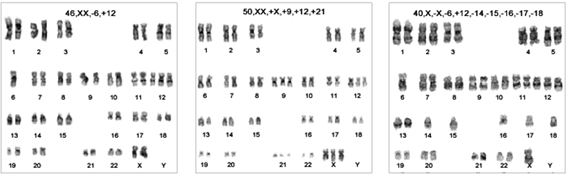
Figure 1. Examples of karyotypic abnormalities identified in individuals with MVA.
Cancer cytog
Gain of chromosomes 8 and 13 and loss of chromosomes 9 and 14 have been observed in the embryonal rhabdomyosarcoma from an individual with MVA. Gain of chromosome 8 has also been identified in the embryonal rhabdomyosarcoma from a further patient with MVA syndrome.
Other Findings
Note
Cells from BUB1B mutation-positive cases demonstrate an abnormal response to nocodazole-induced mitotic checkpoint activation.
Genes involved and Proteins
Alias
BUBR1Bub1AMAD3LSSK1
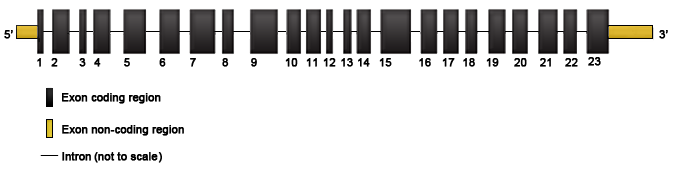
Figure 2. Schematic representation of BUB1B demonstrating the relative exon sizes.
Description
BUB1B spans 60 kb and is composed of 23 exons.
Note
Protein name: BUBR1

Figure 3. Schematic representation of BUBR1 demonstrating significant functional or structural domains.
Description
1050 amino acids, 120 kDa.
Expression
Ubiquituously expressed. Preferentially expressed in tissues with a high mitotic index.
Localisation
Function
A central component of the mitotic spindle checkpoint that directly inhibits the anaphase-promoting complex\/cyclosome until sister chromatids are correctly attached to the spindle, thus ensuring proper chromosome segregation during cell division. Also binds the motor protein CENPE, an interaction required for regulation of kinetochore-microtubule interactions and checkpoint signalling.
Homology
BUBR1 is the mammalian homologue of yeast Mad3, a significant difference being that BUBR1 possesses a kinase domain which is absent in Mad3.
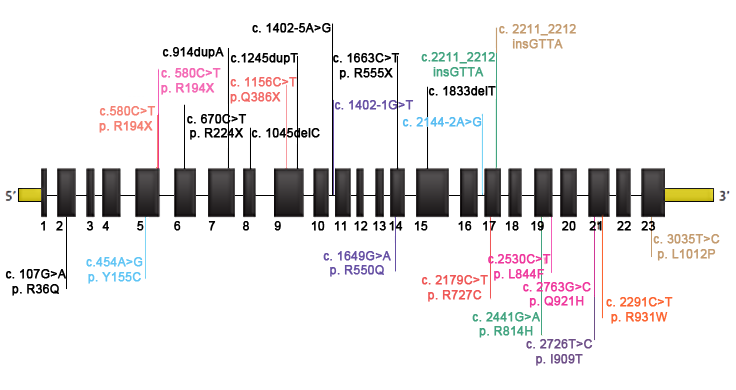
Figure 4. Schematic representation of BUB1B demonstrating the relative exon sizes and positions of known mutations. Truncating mutations are depicted above the figure, with missense mutations below. Biallelic mutations are represented by coloured lines, with mutations in the same individual in matching colours. Monoallelic mutations are represented by black lines and font.
Germinal
Biallelic germline mutations have been found in eight MVA pedigrees (figure 4). Each family carries one missense mutation and one mutation that results in premature protein truncation or an absent transcript. Monoalleic truncating mutations have also been reported in several cases.
Alias
PIG8TSP57TranslokinKIAA0092
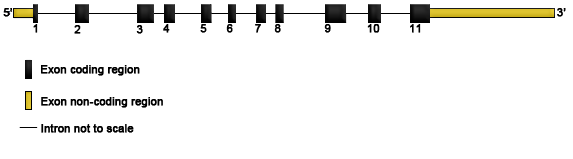
Figure 5. Schematic representation of CEP57 demonstrating the relative exon sizes.
Description
CEP57 spans over 42 kb and is composed of 11 exons.
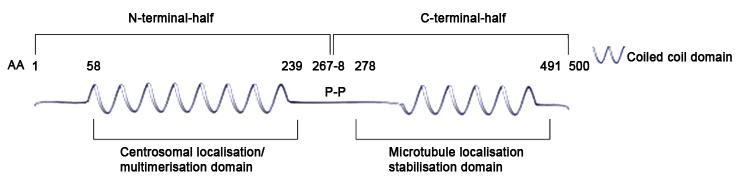
Figure 6. Schematic representation of CEP57 demonstrating significant functional or structural domains.
Description
500 amino acids, 57 kDa.
Expression
Ubiquituously expressed.
Localisation
Nucleus, cytoplasm, cytoskeleton, centrosome.
Function
Centrosomal protein required for microtubule attachment to centrosomes. Also involved in intracellular bidirectional trafficking of factors such as FGF2 along microtubules.
Homology
The CEP57 gene is conserved in chimpanzee, dog, cow, mouse, rat, chicken, and zebrafish.

Figure 7. Schematic representation of CEP57 demonstrating the relative exon sizes and positions of known mutations. Biallelic mutations are represented by coloured lines, with mutations in the same individual in matching colours.
Germinal
Biallelic, loss-of-function mutations have been found in three MVA pedigrees (figure 7).
Article Bibliography
| Pubmed ID | Last Year | Title | Authors |
|---|
External Links
Citation
Sandra Hanks ; Katie Snape ; Nazneen Rahman
Mosaic variegated aneuploidy syndrome
Atlas Genet Cytogenet Oncol Haematol. 2011-12-01
Online version: http://atlasgeneticsoncology.org/cancer-prone-disease/10167/mosaic-variegated-aneuploidy-syndrome
