Kidney: Metanephric adenoma
2012-09-01 Chin-Chen Pan Affiliation1.Department of Pathology, Taipei Veterans General Hospital, Taipei, Taiwan
2.Department of Pathology, Brigham and Womens Hospital, Boston, MA. [email protected]
Summary
Note
A benign renal epithelial tumor resembling differentiation toward early embryonic metanephric tubules.
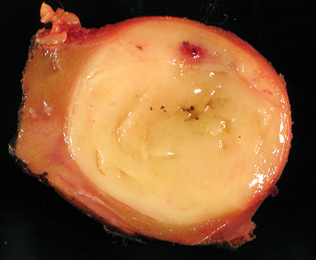
Figure 1A Metanephric adenomas are typical, small, well circumscribed with a fleshy tan cut surface (Kelsey McIntyre and Michelle S. Hirsch).
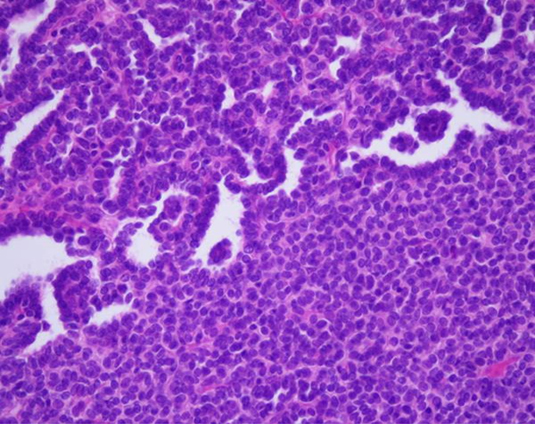
Figure 1B Histologically, the tumor cells are small, monomorphic and cuboidal. Architecturally, the tumors can demonstrate tubular (predominant), papillary and glomeruloid growth patterns (courtesy Chin-Chen Pan).
Abstract
Review on Kidney metanephric adenoma a, with data on clinics, and the genes involved.
Classification
Note
Metanephric adenoma belongs to the category of Metanephric tumor in the WHO histological classification of tumors of the kidney.
Clinics and Pathology
Etiology
Although previously suggested to be derived from persistent blastema, metanephric adenoma is currently thought to develop from maturation of nephroblastoma.
Epidemiology
Metanephric adenomas are rare (
Clinics
Mostly metanephric adenomas are incidentally discovered. Some patients present with hematuria and abdominal or flank pain.
Pathology
Grossly, metanephric adenomas demonstrate a tan to fleshy white homogeneous cut surface (Fig. 1A) (Grignon et al., 2016). Most tumors are well-demarcated but lack a true capsule and are typically unilateral. Microscopically, the tumor is highly cellular and chiefly composed of tightly packed primitive tubules; papillary or glomeruloid structures may also be seen. The individual tumor cells are small, bland and cuboidal with scant cytoplasm, and round-to-oval nuclei with smooth chromatin, and inconspicuous nucleoli (Fig. 1B). Stromal hyalinization, dystrophic calcification and psammoma bodies are occasionally seen. Metanephric adenomas may resemble nephroblastoma or papillary renal cell carcinoma microscopically. Mitotic figures are rare or absent; necrosis is not seen. Tumor cells are immunoreactive for WT1, PAX8 and BRAF, and are typically negative for CK7 and AMACR.
Figure 1B Histologically, the tumor cells are small, monomorphic and cuboidal. Architecturally, the tumors can demonstrate tubular (predominant), papillary and glomeruloid growth patterns (courtesy Chin-Chen Pan).
Treatment
Surgical excision.
Prognosis
The vast majority of metanephric adenomas behave in a benign fashion. Cases of regional lymph node metastasis and sarcomatoid changes have been individually reported.
Cytogenetics
Note
No consistent cytogenetic abnormalities have been identified in metanephric adenoma. The gains of chromosomes 7 and 17 noted in papillary renal cell carcinoma, as well as the chromosome gains of 1q, 7q, and 12, and losses of 11p and 16q commonly seen in Wilms tumor have not been detected in metanephric adenoma.
Genes Involved and Proteins
Gene name
BRAF (v-raf murine sarcoma viral oncogene homolog B1)
Location
7q34
Note
BRAF V600E mutations are found in approximately 90% of metanephric adenomas.
Article Bibliography
| Pubmed ID | Last Year | Title | Authors |
|---|---|---|---|
| 14559991 | 2003 | Metanephric adenoma lacks the gains of chromosomes 7 and 17 and loss of Y that are typical of papillary renal cell carcinoma and papillary adenoma. | Brunelli M et al |
| 17098885 | 2007 | Metanephric adenoma of the kidney: a clinicopathological and molecular study of two cases. | Burger M et al |
| 22727996 | 2012 | BRAF mutations in metanephric adenoma of the kidney. | Choueiri TK et al |
| 8685236 | 1996 | Metanephric adenoma: histology, immunophenotype, cytogenetics, ultrastructure. | Gatalica Z et al |
| 9353093 | 1997 | Cytologic and cytogenetic analysis of metanephric adenoma of the kidney: a report of two cases. | Granter SR et al |
| 7755148 | 1995 | Metanephric adenoma of the kidney. A clinicopathological, immunohistochemical, flow cytometric, cytogenetic, and electron microscopic study of seven cases. | Jones EC et al |
| 11688464 | 2001 | Metanephric adenoma, nephrogenic rests, and Wilms' tumor: a histologic and immunophenotypic comparison. | Muir TE et al |
| 16424894 | 2006 | Alpha-methylacyl-CoA racemase as a marker in the differential diagnosis of metanephric adenoma. | Olgac S et al |
| 20802469 | 2010 | Detection of chromosome copy number alterations in metanephric adenomas by array comparative genomic hybridization. | Pan CC et al |
| 11684965 | 2001 | Metanephric adenosarcoma in a young adult: morphologic, immunophenotypic, ultrastructural, and fluorescence in situ hybridization analyses: a case report and review of the literature. | Picken MM et al |
| 25130952 | 2015 | Immunohistochemical staining for BRAF V600E supports the diagnosis of metanephric adenoma. | Pinto A et al |
| 10757405 | 2000 | Metastatic metanephric adenoma in a child. | Renshaw AA et al |
| 20102400 | 2010 | High-resolution array CGH of metanephric adenomas: lack of DNA copy number changes. | Szponar A et al |
| 25602792 | 2015 | Molecular and immunohistochemical characterization reveals novel BRAF mutations in metanephric adenoma. | Udager AM et al |
Citation
Chin-Chen Pan
Kidney: Metanephric adenoma
Atlas Genet Cytogenet Oncol Haematol. 2012-09-01
Online version: http://atlasgeneticsoncology.org/solid-tumor/5210/kidney-metanephric-adenoma
Historical Card
0000-00-00 Kidney: Metanephric adenoma by Kelsey McIntyre,Michelle S. Hirsch Affiliation
Department of Pathology, Brigham and Womens Hospital, Boston, MA. [email protected]
