Testis: Germ cell tumors
2001-02-01 Leendert H.J. Looijenga Affiliation1.Pathology\/Lab. Exp. Patho-Oncology, Erasmus Medical Center\/Daniel, Josephine Nefkens Institute, Building Be, room 430b, P.O. Box 1738, 3000 DR Rotterdam, Dr. Molewaterplein 50, 3015 GE Rotterdam, The Netherlands
Classification
Classification
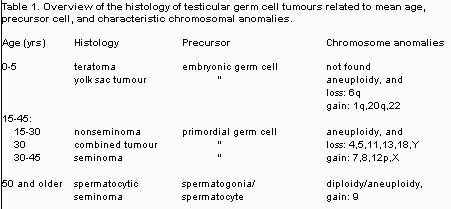
Germ cell tumours comprise a heterogeneous group of neoplasms, which can be found at different, although restricted anatomical locations. In the testis three groups of germ cell-derived tumours are distinguished:
- I- teratomas and yolk sac tumours of infants;
- II- seminomas and nonseminomas of adolescents and adults;
- III- spermatocytic seminomas of the elderly.
Clinics and Pathology
Embryonic origin
That the different types of germ cell tumours of the testis are derived from cells belonging to the germ cell lineage, is established, although the actual non-malignant counterparts are still a matter of debate. It is likely that the teratomas and yolk sac tumours of infants originate from an embryonic germ cell, while this is a spermatogonial/spermatocyte-type of cell for spermatocytic seminomas. In contrast, it is established that the precursor of seminomas and nonseminomas is carcinoma in situ (CIS), also referred to as intratubular germ cell neoplasia undifferentiated (IGCNU) or testicular intratubular neoplasia (TIN). CIS is composed of tumour cells located on the basal membrane at the inner side of the seminiferous tubules, under the tight junction, where normally the spermatogonia reside. It has been suggested that the normal counterpart of CIS, i.e., a primordial germ cell/gonocyte is present within the gonad around the 7th to 10th week gestational age. This is supported by the epidemiological finding that the incidence of seminomas and nonseminomas show a lower incidence in cohorts of men born during the period of the second word war in Denmark, Norway and Sweden. An alternative model has been proposed, in which the cell of origin is a pachytene spermatocyte.
Epidemiology
During the first few years of life, the only types of germ cell tumours diagnosed in the testis are teratomas and yolk sac tumours. They are evidently unrelated to puberty. In contrast, the seminomas, nonseminomas, and spermatocytic seminomas are clinically manifest during or after puberty, therefore likely related to sexual maturation. Spermatocytic seminomas are predominantly found in patients of 50 years and older. While most patients with a seminoma present in their 4th decade of life, this is in the 3rd decade for patients with a nonseminoma. An increasing incidence (in between 6-11/100.000) has been reported both for seminomas and nonseminomas during the last decades in white populations throughout the world, with an annual increase of 3-6%. Although in general rare, accounting for 1-2% of all malignancies in males, seminomas and nonseminomas are the most common cancer in young Caucasian males. In some European countries, i.e., Denmark and Switzerland, the life time risk for seminoma or nonseminoma is up to 1%. However, the increase seems to stabilise to date. In contrast to whites, blacks have a significantly lower, not increasing, incidence for seminomas/nonseminomas, although histology and age-distribution are the same. No significantly increasing incidence has been reported for teratomas and yolk sac tumours of infants and spermatocytic seminomas.
The incidence of CIS, the precursor of both seminomas and nonseminomas, in the general population is similar to the life time risk to develop a seminoma/nonseminoma. This indicates that CIS will always progress to invasiveness. About 5% of patients with a unilateral seminoma or nonseminoma have contralateral CIS.
The incidence of CIS, the precursor of both seminomas and nonseminomas, in the general population is similar to the life time risk to develop a seminoma/nonseminoma. This indicates that CIS will always progress to invasiveness. About 5% of patients with a unilateral seminoma or nonseminoma have contralateral CIS.
Pathology
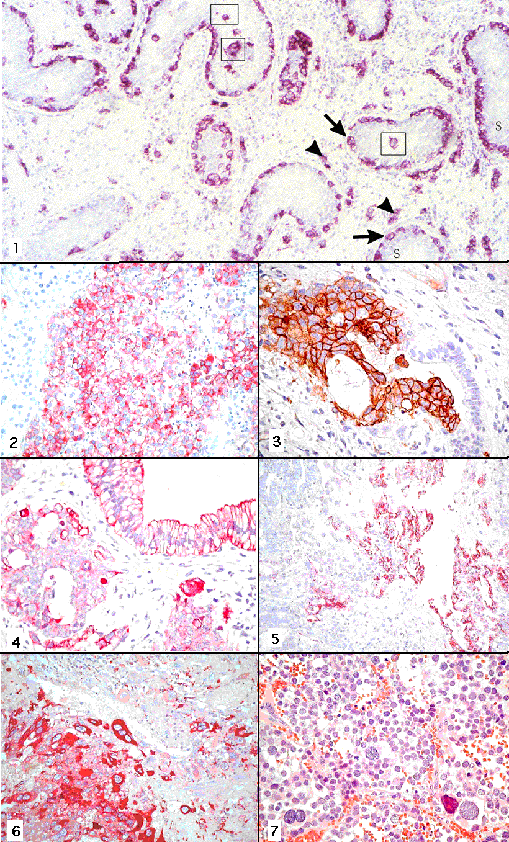
CIS cells show similarities to embryonic germ cells, like their positivity for alkaline phosphatase, the stem cell factor receptor (c-KIT), and their glycogen content. These cells are frequently found in the adjacent parenchyma of an invasive seminoma and nonseminoma, of which a representative example is given in Figure 1. Histologically and immunohistochemically, seminoma cells mimick CIS. Lymphocytic infiltrations in the supportive stroma are a consistent feature of these tumors (Figure 2). So far, no differences have been found between CIS and seminoma cell, except the invasive growth of the latter. In contrast to the homogeneity of CIS and seminomas, nonseminomas can be composed of different elements, including embryonal carcinoma (the undifferentiated, stem cell, component), teratoma (the somatically differentiated component), yolk sac tumour and choriocarcinoma (the components of extra-embryonal differentiation) (see Figure 3-6). These different histological elements can be identified using immunohistochemistry for different markers, like CD30 for embryonal carcinoma, alpha fetoprotein (AFP) for yolk sac tumour, and human chorionic gonadotropin (hCG) for choriocarcinoma (see illustrations). Most nonseminomas are mixtures of these different elements. About 50% of germ cell tumors of adolescents and adults are pure seminomas, and 40% pure or mixed nonseminomas. Tumours containing both a seminoma and a nonseminoma component are classified as combined tumours according to the British Classification system, and as nonseminomas according to the World Health Organisation (WHO) classification. These tumours present at an age in between that of pure seminoma and nonseminoma.
The spermatocytic seminomas are histologically uniform and composed of three cell types, small, intermediate and large cells, that are evenly distributed (Figure 7). The immunohistochemical markers for CIS/seminoma are overall negative in spermatocytic seminomas. So far, no specific markers have been reported for spermatocytic seminomas, Histologically and immunohistochemically, the teratoma and yolk sac tumour components found in the infantile testis are indistinguishable from those elements found in nonseminomas of the adult testis. However, they differ in chromosomal constitution (see Table 1 and below), and the first lack CIS in the adjacent parenchyma.
The spermatocytic seminomas are histologically uniform and composed of three cell types, small, intermediate and large cells, that are evenly distributed (Figure 7). The immunohistochemical markers for CIS/seminoma are overall negative in spermatocytic seminomas. So far, no specific markers have been reported for spermatocytic seminomas, Histologically and immunohistochemically, the teratoma and yolk sac tumour components found in the infantile testis are indistinguishable from those elements found in nonseminomas of the adult testis. However, they differ in chromosomal constitution (see Table 1 and below), and the first lack CIS in the adjacent parenchyma.
Evolution
In spite of the fact that it is generally accepted that CIS is the precursor for seminoma and nonseminoma, the relationship(s) between these histological elements is still a matter of debate. It has been shown, especially using cell lines derived from nonseminomas, that embryonal carcinoma is the undifferentiated stem cell of all differentiated nonseminomatous components. So far, no cell lines for seminoma or CIS are available. Nonseminomas mimick embryonal development to a certain level. However, it is unproven so far whether seminomas may also progress into nonseminoma, although various observations, both biological and clinical, may support this model. It has been suggested that CIS present in the adjacent parenchyma of an invasive seminoma or nonseminoma is only one step behind in the progression of the cancer, which is supported by molecular findings.
Prognosis
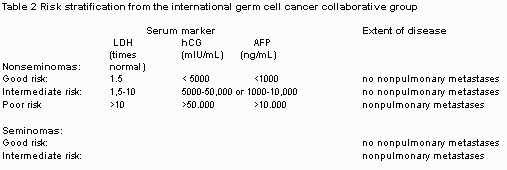
The teratomas of infants, and the spermatocytic seminomas are generally benign. Therefore, orchidectomy alone is mostly curative. However, spermatocytic seminomas may progress to sarcoma, a highly malignant tumour. When the yolk sac tumour component of infants is metastatic, it can be cured in the majority of patients using chemotherapy. Seminomas are highly sensitive to irradiation, while nonseminomas are overall highly sensitive to cisplatin-based chemotherapy, with cure rates of up to 90%. Criteria have been developed to distinguish nonseminoma patients with a good, intermediate and poor response (Table 2). Although these parameters are not informative on an individual basis, they separate the three groups as a whole. Seminoma patients always fall in the good and intermediate prognostic group.
Stage I disease might be treated by orchidectomy followed by a wait and see strategy. Alternatively, retroperitoneal lymph node dissection (nerve sparing) and/or irradiation (in case of pure seminoma) can be performed. Moreover, a single dose cisplatin-based chemotherapy is tested in an experimental set up. These issues are of interest, because the risk of occult metastases in clinically stage I nonseminomas is about 30%. Established factors predicting metastastic disease are lymphovascular space invasion and percentage of embryonal carcinoma. For nonseminomas there is no consensus on the best method to define the risk of occult metastases and on how the information can be used for the clinical management of patients. In clinically stage I seminoma patients occult metastases are predicted by vascular invasion and tumor size. More recently, the mean nuclear volume has been reported to be an informative parameter. Obviously these parameters could serve to define a group of patients that could benefit from surveillance. Patients with refractory disease might benefit from high-dose chemotherapy.
Because CIS is formed during intra-uterine growth, and the treatable cancer in most cases becomes clinically manifest after puberty, methods for early diagnosis and treatment might prevent progression of CIS to an invasive seminoma or nonseminoma, thereby preventing possible progression to refractory disease. A number of putative parameters have been reported, although none of them have been tested in a clinical setting thus far. Moreover, it has been shown that CIS can be effectively eradicated using local irradiation, with limited side effects.
The presence of CIS in the contralateral testis in 5% of patients with a seminoma or nonseminomas has led to the routine of a contralateral biopsy in some countries. However, in most countries the clinicians prefer a closely wait and see strategy. Patients with cryptorchidism, atrophic testis, or prior infertility have a higher risk of CIS in the contralateral testis. The exact numbers are unknown, but it is estimated that high-risk patients comprise 40-50% of the population with CIS. Altogether about 50-60% of patients with a unilateral testis tumor will have no other risk factors for CIS.
Stage I disease might be treated by orchidectomy followed by a wait and see strategy. Alternatively, retroperitoneal lymph node dissection (nerve sparing) and/or irradiation (in case of pure seminoma) can be performed. Moreover, a single dose cisplatin-based chemotherapy is tested in an experimental set up. These issues are of interest, because the risk of occult metastases in clinically stage I nonseminomas is about 30%. Established factors predicting metastastic disease are lymphovascular space invasion and percentage of embryonal carcinoma. For nonseminomas there is no consensus on the best method to define the risk of occult metastases and on how the information can be used for the clinical management of patients. In clinically stage I seminoma patients occult metastases are predicted by vascular invasion and tumor size. More recently, the mean nuclear volume has been reported to be an informative parameter. Obviously these parameters could serve to define a group of patients that could benefit from surveillance. Patients with refractory disease might benefit from high-dose chemotherapy.
Because CIS is formed during intra-uterine growth, and the treatable cancer in most cases becomes clinically manifest after puberty, methods for early diagnosis and treatment might prevent progression of CIS to an invasive seminoma or nonseminoma, thereby preventing possible progression to refractory disease. A number of putative parameters have been reported, although none of them have been tested in a clinical setting thus far. Moreover, it has been shown that CIS can be effectively eradicated using local irradiation, with limited side effects.
The presence of CIS in the contralateral testis in 5% of patients with a seminoma or nonseminomas has led to the routine of a contralateral biopsy in some countries. However, in most countries the clinicians prefer a closely wait and see strategy. Patients with cryptorchidism, atrophic testis, or prior infertility have a higher risk of CIS in the contralateral testis. The exact numbers are unknown, but it is estimated that high-risk patients comprise 40-50% of the population with CIS. Altogether about 50-60% of patients with a unilateral testis tumor will have no other risk factors for CIS.
Cytogenetics
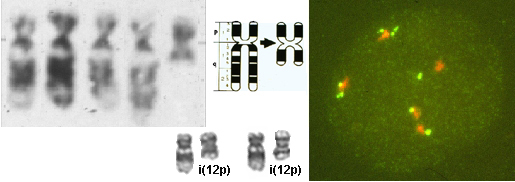
Representative example of: actual G-banding and schematic of a normal chromosome 12 (left within panel) and an isochromosome 12p (i(12p)) (right within panel); the fluorescent in situ hybridization pattern with a probe specific for the centromeric region of chromosome 12 (red) and the p-arm (green). Note the presence of three normal chromosomes 12 (paired green and red signal), and two isochromosomes (one red and two green signals) Leendert H.J. Looijenga. bottom row: i(12p) G-banding - Courtesy G. Reza Hafez, Eric B. Johnson, and Sara Morrison-Delap,UW Cytogenetic Services .
Cytogenetics morphological
Cytogenetics molecular
The isochromosome 12p can be identified on interphase nuclei by fluorescent in situ hybridization, using simultaneously a probe specific for the centromeric region and the short am of chromosome 12. The use of the centromeric probe only was not found to be informative.
Genetics
Note
Familial predisposition About 2% of the patients with a seminoma or nonseminoma have an affected family member, indicating a genetic component in the development of this cancer. So far, two genome-wide linkage analyses have been performed. The first showed linkage to regions of chromosome 1, 4, 5, 14 and 18, while the second found no evidence for linkage to chromosome 1, and a weaker indication for involvement of region 2 of chromosome 4 (4cen-q13). For the other region on chromosome 4 (p14-p13), and for chromosome 5, similar results were obtained. Both studies indicated linkage to chromosome 18. The latter study found linkage to the short arm of chromosome 2, and the telomeric region of 3q. A telomeric region of the long arm of chromosome 12 showed linkage when the results of both studies were combined, while no linkage was found in the separate studies. An other finding of interest is the fact that bilateral occurrence of the tumor is more frequent in familial than in sporadic cases (15 versus 5%). Indeed, most recently linkage to Xq27 has been found for cryptorchidism and bilateral germ cell tumors, although the gene involved is still unknown.
Genes Involved and Proteins
Note
In spite of several suggestions about a possible role of a number of genes in the development of teratomas and yolk sac tumours of the infantile testis, the seminomas and nonseminomas and the spermatocytic seminomas, actual prove for their involvement is missing so far.
Article Bibliography
| Pubmed ID | Last Year | Title | Authors |
|---|---|---|---|
| 9524563 | 1998 | Candidate regions for testicular cancer susceptibility genes. The International Testicular Cancer Linkage Consortium. | |
| 8647654 | 1996 | Comparative analysis of cell surface antigens expressed by cell lines derived from human germ cell tumours. | Andrews PW et al |
| 10862031 | 2000 | Genetic analysis of the APAF1 gene in male germ cell tumors. | Bala S et al |
| 10597209 | 1999 | Treatment of patients with cisplatin-refractory testicular germ-cell cancer. German Testicular Cancer Study Group (GTCSG). | Bokemeyer C et al |
| 10706106 | 2000 | A novel SMAD4 gene mutation in seminoma germ cell tumors. | Bouras M et al |
| 9524565 | 1998 | The cytogenetic theory of the pathogenesis of human adult male germ cell tumors. Review article. | Chaganti RS et al |
| 9284835 | 1997 | Frequent p16INK4 (MTS1) gene inactivation in testicular germ cell tumors. | Chaubert P et al |
| 8955658 | 1996 | Prevalence of contralateral testicular intraepithelial neoplasia in patients with testicular germ cell neoplasms. | Dieckmann KP et al |
| 10952776 | 2000 | Allelic losses in carcinoma in situ and testicular germ cell tumours of adolescents and adults: evidence suggestive of the linear progression model. | Faulkner SW et al |
| 10786678 | 2000 | Prognosis of primary testicular seminoma: a report on 57 new cases. | Fujikawa K et al |
| 2569358 | 1989 | Chromosome 12q heterozygosity is retained in i(12p)-positive testicular germ cell tumor cells. | Geurts van Kessel A et al |
| 7529549 | 1994 | Origin and biology of a testicular Wilms' tumor. | Gillis AJ et al |
| 1984105 | 1991 | Prevalence of carcinoma in situ and other histopathological abnormalities in testes from 399 men who died suddenly and unexpectedly. | Giwercman A et al |
| 9562449 | 1998 | Early stage and advanced seminoma: role of radiation therapy, surgery, and chemotherapy. | Gospodarwicz MK et al |
| 9056671 | 1997 | Aberrant expression of cyclin D2 is an early event in human male germ cell tumorigenesis. | Houldsworth J et al |
| 7531795 | 1995 | Expression of immunohistochemical markers for testicular carcinoma in situ by normal human fetal germ cells. | Jørgensen N et al |
| 8913724 | 1996 | Detection of chromosomal DNA gains and losses in testicular germ cell tumors by comparative genomic hybridization. | Korn WM et al |
| 8541838 | 1995 | Candidate regions for a testicular cancer susceptibility gene. | Leahy MG et al |
| 7515656 | 1994 | Testicular germ cell tumors of adults show deletions of chromosomal bands 11p13 and 11p15.5, but no abnormalities within the zinc-finger regions and exons 2 and 6 of the Wilms' tumor 1 gene. | Looijenga LH et al |
| 7687459 | 1993 | Frequent loss of 11p13 and 11p15 loci in male germ cell tumours. | Lothe RA et al |
| 2795697 | 1989 | Decreased testicular cancer risk in men born in wartime. | Møller H et al |
| 7954476 | 1994 | Loss of heterozygosity identifies multiple sites of allelic deletions on chromosome 1 in human male germ cell tumors. | Mathew S et al |
| 10211110 | 1998 | Fluorescence in situ hybridization analysis of chromosome 12 anomalies in semen cells from patients with carcinoma in situ of the testis. | Meng FJ et al |
| 8610136 | 1996 | Aberrant platelet-derived growth factor alpha-receptor transcript as a diagnostic marker for early human germ cell tumors of the adult testis. | Mosselman S et al |
| 10908150 | 2000 | Comparative genomic and in situ hybridization of germ cell tumors of the infantile testis. | Mostert M et al |
| 9632138 | 1998 | Identification of the critical region of 12p over-representation in testicular germ cell tumors of adolescents and adults. | Mostert MC et al |
| 8625271 | 1996 | Fluorescence in situ hybridization-based approaches for detection of 12p overrepresentation, in particular i(12p), in cell lines of human testicular germ cell tumors of adults. | Mostert MM et al |
| 8293405 | 1994 | Testicular cancer in blacks. A multicenter experience. | Moul JW et al |
| 1381946 | 1992 | Detection of RAS mutations in archival testicular germ cell tumors by polymerase chain reaction and oligonucleotide hybridization. | Moul JW et al |
| 1683567 | 1991 | Detection and analysis of origin of i(12p), a diagnostic marker of human male germ cell tumors, by fluorescence in situ hybridization. | Mukherjee AB et al |
| 7518576 | 1994 | Allelic loss and somatic differentiation in human male germ cell tumors. | Murty VV et al |
| 7936646 | 1994 | Frequent allelic deletions and loss of expression characterize the DCC gene in male germ cell tumors. | Murty VV et al |
| 8812492 | 1996 | Physical mapping of a commonly deleted region, the site of a candidate tumor suppressor gene, at 12q22 in human male germ cell tumors. | Murty VV et al |
| 8624259 | 1996 | Apoptosis of human seminoma cells upon disruption of their microenvironment. | Olie RA et al |
| 7535083 | 1995 | N- and KRAS mutations in primary testicular germ cell tumors: incidence and possible biological implications. | Olie RA et al |
| 2536126 | 1989 | Ploidy of primary germ cell tumors of the testis. Pathogenetic and clinical relevance. | Oosterhuis JW et al |
| 9408759 | 1997 | Detection of chromosomal aberrations in seminomatous germ cell tumours using comparative genomic hybridization. | Ottesen AM et al |
| 7796415 | 1995 | Loss of heterozygosity of tumor suppressor genes in testis cancer. | Peng HQ et al |
| 10359533 | 1999 | Chromosomal deletions occur in restricted regions of 5q in testicular germ cell cancer. | Peng HQ et al |
| 10779021 | 2000 | Genetic analysis of childhood endodermal sinus tumors by comparative genomic hybridization. | Perlman EJ et al |
| 10400552 | 1999 | Incidence of testicular cancer in the United States: has the epidemic begun to abate? | Pharris-Ciurej ND et al |
| 11144894 | 2000 | Carcinoma in situ in the testis. | Rørth M et al |
| 7517917 | 1994 | Expression of the c-kit protein product in carcinoma-in-situ and invasive testicular germ cell tumours. | Rajpert-De Meyts E et al |
| 10655070 | 2000 | Localization to Xq27 of a susceptibility gene for testicular germ-cell tumours. | Rapley EA et al |
| 8143614 | 1993 | K-ras oncogene codon 12 point mutations in testicular cancer. | Ridanpää M et al |
| 7893365 | 1995 | The p53 and mdm-2 genes in human testicular germ-cell tumors. | Riou G et al |
| 11021820 | 2000 | Restricted 12p amplification and RAS mutation in human germ cell tumors of the adult testis. | Roelofs H et al |
| 11127816 | 2000 | Overrepresentation of the short arm of chromosome 12 is related to invasive growth of human testicular seminomas and nonseminomas. | Rosenberg C et al |
| 8627820 | 1996 | Reviews of chromosome studies in urological tumors. III. Cytogenetics and genes in testicular tumors. | Sandberg AA et al |
| 7682101 | 1993 | Uniparental origin of i(12p) in human germ cell tumors. | Sinke RJ et al |
| 4115573 | 1972 | Possible carcinoma-in-situ of the testis. | Skakkebaek NE et al |
| 9112574 | 1997 | Analysis of the DCC tumor suppressor gene in testicular germ cell tumors: mutations and loss of expression. | Strohmeyer D et al |
| 9461002 | 1998 | Molecular cytogenetic analysis of adult testicular germ cell tumours and identification of regions of consensus copy number change. | Summersgill B et al |
| 10362788 | 1999 | Activating c-kit gene mutations in human germ cell tumors. | Tian Q et al |
| 1310514 | 1992 | Ploidy of testicular carcinoma in situ. | de Graaff WE et al |
| 10521799 | 1999 | Incidence of testicular germ-cell malignancies in England and Wales: trends in children compared with adults. | dos Santos Silva I et al |
| 1318004 | 1992 | DNA ploidy in testicular germ cell neoplasms. Histogenetic and clinical implications. | el-Naggar AK et al |
| 8527395 | 1995 | No recurrent structural abnormalities apart from i(12p) in primary germ cell tumors of the adult testis. | van Echten J et al |
Citation
Leendert H.J. Looijenga
Testis: Germ cell tumors
Atlas Genet Cytogenet Oncol Haematol. 2001-02-01
Online version: http://atlasgeneticsoncology.org/solid-tumor/5005/testis-germ-cell-tumors
Historical Card
1998-08-01 Testis: Germ cell tumors by François Desangles,Philippe Camparo Affiliation
